On October 27, 2025, on the eve of the sixtieth anniversary of the conciliar declaration Gravissimum educationis, the Pope Leóo XIV signed the apostolic letter «Designing new maps of hope», in the framework of the Jubilee of the Educational World. This document takes up the legacy of the Second Vatican Council to rethink the meaning of Christian education in today's world. The Pap lettera rethinks the meaning of Christian education in a world marked by digitalization, inequality, migration and the ecological crisis. Far from being a nostalgic look back at the past, the letter proposes a renewed educational pact inspired by the Gospel, where teaching is understood as an act of hope and charity that transforms culture. Below, we offer a synthetic reading of the letter by means of 10 essential keys and 10 answers about the document.
«Design new maps of esperanza» in 10 points
1. Education, the heart of evangelization
Pope Leo XIV celebrates the sixtieth anniversary of Gravissimum educationis remembering that educating is not a marginal task, but the concrete way in which the Gospel is incarnated in life. Christian education does not consist only in transmitting knowledge, but in forming people capable of living the faith as culture, relationship and service. In a world disoriented by speed and uncertainty, the Pope invites us to «design new maps of hope»: to reconstruct educational paths that integrate faith and reason, dialogue and mission, so that the Gospel may continue to be a source of meaning and renewal.
2. A living heritage that continues to inspire
The Pope traces a historical panorama in which Catholic education appears as a history of the Spirit in action. From the Desert Fathers to the great modern educators - Augustine, Calasanzio, De La Salle, Don Bosco, Montessori - the Church has offered concrete responses to the needs of every age. Christian education, far from being abstract theory, has always been an incarnation of love and justice, capable of regenerating culture, uplifting the poor and sustaining hope.
3. Educating is a community act
The Pope insists that no one educates alone. The educational community is a «we» that unites teachers, students, families, pastors and civil society in a common mission: to generate life. This relational fabric prevents the routine of «it has always been done this way» and pushes us to innovate with fidelity. In Christian education, heart and reason meet; doubt is not censured, but accompanied. The Catholic school must be a place where truth is sought in communion and where each person feels recognized as an asset, not as a problem.
4. The human person at the center
Every Christian educational project starts from the conviction that the human being is the image of God, bearer of a dignity that no structure can reduce. Educating is an art of accompanying, not of training. It means awakening the desire for truth and teaching responsible freedom. The Pope reminds us that to form implies time, effort, patience and example: one is not born a professional or a believer, one becomes one step by step, in a process where intelligence, ethics and spirituality are intertwined.
5. Subsidiarity and co-responsibility
The principle of subsidiarity, fundamental in the social doctrine of the Church, occupies a prominent place in the Charter. It means that the higher instances - State, Church or institutions - must support, without substituting, families and local communities in their educational mission. This vision promotes collaboration among all social actors, recalling that education is a common good that demands participation and shared responsibility. Authority, the Pope emphasizes, must be exercised as service, not as domination.
6. Integral education and social justice
The Pope's apostolic letter reaffirms that Christian education embraces all the dimensions of the person: intellectual, spiritual, affective, corporal and social. It is not limited to efficiency or professional success, but seeks human growth and the transformation of the environment. In a world marked by inequalities, education must be an instrument of justice and charity, guaranteeing access, inclusion and support to the most vulnerable. «Losing the poor - says the Pope - is tantamount to losing the school itself».
7. Integral ecology and contemplation of the Creator
Inspired by the Franciscan tradition and the theology of creation, Leo XIV proposes a pedagogy of contemplation: discovering God in the beauty of the world and taking responsibility for its care. Ecological education is part of moral education: it teaches sobriety, respect, cooperation and gratitude. The Pope links environmental justice and social justice, affirming that when the earth suffers, the poor suffer first, and that every gesture - from avoiding waste to promoting peace - has educational and spiritual value.
8. The challenges of the digital era
The Pope devotes ample space to reflection on education in digital times. He warns that technology and artificial intelligence must be at the service of the person, not the other way around. Catholic schools and universities risk losing their soul if they are reduced to platforms of efficiency without humanity. For this reason, he proposes the «digital human»: an ethical and creative use of technology that fosters imagination, empathy, poetry and critical reflection. No algorithm can replace the human encounter and the joy of learning together.
9. The Global Education Pact as a compass
Leo XIV takes up the legacy of the Global Education Pact promoted by Pope Francis, pointing out its seven paths: centrality of the person, listening to young people, the dignity of women, the role of the family, inclusion, a just economy and care for the common home. He adds three new priorities: interior life, digital discernment and education for peace. The Pope calls for a renewed alliance between schools, universities and communities, building authentic global «educational constellations» at the service of universal fraternity.
10. New maps of hope
In his conclusion, the Pope invites educational communities not to withdraw into nostalgia or fear, but to become a beacon: «not a nostalgic refuge, but a laboratory of discernment, pedagogical innovation and prophetic witness». Educating, he says, is an act of faith in the future, a gesture of love that transforms history. He asks «disarm words, raise your eyes, guard your heart», so that education may continue to be a space of freedom, encounter and transcendence. Those who educate, affirms Leo XIV, illuminate the world like a star and keep alive the promise of a more human tomorrow.
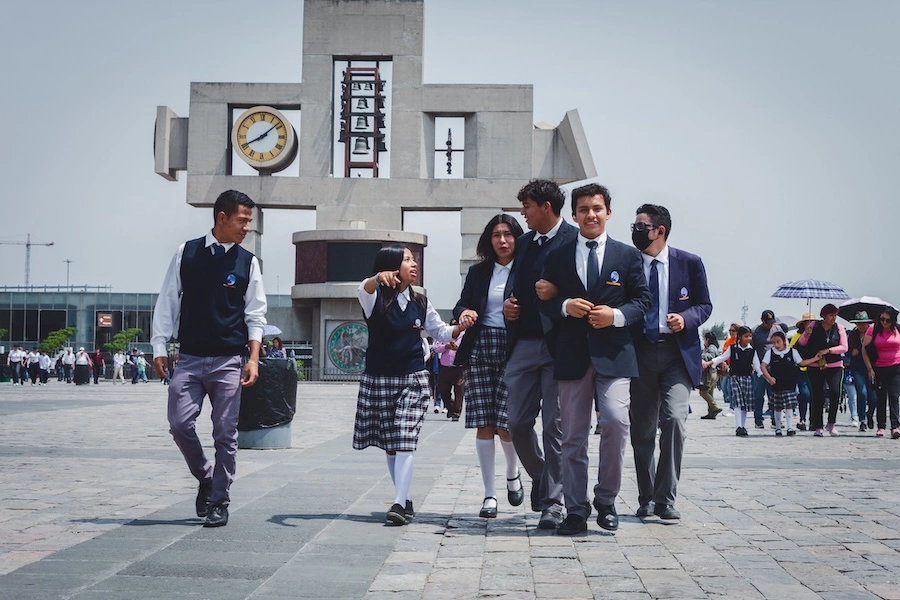
10 questions and answers about the apostolic letter «Disegnare nuove mappe di speranza».»
1. What does it mean that education is the «heart of evangelization»?
Pope Leo XIV affirms that education is not a secondary activity of the Church, but the concrete way in which the Gospel is incarnated in daily life. Christian education transmits values, but above all it forms hearts capable of loving, discerning and serving. To evangelize is also to teach how to think, to dialogue and to build culture; therefore, to educate is an expression of missionary charity.
2. Why does the Pope use the history of Catholic education?
Because he wants to show that the educational tradition of the Church is not an immobile past, but a living history of the Holy Spirit in action. Through figures such as St. Augustine, St. Joseph Calasanz, St. John Baptist de La Salle and Maria Montessori, the Pope shows that each era has required new pedagogical responses inspired by the Gospel. This heritage is a «firmament of works and charisms» that continues to guide today's educational path.
3. What role does the community play in the task of education?
Because no one educates alone, but all authentic education is the fruit of a community that accompanies, dialogues and generates trust. Teachers, families, students, pastors and civil society together form an «educational community». In this framework, knowledge is not imposed, but discovered and shared. Community is the antidote to digital loneliness and cultural fragmentation.
4. Why is the human person at the center of the educational process?
Christian education is based on the fundamental truth that every person is the image of God and possesses an inviolable dignity. It is not a matter of producing useful individuals, but full human beings, capable of seeking the truth and practicing freedom with responsibility. To educate, in this sense, is not to fill the mind, but to awaken the soul. For this reason, the Pope calls for the formation of whole persons: intelligent, compassionate, critical and spiritual.
What does the principle of subsidiarity imply in the field of education?
It implies recognizing that larger institutions - State, Church, agencies - must support without replacing families and communities in their educational mission. Subsidiarity defends the autonomy of local levels and promotes cooperation. According to the Pope, this principle protects educational freedom and prevents instruction from being subordinated to political or economic interests. Educating, he says, is a shared responsibility, not a competition.
6. How is integral education conceived in the apostolic letter?
Leo XIV proposes an integral and humanistic vision: education encompasses the mind, body, spirit, emotions and social relations. It is not only a matter of accumulating knowledge, but of forming citizens of solidarity and coherent believers. Christian education does not separate theory from practice, nor science from ethics. For this reason, the Pope reminds us that the value of a school is not measured by its efficiency, but by its capacity to serve human dignity and the common good.
What relationship does the Pope establish between education, ecology and social justice?
For the Pope, educating also means caring for creation and promoting justice. Inspired by St. Francis of Assisi and St. Bonaventure, the Pope invites us to contemplate the world as a reflection of God. To teach respect for nature is to teach love of life. Christian ecological education unites environmental justice and social justice, because damage to the planet affects the poor first. To educate ecologically is to form conscience and cultivate compassion.
8. How does the document address the challenges of the digital era?
The Pope recognizes that technology offers great opportunities, but warns that it can dehumanize if used without judgment. Education, he says, must integrate the digital with the human, teaching discernment, empathy and critical thinking. No algorithm can replace the creativity, humor or love of the teacher. For this reason, he proposes a «pedagogy of digital encounter,» where technology is at the service of the person, the community and the common good.
9. What role does the Global Education Pact play in this vision?
The Pope sees in the Global Education Pact - initiated by Francis - a prophetic compass. Its seven paths (person, youth, women, family, inclusion, just economy and integral ecology) inspire universal educational action. Leo XIV adds three new priorities: interior life, ethical use of the digital world and education for peace. These orientations form a «global educational constellation,» where the diversity of charisms and cultures are united in the same mission of fraternity.
10. What is the Pope's call to educators?
The Pope concludes his letter with a call to «design new maps of hope». He asks us to disarm aggressive words, to raise our gaze to discover new routes, and to guard our hearts so as not to lose our humanity. Educators, he says, are «choreographers of hope». It is in their hands to keep alive the flame of the Gospel in contemporary culture, transforming education into an act of love that illuminates the world.