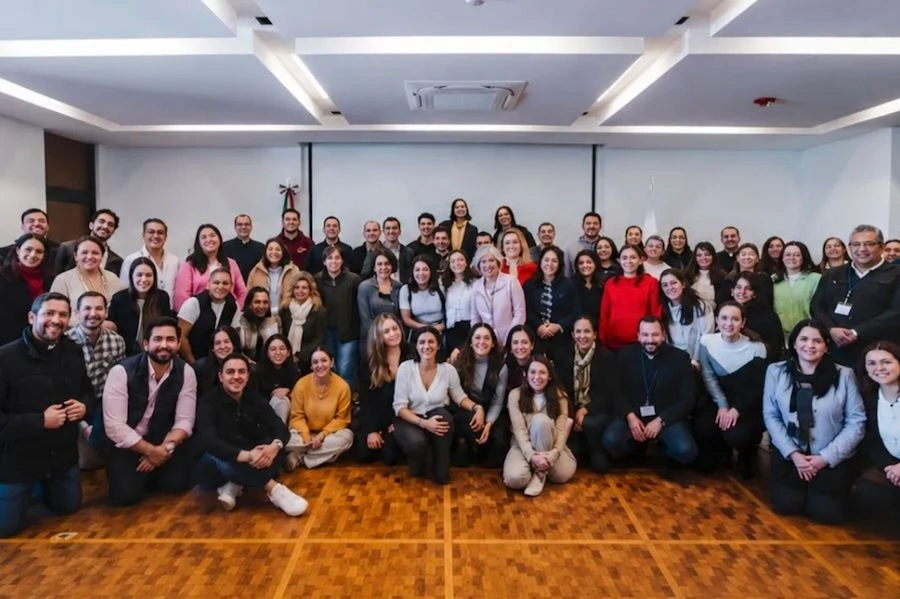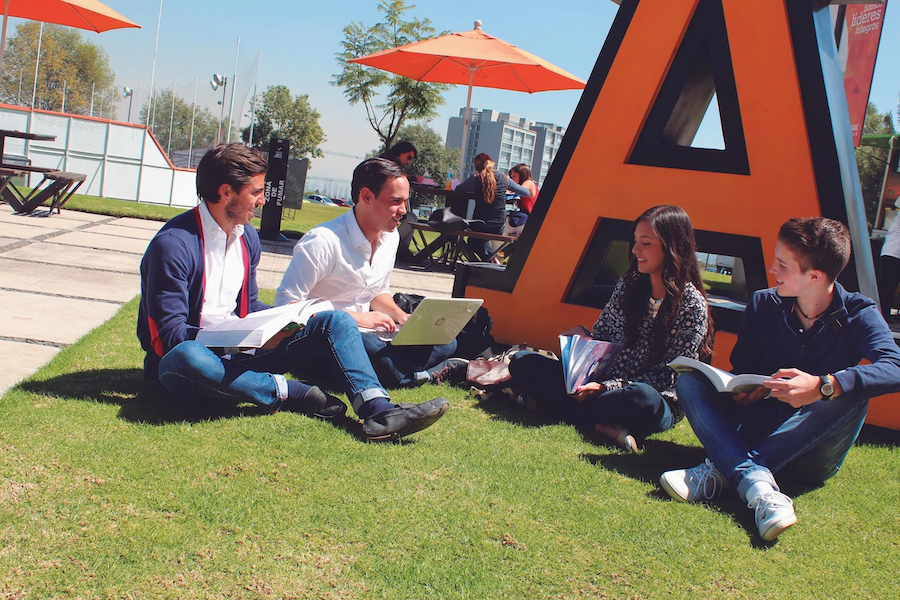
Rafael Estrada, director .cademic of Anahuac Online and Monica Carriedo, leader of educational evaluation at the same university, began their trajectory at the Web Anahuac since your studies undergraduate. Today, provide your mind, soul and heart . innovation of this institution developing academic programs e implementing artificial intelligence tools, always promoting the ethical and responsible use of technology. How do they manage to do so? How do they face the current challenges in the world of education with an open and innovative attitude?
Industrial Engineer by profession and a teacher by vocation, Rafael Estrada reports that its passion for education came about after reading a book about the subject while pursuing his studies at the Instituto de Estudios Superiores de Tamaulipas (Institute of Higher Studies of Tamaulipas) (IEST Anahuac). This led him to leave the petrochemical industry for start teaching at the university while studied a master's degree in human capital. Some time later, conducted a doctorate in international education, with specialization in data analytics, mathematics, philosophy and artificial intelligence.
With more than 15 years of experience in educational works, Monica Carriedo recalls with gratitude the stage of her life when she was a consecrated member of Regnum Christi, an experience that strengthened her faith and her vocation of service through education. She earned her bachelor's degree in Education at the Universidad Anáhuac, where she also obtained two master's degrees - in Education and in Philosophy. Over time, her life discernment led her to continue her path from other fields, joining the Anáhuac Online team. She is currently pursuing her doctorate in Educational Evaluation and works as a professor at the same university.
Throughout their professional careers, they have taken the lead in educational transformation at Anáhuac Online, but they have never have They have put aside their true vocation: teaching. This work allows them to maintain a connection with the not only to transmit knowledge, but also to learn from their experiences, needs and challenges.
Being a Catholic university today
It is understood as school or university catholic which defines its identity, mission and culture from the commitment to maintain the christian message, looking for contribute to human dignity.
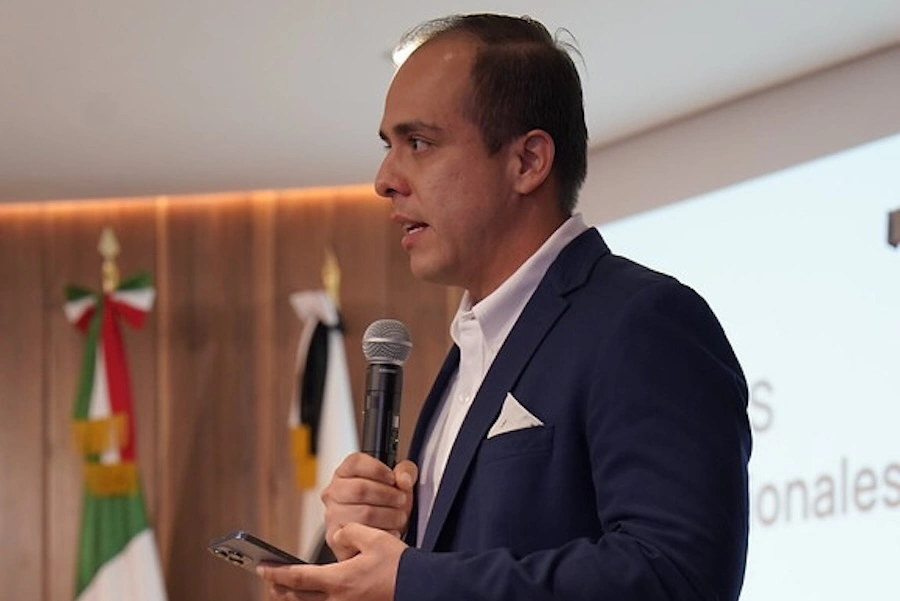
«A Catholic university must be person centered, seeking the goodbe and confident that someday they will be able to do so. un well in the society through its leadership», explains Monica.
«In addition, it hasits origin, its tradition and its purpose.», adds Rafael. «It is neither material nor temporary, but rather recognizes and maintains its purpose no matter what times you are going through., always open to a constant dialogue, with diversity of knowledge and trusting in the truth».
These elements are integrateds in each of the subjects and courses that it teaches. Anahuac Online, where Rafael stresses that one of the greatest satisfactions is to think and create in conjunction with who have different ideas for so that they can answer in a comprehensive manner to the problems that afflictl the world.
Catholic university has a commitment with the company & your well-being, looking for to elevate the human and social condition through education and the formation of professionals who are more fraternal, just and ethical. «What we intend as integral formation is to recognize the human dimensions as the starting point, but also the human faculties as something that when developed allows for a better interaction, a rigorous intellect that seeks to learning in a sincere manner, who knows of compasand that it has a will to for orientation», comments Rafael.
«We are ready to respond to the needs and concerns of our customers. have our students, not only to train them as great professionals», explains Monica. «We are looking for to provide them with quality training that goes beyond academics. and this is achieved through personal contact, peand methodologies, but also on the basis of structures and methodologies that recognize its inherent dignity, its calling to transcendence, the place it occupieso in the world, the needs that have and their way of thinking».
«It is solid and reliable ground in a world of great uncertainty.», adds Rafael.
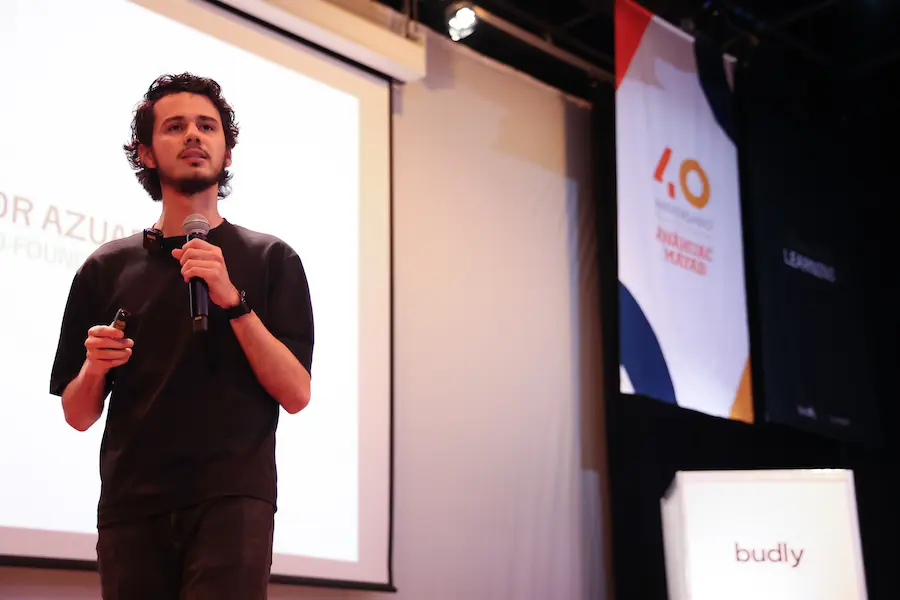
One way of transmitting this identity, mission and Christian culture is through the courses that all students must take, regardless of their chosen career.
Rising to the challenge: transmitting the humanist and catholic vision in the era of artificial intelligence
As academic director & leader of educational evaluation, is part essential of the work questioning the curriculum of each career. A good way to start is by thinking about the subjects “mandatory” that students are required to take throughout their journey at Anáhuac. Rafael and Monica have asked themselves over and over again how you can reach really at heart of their students through these materials that, if applicable, are focused on issues of humanities.
«We are called to illuminate; that's why that these matters We think of them so that our students can go to schooln discovering those issues that may never had been considered like the leadership, the open reason, the critical thinking and social welfare. How can we influence not only so that they can learn about these topics, but also so that they can apply them in their lives?», raises Rafael.
«Aother than teaching them, We show them what we know and what we want to transmit to them in order to go guiding how implement these issues that are learning. Eventually, we wish to that they apply this in their life and tomorrow in their work.», complements Monica.
Additionally, explain that humanities subjects haso has been to . developed in alliance with the Pontifical Athenaeum Regina Apostolorum of Rome in conjunction with priests, professors or deans of philosophy & Anáhuac teachers who contribute theirs expertise. Rafael mentions that there has always been some resistance to this type of skill-building topics. which are usually defined as softskills i “soft”: «However, he have succeeded in these subjects are accepted by the students. Es incredible because in recent years we have had feedback positiv.. Chen you read a comment from a young person who studies an engineering degree and tells you “I'm an engineer.“this is the best subject I have taken in my career.”, you are left with a sense of pride».
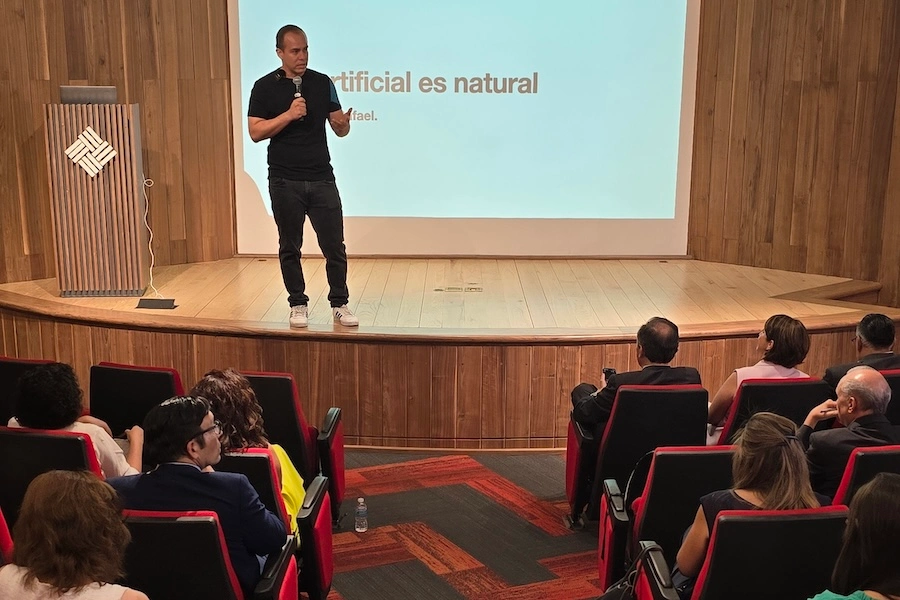
When the narrative begins to change from tone, there is no doubt that that their efforts has had a real impact on students. Education based on Catholic values is making it possible to train professionals with a humanistic vision, capable of continuing this positive impact on society. despite the fact that the world seems to be moving in the opposite direction, trying to focus its vision solely on innovation and technology..
Therefore, the Web International of Universities has incorporated in recent years a values-based education along with the use of innovative technologies. as artificial intelligence. In this way, its students acquire cutting-edge tools that better prepare them and ensure that innovation is always used in accordance with ethical principles and for the benefit of society.
A few months that OpenAI to release its APIs, to startupó the development of a unique project in Mexico, by creating the first artificial intelligence (AI) engine enabled by OpenAI in the educational world. Eventually, an interdisciplinary team of professionals set to work to integrate technical and humanistic knowledge into the educational experience of all Anahuac Online students.
«I believe that subjects implemented with AI haso had a lot of success, above all in the undergraduate students who do not have the proximity of being with a professor or be in front of the aula. Even so, we were able to to involve through de their intellect, from his heart and his will, thank you to its good design», mentions Rafael.
Education with artificial intelligence, étic. and purpose
In response, Rafael and Monica developed a strategy based on three fundamental elements for proposesr education with artificial intelligence . thes universities: mindset, skillset & toolset.
The mindset refers to adopting a philosophical view of AI as a tool for better thinking and beyond the answers that can provide you with a IA. The skillset is defined as the development of competencies as a lecturerdeep understanding, structured thinking and logical analysis to interact intelligently with AI. Finally, the toolset refers to choosing technical toolsologicals that align with the educational vision and the skills of the team, recognizing that AI is a key component of the team., correctly used, amplifies, but does not replace.
In order to ensure responsible use of the artificial intelligence, In addition, the Universidad Anáhuac has elaborated philosophical manifestos, orientation policies and clear regulations: «Of course, it must there are policies at the orientation level & regulations at the use level with its consequences, pBut if if we only impose rules without offering a vision, we run the risk of banning AI first, then computers and even calculators.», adds Rafael.
For her part, Monica emphasizes the importance of educating students in the ethical use of information technology. artificial intelligence: «It's not about the tool solving everything, but about to teach them how to use it.. to think about, to enjoy dlearning and go further. Only when they understand their limits, can they truly take advantage of it.».
The proper use of artificial intelligence implies understanding its impact on the educational training of young people. In this regard, it is necessary that both teachers and students develop a critical attitude towards technology. For this, the tool should be seen as a learning support.. This is how it works Budly, a platform developed by IA which currently use more than 7.000 students in the Anáhuac University Network (RUA) & which has as mission to personalize the educational experience and foster critical thinking among students.
This tool does not seek to replace academic effort, but rather to empower and assist the student. so that de.g.e from being a passive spectator to becoming a passive spectator.. into an active explorer of knowledge. In fact, Budly uses AI to adapt to each student's style and foster deeper, more meaningful learning. «We have obtained excellent results in terms of interaction, achieving a vision that does not replace the teacher, but rather amplifies and optimizes the impact of learning on the student.», adds Rafael.

RUA's vision goes beyond its own campus: it seeks to form a real competence in artificial intelligence that will enable a new model of thought in LatinoaAmerica. This commitment to educational innovation has not gone unnoticed, but has been recognized internationally. In 2024, Budly won the gold medal at the QS Reimagine Education Awards, The company has been recognized as the best application of generative AI in education in Latin America.
The future of education: hope to the great challenges
To look to the future, Rafael reflects on the origin of the figure of the teacher, where teaching was an adventure and learned from contemplation for the development of ideas.
«I believe that we changed direction during the 19th century when we we adopt standardization as a central principle and then we wanted to apply it to education. Instead of being original educators who loved and cared about the discovery of the world and of their students, we were led to believe that educating well was equivalent to standardizing what was educable, that everyone should come out the same and that everyone should achieve the same profile. I believe that today, with the tools we have, we are going back to the origin of the teacher: to love the student, to know him personally and to know him well. to wish him well; all this leads us to guide him and to help him», shares Rafael.
Monica reflects on the essential skills and competencies for educators in the face of artificial intelligence, and mentions that is as simple as keeping that human part and continuing to develop it. «I tell them in class, “I don't have much more to contribute than to be here with you, to be able to listen to you and to generate a dialogue.».
Keeping an open mind is also of great value, as it helps us to accept the challenges that come our way instead of fighting with the direction the future is taking. «We are confident that young people are bringing us a lot of things that we had not made visible before: the importance of mental wellbeing, health, the dignity of women and men, and the importance of the environment. These are extremely positive themes that we as adults can continue to pursue. learning of them», shares Monica.
«The future is not so dark», complements Rafael. «We tend to see the past in a romanticize. or to hear comments such as “.nt the young people yes wanted to study”, “everything used to be done by hand”, “formerly young people did have willingness to work”, but I think that, on the contrary, young people are very eager to learn. and a great willingness to teach things to the older generations».
«I see that my students are much more critical and that they have this moral side that, perhaps, is not so well founded, but the concern for society and the welfare of the person is there.», says Monica. «To me, that's an extremely hopeful thing because we're putting a spotlight at things that used to we had very normalized. Young people need training and support, and we will be there to provide it.».
To educators who are looking to make a positive change in society and see the outlook a bit challenging, Rafael advises them to remember why they decided to go into teaching.
«Paul Valery wrote: “the wind rises and you have to try to live”. The wind is rising and we must live in the times we live in., taking the opportunity of adventure to face the unknown. That is the heart of every teacher».
Anáhuac Online has a deep desire to demonstrate that it is possible to unite technological innovation and humanistic values in order to transform.r education. Through Catholic education, integral formation and the integration of humanistic subjects, the institution prepares ethical leaders committed to social welfare. The commitment to artificial intelligence, always from an ethical and responsible perspective, opens new opportunities for learning and personal development.
On this path, the future of education is full of hope: young people, guided by passionate teachers, are called to build a more just, fraternal and humane society, where knowledge and values become tools for living and transforming the world.
Anahuac Online is an integral part of thee of the Network of Anahuac Universities (RUA) who, in turn, is part of the Regnum Christi International University Network (RIU). With almost 200 online education programs 100 % asynchronous (not simultaneous) with international prestige, Anáhuac Online offers online master's degrees, specialties, diplomas and careers, through a cutting-edge educational model that adapts to the pace of life of each student.
(If you have a story to share about our educational works, we invite you to write to [email protected])