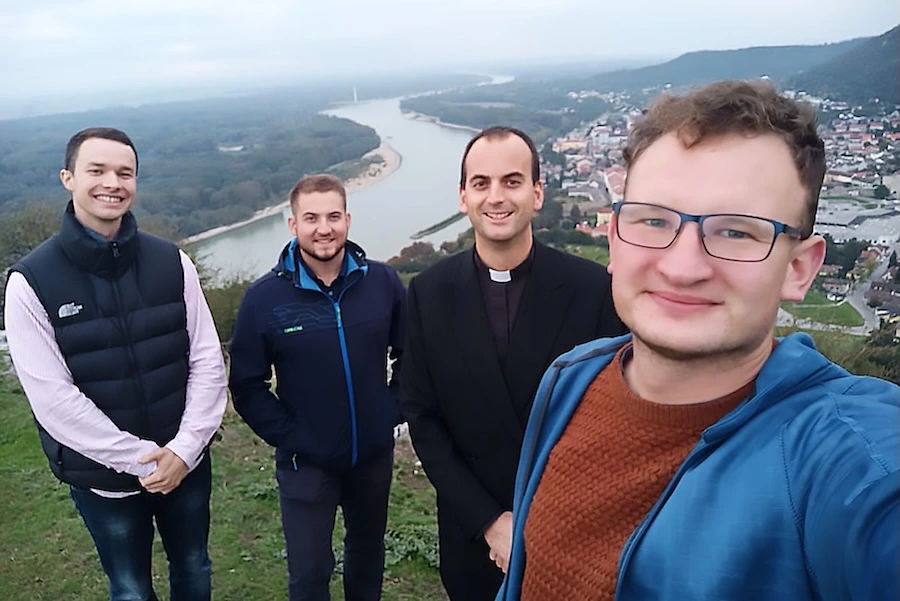
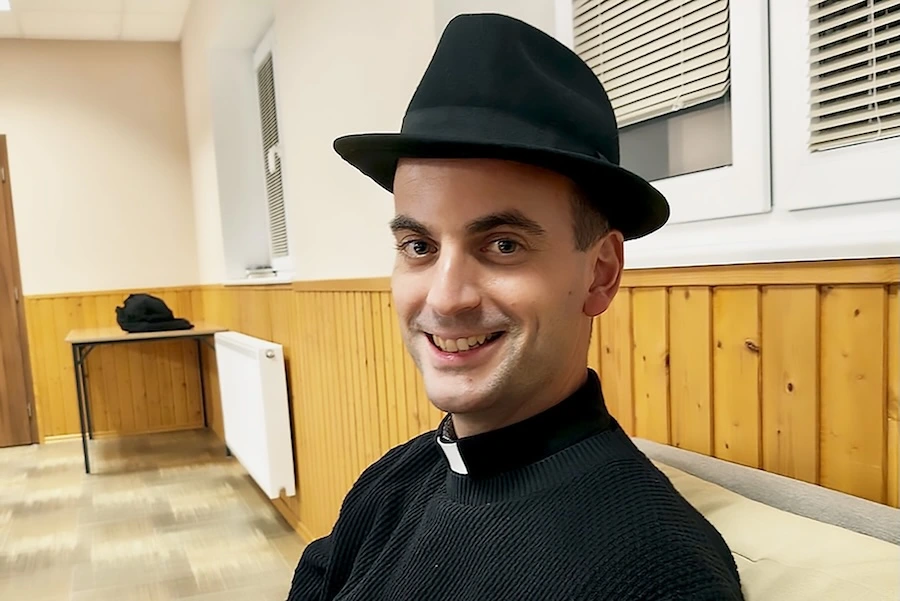
Slovak priest P. Štefan Kavecký, Legionary of Christ, The mission of Regnum Christi is carried out between Vienna and Bratislava, promoting Regnum Christi initiatives such as the Power youth program and the Mies to community project. His vocation was born in a Slovakia marked by the faith lived after communism and today is expressed in an evangelization shared with lay people and volunteers.
A faith of resistance in a post-communist environment
Father Štefan grew up in a Slovakia that still felt the wounds of the communist regime. His parents lived a guarded, restricted, sometimes clandestine faith. He recalls stories of Bishop Ján Chryzostom Korec, who served as a bishop in secret while working during the day and being watched by the police. Faith could not be lived publicly; Christian literature circulated in very discreet, subway copies.
In his family, however, faith was a daily experience: prayer together, Mass in the family, service as an altar boy from the age of four. At the age of seven, he thought about the priesthood for the first time. It was not a passing intuition. It was a seed that went through his adolescence, the apostolate in the ECYD, spiritual accompaniment and a long process of discernment.
The path was not linear. There were doubts, cultural clashes, ecclesial crises, unanswered questions. During the most difficult years he understood something decisive: it was not just a matter of “doing something for the Lord,” but of loving him. “He is the love of my life,” he came to say in the midst of this journey of discernment.
God also acts in fragility
A month-long retreat in Rome in 2015 marked the turning point. As he reviewed his story, he discovered a constant thread: God had never left him alone. Each stage, each decision, each person were like pieces of a mosaic. If one was missing, the whole was not understood.
That experience left him with a conviction that continues to mark his ministry today: God also works through persistent fragility. Not from evident strength, but from the ways, the limitations and those small accumulated fidelities.
Upon his ordination to the priesthood in December 2017, that awareness did not disappear. On the contrary, it became more real. Over time he has learned that the inner fire is not always an intense flame; sometimes it is just a smoldering wick. But the real fire is not his own, but that of the heart of Christ.
Between Vienna and Bratislava: two scenarios, the same call
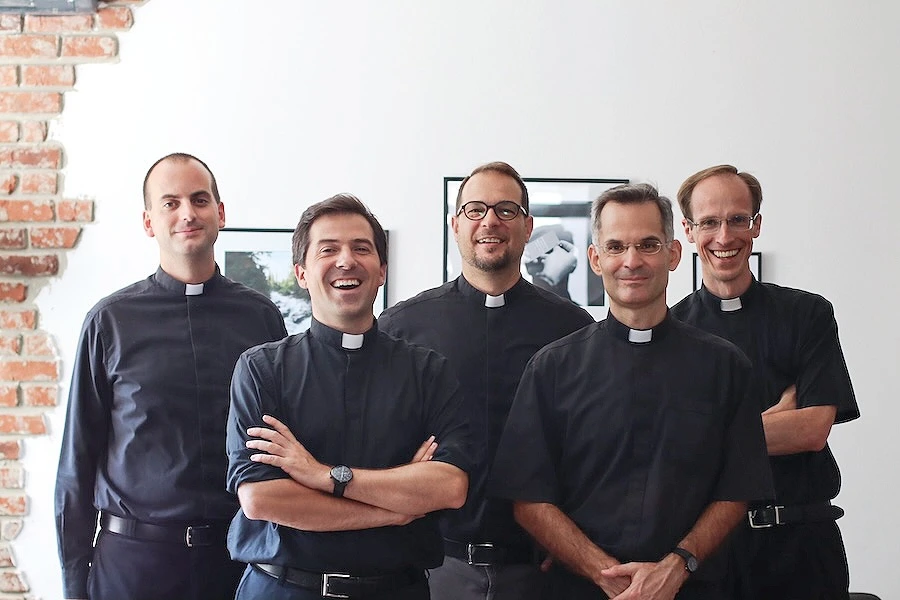
Today his life is divided between two cities: Vienna - where the Legionaries of Christ community lives - and Bratislava, where he fully develops his apostolic work in Regnum Christi.
Vienna reflects the complexity of a large European capital: multicultural, religiously plural, structured, organized. In a public school, many children do not belong to any denomination; Muslims outnumber practicing Christians. Bratislava, while maintaining a culturally Catholic majority, is also undergoing an accelerated process of secularization, especially in the capital.
For Father Štefan, it is not a question of comparison, but of integration. Vienna offers structure, professionalism, regularity. Bratislava offers spontaneity, youthful dynamism and strong volunteerism. The mission needs both dimensions.
Community and mission: a Church learning to walk together
In Bratislava, Regnum Christi is organized around two pillars: community and mission. The community includes members, volunteers committed for specific periods of time and teams that support specific projects. It is not like a traditional parish or a stable Sunday community; rather, it is a living network that gathers around formative and apostolic initiatives.
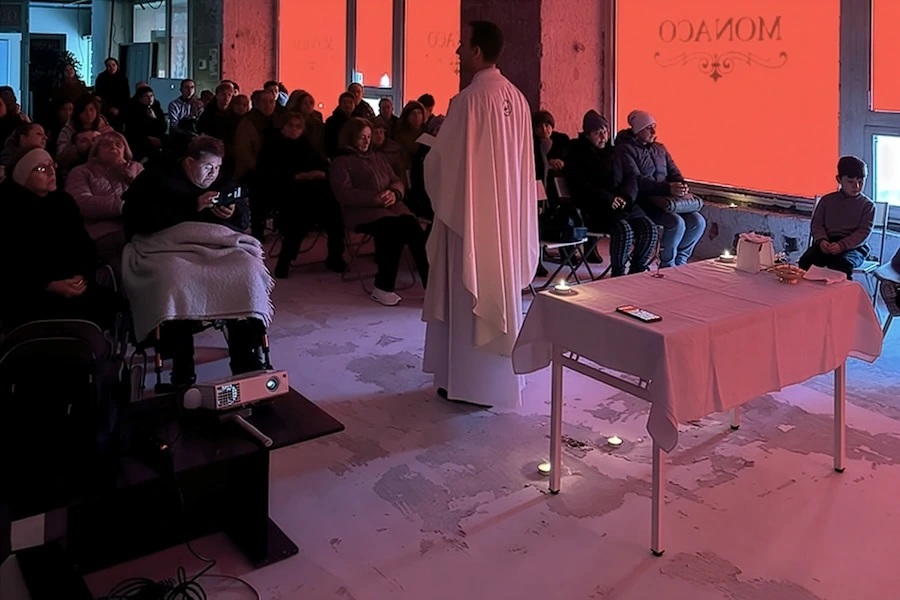
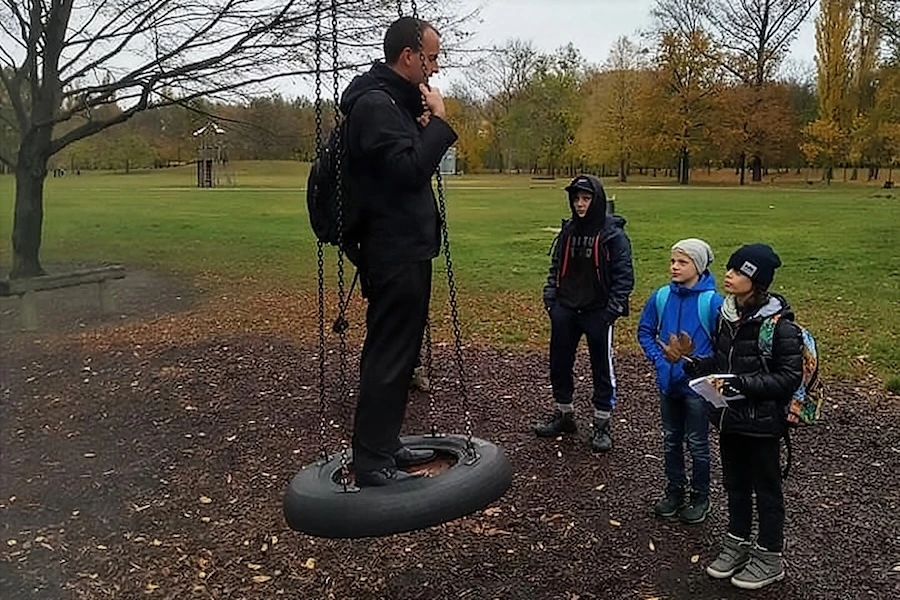
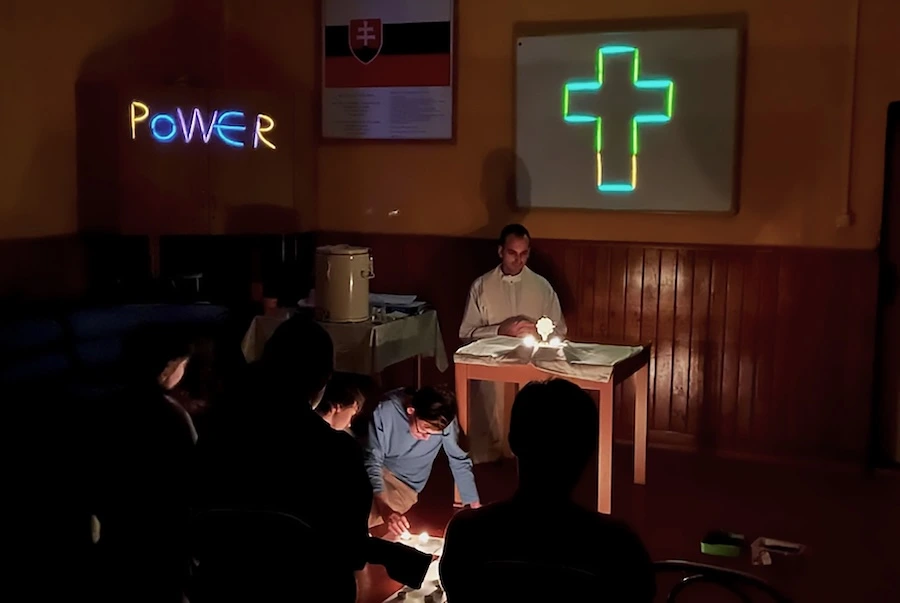
Among the evangelization objectives are the Power program for children and adolescents, which is part of the ECYD apostolate, the training camps and, in a special way, Mies to (The Place), a former casino that is being transformed into a space of encounter, inspiration and commitment.
Mies to represents much more than a material work. It is a concrete attempt to incarnate a missionary and synodal Church: an open place where faith can be made visible in service, in shared responsibility and in initiatives that involve many.
Mies to
The initiative is based on a simple conviction: kindness and solidarity grow where people can meet, inspire each other and commit to concrete actions in their environment. That is why, Mies to articulates its proposal around three interconnected pillars.
The first pillar is the creation of an accessible and flexible space. The project seeks to provide functional and welcoming environments - from quiet areas for reflection to rooms for workshops or community events - capable of adapting to both informal gatherings and intergenerational activities.
The second pillar is an inspirational program. It includes discussions, creative workshops, spiritual experiences and cultural proposals, all inspired by values such as dignity, service, forgiveness and joy. The aim is to foster personal growth and help participants discover their talents and develop greater sensitivity to the needs of others.
The third pillar is concrete opportunities for solidarity. In addition to training and meetings, the project promotes volunteer activities aimed at generating a positive impact on the local community, from supporting families in difficulty to environmental initiatives or accompanying young people.
By integrating space, training and solidarity action, Mies to aspires to become a community reference point: a place where the relationship with God, self-care and commitment to others are translated into concrete initiatives at the service of the environment.
The community of envoys
While accompanying these processes, Father Štefan develops a doctoral research on what he calls “the community of the sent ones”. The question that motivates him is: do we really live as co-responsible for the mission?
The first results show that this awareness still needs to grow. It is not enough to organize activities; it is necessary that each baptized person recognizes that he/she is sent. The mission does not belong to the priest alone, nor to a small committed group. It is the task of everyone.
This step - from spectators to protagonists - is one of the great challenges in a context in which faith often takes a secondary place to study, work or social life.
Learning with patience in the midst of limitations
The reality is not so simple: more than a hundred events a year, limited resources, a heavy dependence on volunteers and he is the only Legionary of Christ priest in the city.
Father Štefan recognizes his biggest personal challenge: impatience. I wish the projects would grow faster. But the mission does not keep pace with our expectations. He has learned to accept the pace of others and to trust that true growth is interior rather than visible.
A bicycle accident and a stay in the hospital reinforced that lesson. In enforced silence he experienced Christ's faithful presence, not in a spectacular way, but in a constant way. This is how he describes God's action today: silent, patient and sustained.
Making Jesus visible
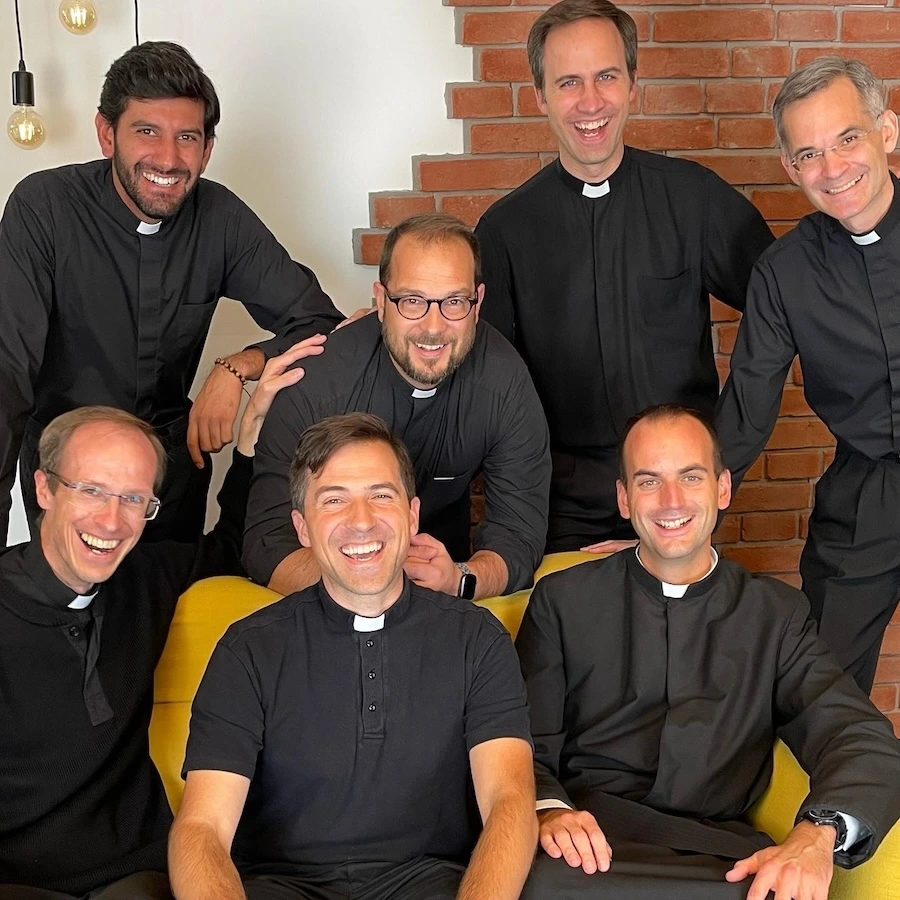
When asked what being a priest means to him, his answer remains simple: to seek to make Jesus visible.
He has experienced it in concrete encounters: a confession of someone after 25 years away from the Church; a young person who matures and assumes responsibility in the Power program; a mother who tells him that her son is now a different person. These are discreet signs, but very real.
His wish for Bratislava is clear: that Mies to to consolidate itself as a living space where people encounter God and experience the Church as an open home; that lay commitment grows; that vocations arise; that the mission becomes more and more shared.
Basically, his personal history and his pastoral work converge in the same intuition: to be a missionary Church today does not mean having all the answers or great certainties, but trusting that God continues to act through fragility; that persistent fragility that, paradoxically, defines his way of acting.