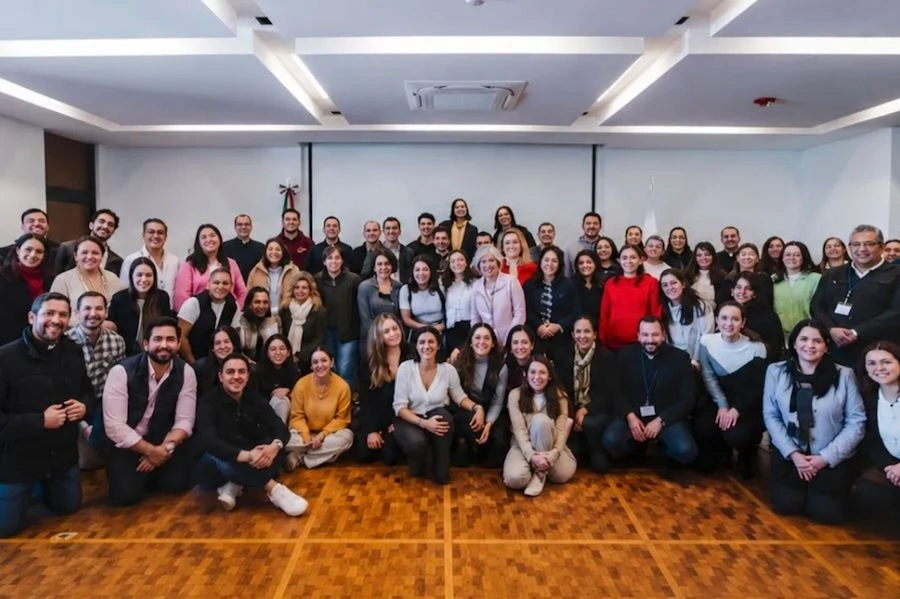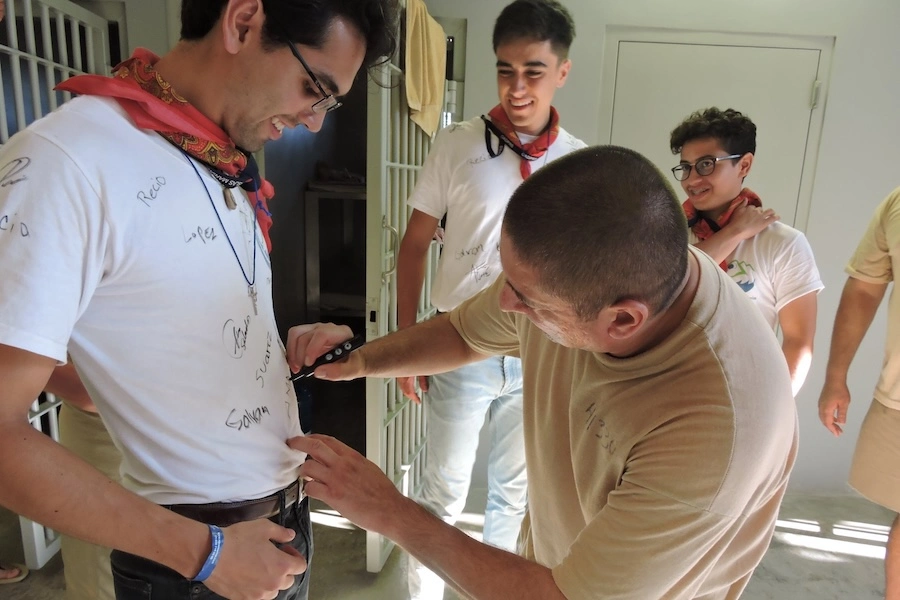
The Church celebrates andhe Jubilee of Prisoners this December 14. The inside of a prison is a territory that few dare to cross. There, where freedom seems to have stopped, Fr. Arturo Guerra, L.C., has discovered by various years the possibility of meeting, the lack of dignity human, and the hope that is reborn andto human brightness that deprivation of freedom does not turn off. Your experience - born among young university students, trips to the Islas Marias, missions in Mexico, Belize and Italy - is a testimony that Jesus continues to dwell on the margins, waiting to be looked at, embraced and accompanied. ¿Qhat moves a priest legionary of Christ to board a ship for nine hours to reach a prison; how a volunteer is transformed by hearing the thanks of someone who thought himself worthless? De behind every history there is a face, a name, something that us remember that mercy never ceases to open roads.
P. Arturo, ¿qhat motivated him to bring missions to such an isolated place as the prison in thes Islas Marías, Mexico?
In 2005, being in contact with young people in the apostolate a small project was born of young volunteers who would teach a radio workshop in a prison of minors in the surroundings of Barcelona, Spain. There I could see the profound good that could be done mutually young university students and the young people deprived of their freedom when meeting with a open heart.
Later, working in Mexico, the idea of doing missions in the Islas Marías came spontaneously because it I have alwaysThe stories that had impressed them weret is the «Father Trampitas» counted. The Islas Marías are in the Pacific Ocean, off the coast of the state of Nayarit, Mexico, about 112 km from the mainland. The complex is made up of four main islands and some islets. The Islas Marías ceased to function as a penitentiary center in February 2019, when the federal government decreed its definitive closure. Today they are a space dedicated to environmental education and conservation.
But back to the pHe was a prisoner in the Marias Islands, when the Islas Marias was still a penitentiary center. He fue a Jesuit priest who lived more than 30 years in the Marías Islands as a voluntary prisoner. The «voluntary prisoner» took it so seriously that when Pope John Paul II visited Mexico for the first time in 1979, it did not reach him. He received permission from the authorities to go to one of the cities where the Pope was going to visit, so he lived together with the people deprived of their freedom during the papal visit, which was broadcast on television.. By the way, the padre Trampitas asked to be buried in the Islas Marías by the tomb of El Sapo, so on every mission we visited the tomb from padre Trampitas, and that of «El Sapo».
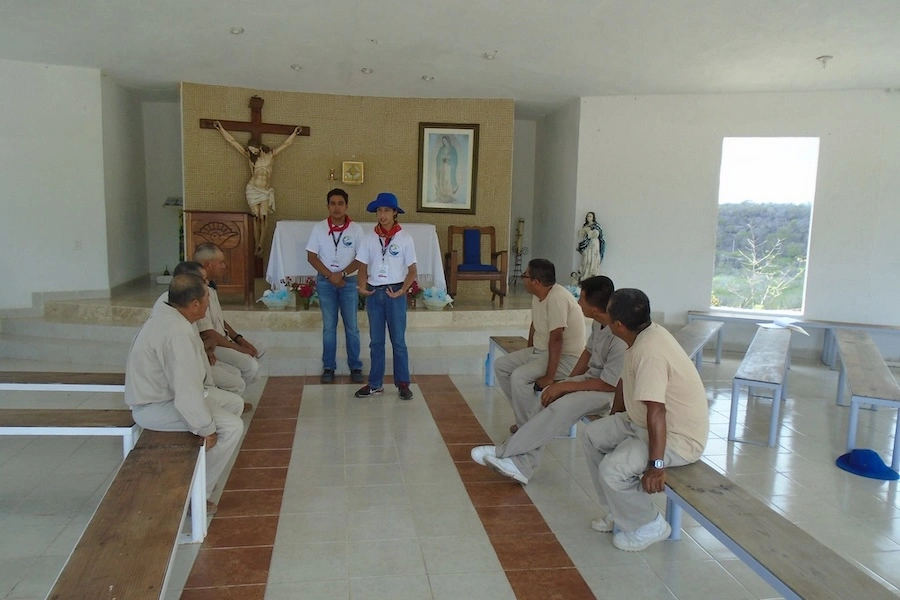
El Sapo is a character from the middle of the 20th century, known for his more than 100 homicides. He spent some time in the Lecumberri prison and then was transferred to the Islas Marías where he met Father Trampitas. In the Islas Marias, he went through a very beautiful process of radical conversion, in a gradual path of grace, God's mercy and his response. In fact, El Sapo confessed to Father Trampitas, his great friend by then. El Sapo promised never to kill again, not even in self-defense. Some time later he was killed among the hills of the Islas Marías and was buried there in the cemetery of the old hacienda that existed before the island became a prison.
How would you describe the process of spiritual and human preparation that you went through?at young people before leaving?
It is important to arrive prepared. This volunteer project is always open to young believers and non-believers. For those who go to with the eyes of faith is a strong experience to find Christ who is hidden in those who are deprived of their freedom. And for those who are moved by a sincere, authentic, open and generous desire to learn and to help as much as possible, leaving aside the labels of whether or not «I am free and you are not», or if «you have not had problems with the law and I have.», o «if I don't believe and you do», We discover that we are all human beings who walk, who sometimes succeed and sometimes fail, who fall and get up and learn. very much of each other's varied and plural life experiences. Of course, the Lord always makes himself present in his own way in every mission..
What was the most challenging thing about leaving the routine behind and entering into such a different context?
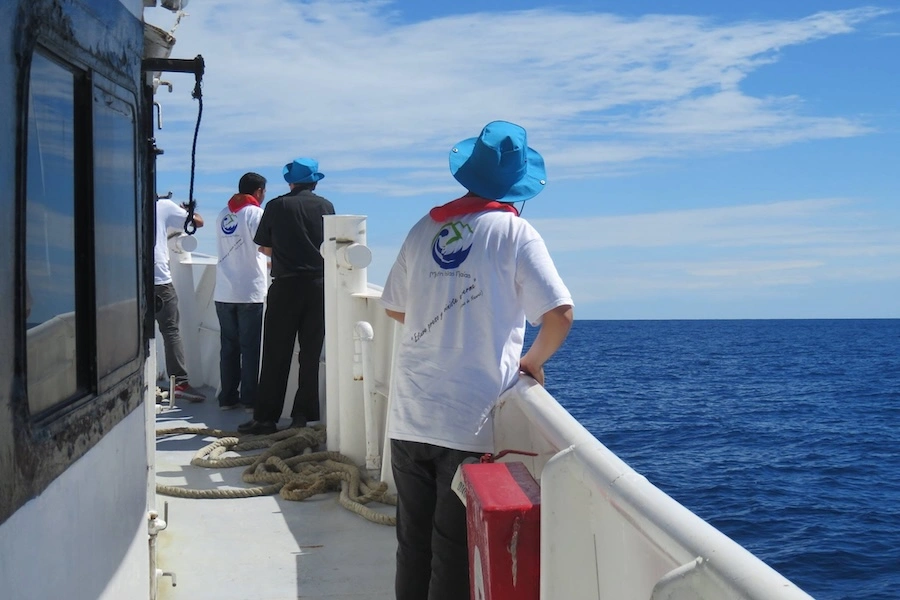
In the case of the Islas Marías, the following was taken often a ship that was making aas nine hours of travel. We left Mazatlan and crossed a “little part” of the immensity of the Pacific Ocean in all its beauty: we could go through sun, rain, and rain, calm sea, restless sea, wind, sunrises and sunsets, fog, sunrises and sunsets, rainbow, gulls, dolphins and turtles... Everything very beautiful, yes, but those nine boat hours, nine one-way and nine back, let you physically exhausted and with a considerable longing to set foot on solid ground as soon as possible, both on the outward and return journeys.
How do young people react when they encounter a reality so different from their own?
Volunteers usually arrive with a heart always generous and in a mixture of curiosity, a bit of fear and nerves and the The question of whether or not they will succeed in being good volunteers who help people deprived of their liberty. The interesting thing about these missions is that all.s estncertainties, fears and nerves usually evaporate after a few minutes. littles minutes of the primncounter with persons deprived of their liberty.
How did the prisoners receive the young missionaries? Was there surprise, resistance or openness from the beginning?
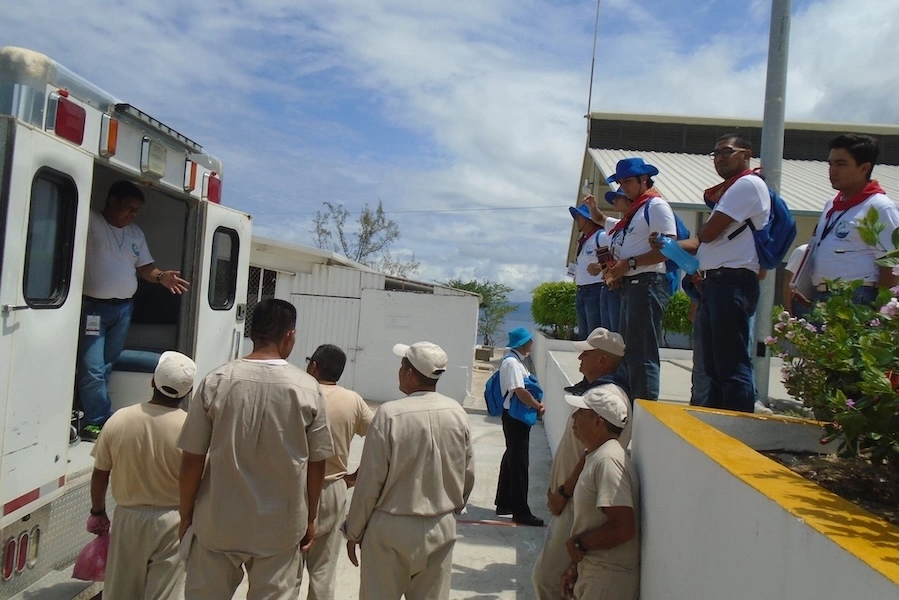
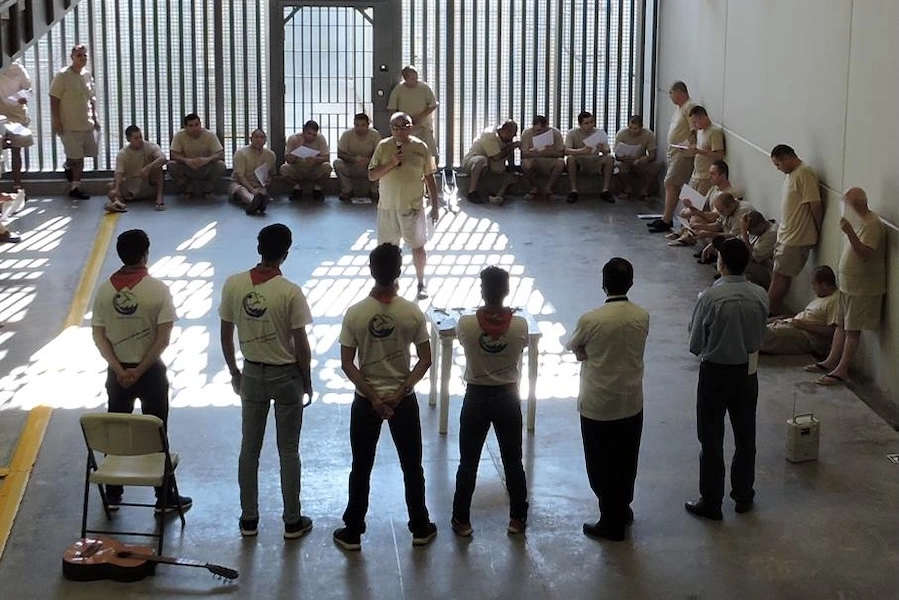
For its part, persons deprived of their liberty usually arrivesr with a heart very open, The expectation of the expectations is mixed with the curiosity of knowing who they will be and what they are coming for, and the doubt of whether what they will offer will be boring or not.. Ehe ice usually breaks up very quickly on both sides and then begins a few days of human, spiritual exchange, cultural, gastronomic, recreational, enormously enriching.
Can you share a specific experience that lo has deeply marked in this type of mission?
On one occasion, at one of the Islas Marias camps, at the end of a morning of activities, a young boy deprived of his freedom, took the floor and said to all of us in a voice that said clara and decided more or less as follows: «I came this morning to its activities only because I was convinced by a colleague to come, but before I came here thought en what little I am worth, in that no one cares about me, that what I do is useless, that those of us who are here are forever labeled as criminal people. and without remedy; but now, after these moments spent with you, I realize how wrong I was and I can only tell them, ¡thank you very much for coming from so far away to visit us.!».
Are there any significant stories of transformation or hope experienced by the prisoners during the mission?
Once in an Italian prison, a young woman told us and thanked us very much and said that when he finished his sentence and returned to his country, would find the time to do the same thing our group of volunteers did with her. On that occasion, we gave a training course in journalism workshop, given that among the volunteers were a good number of students of communication; So she was determined to visit people deprived of their liberty in your country and give them a similar workshop.
What fruits have you seen in the young people who participated, years after the experience?
Young people often struggle with the decision to join or not to join this volunteer program. Reasons not to go, there are many. But once they make up their minds, everything else flows. I have never seen a young person who, at the end of the experience, has repented of gone. Rather leaves a deep and indelible mark. You learn to see life, events, people, problems, challenges and joys with new eyes. When a adult deprived of his or her freedom says from the heart looking volunteers in the eye: «Now that you are back home, hug your parents and please listen to them; not like me who did not want to pay attention to them», can be observed among young people over a lump in the throat or a pair of eyes on the verge of tears.
What place does it occupy today istto experience missionary in his priestly life and in his faith?
You grow and learn enormously in each mission. When you have never been in a prison, you tend to think that inside you will only find hard, unfeeling, self-paying people who are waiting to serve time to continue doing the same things they did before. What I have seen and perceive, mission after mission, is that for a considerable number of people, the harsh experience of imprisonment leads them to take a step back in their lives and to begin a difficult but determined process, deeply human, authentic and beautiful, of becoming aware of the evil done (when it has been done), of concrete desires to repair the evil as far as possible, of assuming one's responsibilities without falling into the temptation of victimhood, of looking to the future with hope and of opening oneself to the God of forgiveness with childlike simplicity.. They are people who achieve a certain wisdom, peculiar common sense and enthusiasm and end up spreading all these good things among their fellow inmates without realizing it.