In the name of the Father and of the Son and of the Holy Spirit.
Amen.
Christ, our King.
Thy Kingdom come!
Preparatory prayer (to put me in the presence of God)
Jesus, you invite me to a moment of prayer with you, help me to deepen with you your living Word. May the Holy Spirit enlighten me so that I may discover your message in my heart. In you I trust.
Gospel of the day (to guide your meditation)
From the Holy Gospel according to Mark 15:33-39; 16:1-6
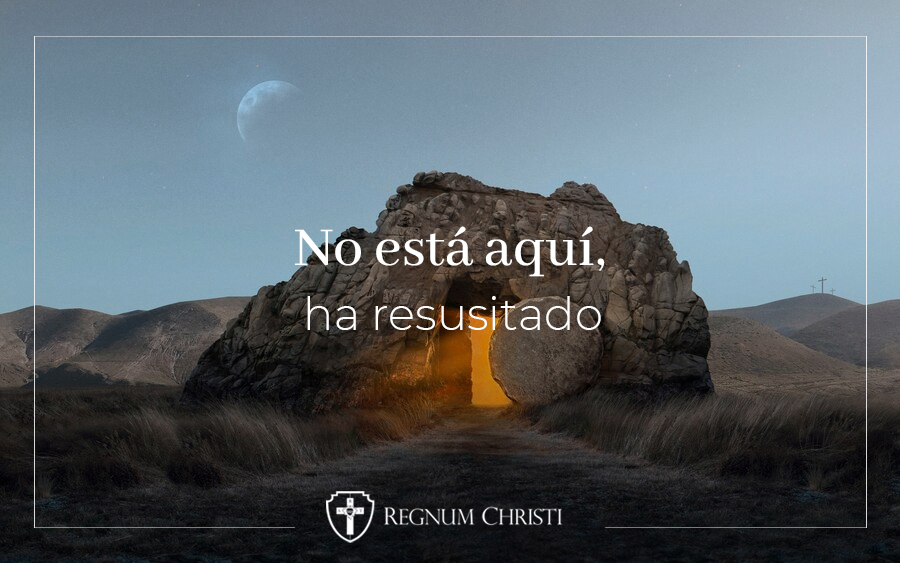
Al llegar el mediodía, toda la región quedó en tinieblas hasta media tarde. Y, a la media tarde, Jesús clamó con voz potente: “Eloí, Eloí, lamá sabaktaní”. (Que significa: “Dios mío, Dios mío, ¿por qué me has abandonado?”) Algunos de los presentes, al oírlo, decían: “Mira, está llamando a Elías.” Y uno echó a correr y, empapando una esponja en vinagre, la sujetó a una caña, y le daba de beber, diciendo: “Dejad, a ver si viene Elías a bajarlo.” Y Jesús, dando un fuerte grito, expiró. El velo del templo se rasgó en dos, de arriba abajo. El centurión, que estaba enfrente, al ver cómo había expirado, dijo: “Realmente este hombre era Hijo de Dios.”[Pasado el sábado, María Magdalena, María la de Santiago, y Salomé compraron aromas para ir a embalsamar a Jesús. Y muy temprano, el primer día de la semana, al salir el sol, fueron al sepulcro. Y se decían unas a otras: “¿Quién nos correrá la piedra de la entrada del sepulcro?” Al mirar, vieron que la piedra estaba corrida, y eso que era muy grande. Entraron en el sepulcro y vieron a un joven sentado a la derecha, vestido de blanco. Y se asustaron. Él les dijo: “No os asustéis. ¿Buscáis a Jesús el Nazareno, el cruci ficado? No está aquí. Ha resucitado. Mirad el sitio donde lo pusieron.”]
Word of the Lord.
Meditate on what God tells you in the Gospel
Today we remember the “Faithful Departed”. Indeed, we remember all our loved ones who have departed this life to meet God. We commend them to his mercy, we pray that the Lord of life will grant them eternal rest, where life no longer perishes. We miss our deceased, especially those who have marked us in our hearts by their kindness, dedication, affection and teachings. I wonder what it must have been like to miss Jesus when he ascended to heaven, and all those who saw him, those who shared with him his words, his miracles and teachings, suddenly did not see him anymore, only the still fresh memory of all that happened. And as the years went by, that first Christian community discovered his loving presence in his Word, in the breaking of the bread, in the early Church. It was already an experience of faith, that death does not have the last word.
That faith in Christ and in his Word is what should also move us to remember our deceased relatives, to pray for them and to honor them with a life according to the Gospel. And we can still go a step further. If we have the opportunity to go and bring flowers to our deceased, there where their remains rest, we will surely come to see very abandoned places, unknown to us but which are undoubtedly someone's family. Deceased to whom nobody asks for them anymore, nobody brings them a flower, and it can be for many reasons: forgetfulness, illness (they cannot go by themselves), physical remoteness (they live in another city or country), etc., but prayer has no borders and knows no strangers; and we can also commend in our prayers these forgotten and abandoned deceased.
Something very important is that remembering our deceased, and praying for them, should not be an occasion for discouragement or hopeless sadness. On the contrary. Remembering them should be a motive of hope in the Resurrection, of strength on the road, knowing that the crown of victory awaits us if we live in Christ, that we should take advantage of every moment to build our future in eternity. In what dwelling place in heaven would I like to live? That dwelling is being built today.
«Estas palabras, hermanos y hermanas, acogidas con fe, hacen que la oración por nuestros hermanos fallecidos sea verdaderamente cristiana. También nos permiten tener una visión más real de su existencia: comprender el sentido y el valor del bien que han hecho, de su fortaleza, de su compromiso y de su amor desinteresados; comprender lo que significa vivir aspirando no a una patria terrena, sino a una mejor, es decir, la patria celestial (cf. Hb 11,16). La oración en sufragio por los difuntos, elevada en la confianza de que viven con Dios, extiende así sus beneficios también a nosotros, peregrinos aquí en la tierra. Nos educa para una auténtica visión de la vida; nos revela el sentido de las tribulaciones que debemos atravesar para entrar en el Reino de Dios; nos abre a la verdadera libertad, disponiéndonos a la búsqueda continua de los bienes eternos»
(H.H. Francis, Homily November 5, 2020).
Dialogue with Christ
This is the most important part of your prayer, prepare yourself to talk with much love with the One who loves you.
Purpose
Propose a personal one. The one that involves the most love in response to the Beloved... or, if you believe that this is what God is asking of you, live what is suggested below.
Nunca es tarde para empezar. Si no lo hemos hecho, pidamos hoy por nuestros familiares difuntos y hagamos esto una práctica. Recordemos en la oración frecuentemente a nuestros familiares difuntos.
Farewell
We thank you, Lord, for all your benefits, you who live and reign forever and ever.
Amen.
Christ, our King!
Thy Kingdom come!
Most prudent Virgin, Mary, Mother of the Church.
Pray for us.
In the name of the Father and of the Son and of the Holy Spirit.
Amen.