What happens when a concern born among young people becomes, almost without seeking it, a missionary experience in one of the poorest countries in the world? What remains when language is not enough, the culture is different, and faith is lived in a minority? Based on an initiative promoted by young people from Regnum Christi in Mexico, a small group spent July 2025 on a mission in Sierra Leone, on the African continent, which confronted them with poverty, fragility, and, above all, with the silent power of charity as the universal language of faith.
Fr. José Pablo Poblete, a 35-year-old Chilean Legionary of Christ, has been working with young people in Mexico for four years. From that closeness came a proposal as direct as it was unexpected: to go beyond the usual missions and take a step further. The idea arose in December 2023, when a young man in charge of missions in the Guadalajara Sur section proposed traveling to Africa. There was no specific country or concrete plan. Only the desire to live a demanding experience, one that would leave a mark.
That same day, something decisive happened. Upon returning to his community, Fr. Poblete shared the conversation, and his superior told him that a relative had been a missionary in Sierra Leone and, without further ado, offered him her contact information. The coincidence — the concern expressed in the morning and the concrete possibility that opened up that same afternoon —was seen as a confirmation. From then on, the project ceased to be a generic idea and became a possible path.
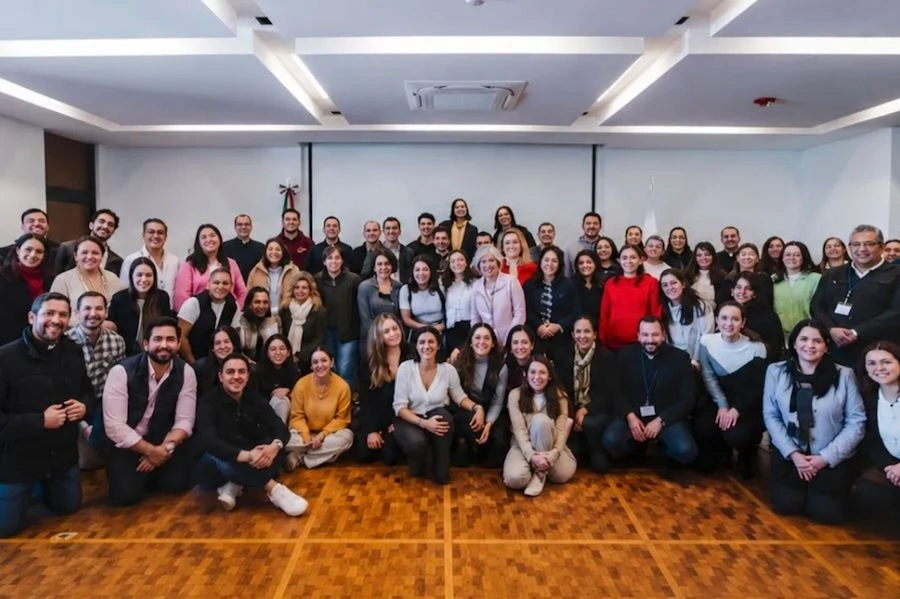
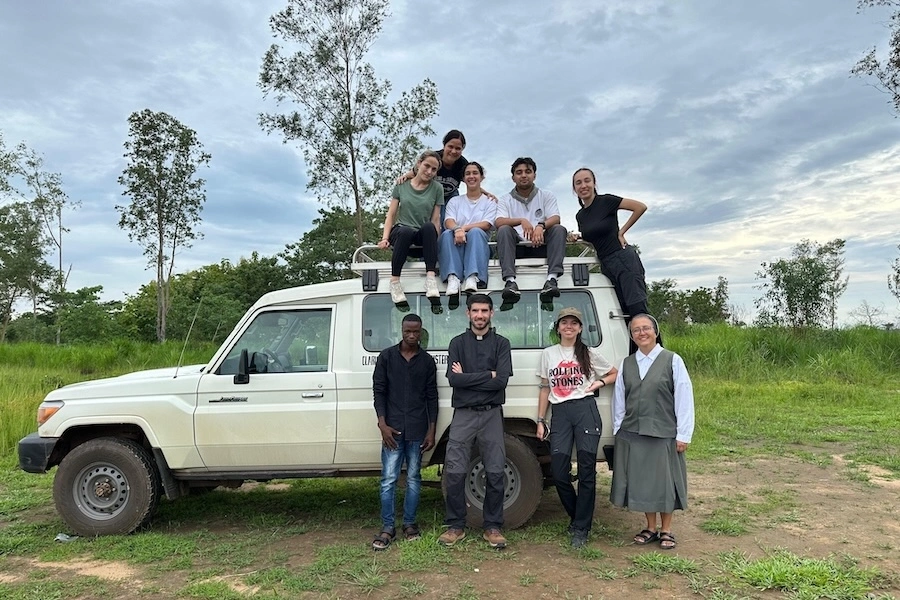
The contact led to a community of Poor Clare missionaries in Sierra Leone, who welcomed the proposal with one clear condition: the mission had to last at least fifteen days for the experience to be real and not superficial. Finally, after nearly a year of preparation and recruitment, seven people traveled from July 1 to 16, 2025, to the city of Lunsar, in the interior of the country, about three hours from Freetown.
A Church on the front line, sustained by the essentials
Lunsar is a city of about 40,000 inhabitants, mostly Muslim, whose living conditions are extremely precarious. There is no stable electricity grid, and daily life depends largely on sunlight. The missionary community that welcomed them is made up of fourteen sisters — Mexican, African, and one Japanese nun with decades of presence in the country — who support an educational project with more than 1,200 girls, in addition to ongoing pastoral work with local communities.
The missionaries have a few solar panels that, only when the sun is shining, allow them to charge basic batteries: turn on a couple of fans at night, store some food in a small refrigerator, wash clothes, or charge a phone. When it rains, there is simply no power. Heat, humidity, and darkness are part of the daily routine.
Food is very limited. During the seventeen days of the mission, the group followed the usual local diet: rice, vegetables, and, on rare occasions, some pasta. Meat is practically non-existent; they only eat chicken on rare occasions. Even though they were generously cared for by the sisters, they experienced what most of the population experiences: hunger and a constant feeling of scarcity.
That experience, although it only lasted 17 days, gave them a glimpse of the permanent reality for those who live there. Poverty is not a temporary circumstance, but a structural condition that particularly affects children: lack of food, frequent illnesses, high infant mortality, and very limited access to medical care.
In this context, the mission was a true immersion. It included collaboration in the school, support for the parish, visits to other educational communities, and weekly trips to the jungle to proclaim the Gospel. More than an added activity, it was a way of sharing — albeit briefly and partially —the same living conditions faced by the local population.
Sierra Leone is among the countries with the lowest human development indicators. This reality cannot be understood solely through figures or general diagnoses: it is evident in the fragility of health, the precariousness of food, and the scarcity of resources that mark daily life.
Charity as a common language, beyond languages and religion
In a predominantly Muslim context, evangelization did not take place through elaborate speeches, but through simple gestures. The first challenge was even the language. Several languages coexist in Sierra Leone: English — a colonial legacy and the official language —, Krio, spoken by a large part of the population, and Temne, predominant in rural areas and in the jungle.
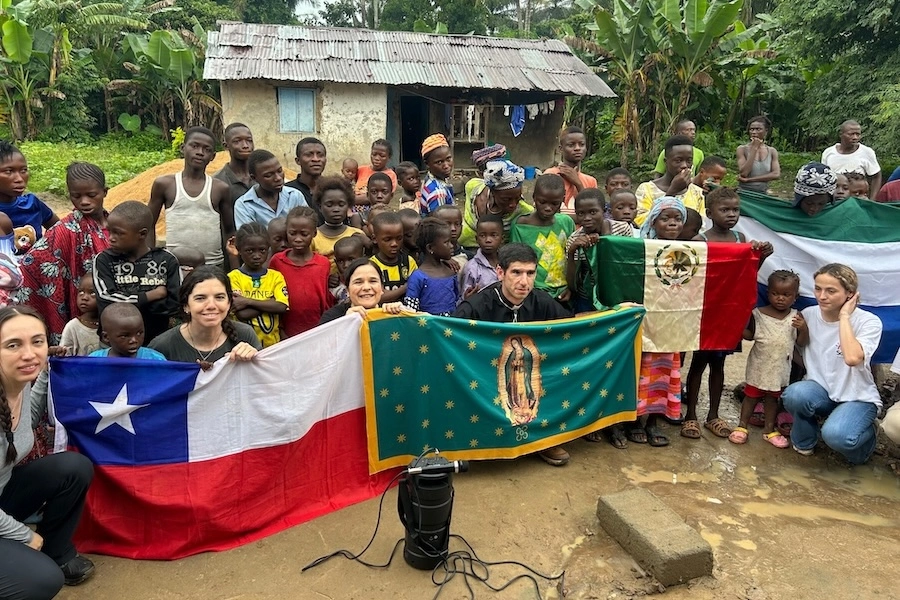
During visits to communities outside the city, the group proclaimed the Gospel through the parable of the Good Samaritan. The message was proclaimed in English and translated into Temne by an interpreter; in other contexts, some of the sisters did so in Krio. While the passage was being narrated, the missionaries acted it out in a theatrical performance.
The reaction was always the same. Children and adults, regardless of the language they spoke, easily identified who had done the good deed. That experience was revealing: when words are insufficient or require mediation, charity becomes understandable to all.
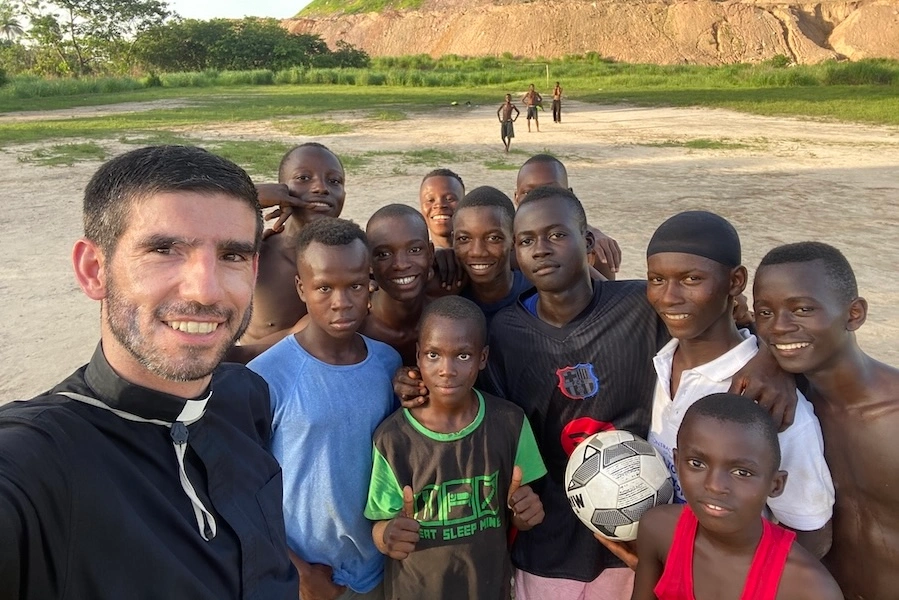
That observation was repeated over and over again: charity transcends languages, cultures, and religions. From there, the doors opened to dialogue, shared prayer, and closeness. Simple gestures—playing soccer, sharing sweets, dancing together—became real spaces for encounter.
Faces that remain, in shared vulnerability
Among the experiences that marked the mission, there are some that cannot be forgotten. One of them was the encounter with a little girl who, after suffering from severe malaria in childhood, was left with serious physical sequelae. Her family, without resources, often left her at school so that she could eat at the sisters' house. The nuns accompany her, feed her, and help her stay in the education system, even though they know they cannot radically change her destiny.
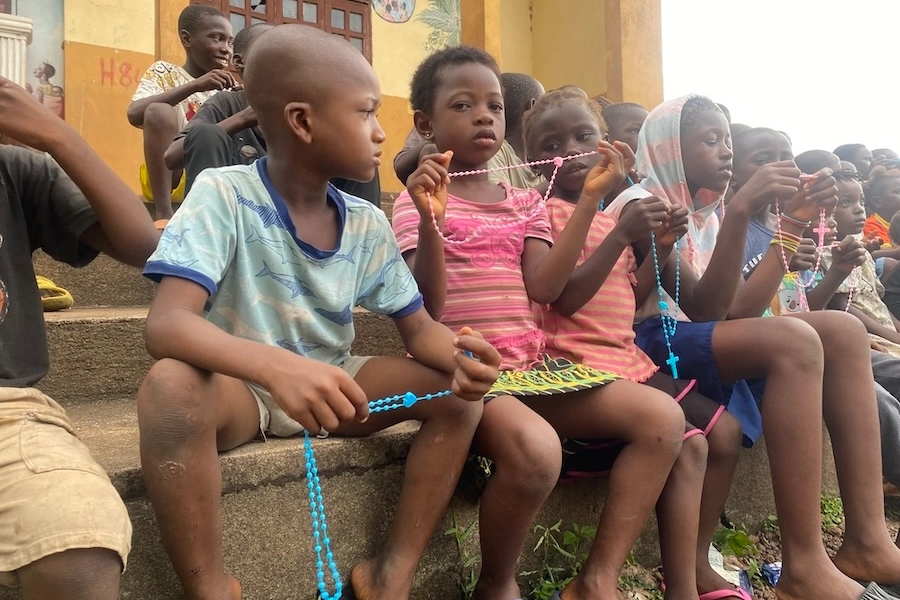
There, perhapsit is not a question of saving the world, but of saving someone's whole world, like the life of that little girl. That concrete, silent, and constant logic defines much of the daily missionary work.
Walking with the Virgin through the streets of the village: prayer and mission
The arrival in the country was also recorded as a sign. The group traveled from Mexico to Belgium and, from there, took the only regular European flight to Sierra Leone, a route that only operates every few days. After landing in Freetown and traveling several hours by road Lunsar, theywere welcomed by the Poor Clare missionaries with songs and drums.
The welcome was not just a cultural gesture. Among the songs, the sisters sang La Guadalupana, accompanied by the rhythm of African drums, spontaneously uniting two worlds and two traditions in the same act of faith. After that first encounter, the community took them directly to the chapel.
There, before the tabernacle, the silent presence of Christ marked the true beginning of the mission. Even though they were far from home, in an unknown and demanding country, the light burning next to the altar offered a shared certainty: the mission always begins with adoration and communion.
This experience in Sierra Leone was not an isolated anecdote or an improvised initiative. It arose from a shared concern, was confirmed through discernment, and was sustained by a missionary community that has been carrying out evangelization missions for years. It is an experience that reminds us that, when it comes to mission, charity remains the first language and the most eloquent criterion.