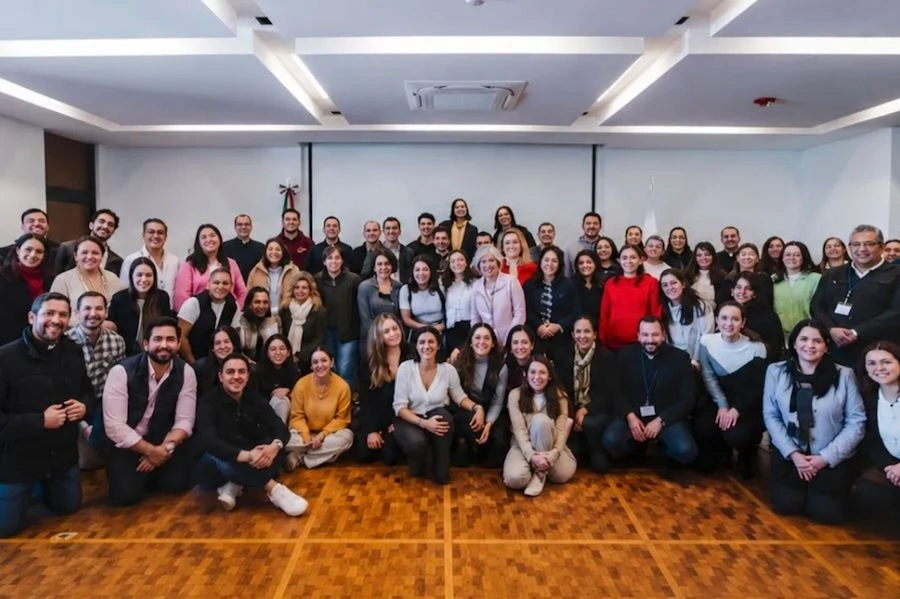
The School Network Regnum Christi in Chile and Argentina, with more than three decades of educational experience, has become a network that not only offers an academic education, but also seeks the integral formation of its students. with the values of the Catholic tradition. Through an educational model rooted in faith and oriented to the service and formation of apostles, these schools are presented as spaces where the educational community grows united under the same purpose: the transformation of the community. la company from the values of the Gospel.
La Network of Schools Regnum Christi in Chile and Argentina presented its annual report 2024, wheree details the actions and achievements during the year, as well as the experiences shared by directors, educators and members of the community. The report highlights the commitment to the integral formation of students, teamwork, and the importance of evangelization in each of the schools of the network.
The 2024 Annual Report highlights the collaborative work of the 15 schools of Regnum Christi in Chile and Argentina, united by the mission of forming Christian leaders committed to the transformation and evangelization of society, following the Ideology and the Institutional Educational Project. Throughout the annual report, the sustained growth of the Network of Schools is evident, consolidating the joint work of the educational communities and the firm commitment to the integral formation of the students. The Catholic identity, academic excellence, person-centered accompaniment and apostolic spirit are the pillars that distinguish the schools, projecting themselves with hope in the face of new challenges. In addition, it is emphasized that the Ideology and Educational Project are not only theoretical principles, but lived realities in each classroom, in spiritual formation and in the daily life of the educational communities. Finally, the importance of the financial sustainability of the educational project, fundamental to guarantee the continuity and fulfillment of the mission in the long term, is emphasized.
Deaders, educators and community members share their experiences and reflections on the sense of belonging, the integral formation of students and the importance of working together to achieve a hopeful future based on principles catolic.
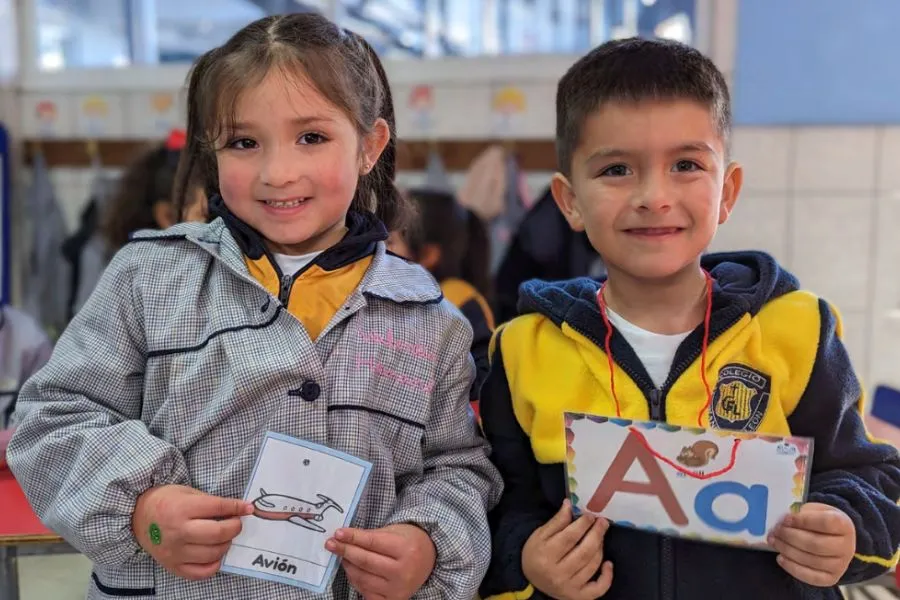
A model educational inspired at the Gospel
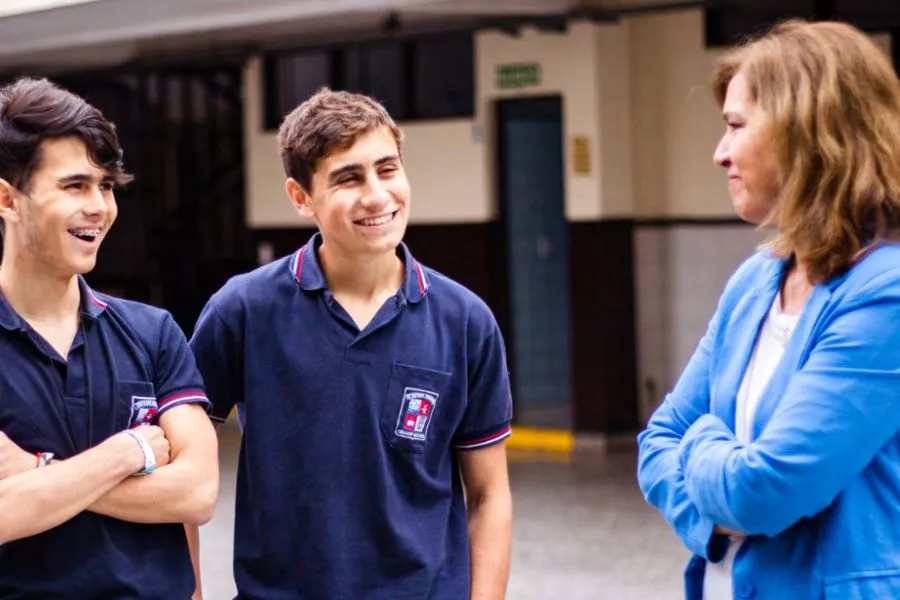
In the words of Alan Wilkins Altamirano, executive director of the Red de Colegios Regnum Christi family of the territory, The mission of these schools is clear: to train apostles who will be able to exercise leadership in their communities.atolic transforming its environment. With a iIn the context of the common agenda, each educational action seeks to lead students to discover the best of themselves, developing their talents with love and putting them at the service of others. This approach, which is based on love and service to God and neighbor, characterizes all the educational centers in the network.
From the beginnings of the Network of Colleges Regnum Christi in Chile and Argentina, in the 1980s, the educational vision of the had a constantThe objective of the program is to form free, mature and committed people of faith. Each of the schools, in their different locations, has followed this mission over the years, generating a solid network of shared learning and growth. In addition to their academic focus, the schools foster a deep sense of community, where the spiritual and human accompaniment of the educators is intertwined with the academic formation. The experience lived in these educational centers not only prepares students to face the challenges of the modern world, but also forms them as authentic apostles, called to bring the light of the Gospel to all corners of society.

The diversity of colegios in Chile
The Red by Colegios is made up of several institutions that, although diverse in their locations and characteristics, share a common the ideario and the mission. From Colegio Cumbres, which began with just 54 students in 1986, to Colegio La Cruz, with more than 30 years of history, each school has forged its own path with the same commitment to excellence and faith. Colegio Cumbres, for example, has gone from being a small institution to become in a consolidated educational community with a clear vision: «We are all Cumbres».
On the other hand, the Everest School, founded in 1995, has also experienced a constant growth. In 2025, the school will celebrate 30 years of history, consolidating itself as an educational reference in Chile. The feeling of belonging is palpable among students and families, who find in Everest a space to be formed not only academically, but also spiritually.
Other schools, such as Colegio San Isidro and Colegio Maitenes, have also stood out for their trajectory in their respective communities. San Isidro, for example, with its first graduating class in 2001, has formed generations of students committed to their faith and service to others, while Maitenes has achieved be a benchmark for education in Melipilla, where the Regnum Christi has played a fundamental role in his spiritual and academic growth.

The commitment in Argentina
The red by colegios in Argentina has experienced remarkable growth since its foundation. From the Colegio Oakhill in Pilar, inaugurated in 2002, to the Instituto Humanista de la Santísima Trinidad in Salta, each school has been characterized by its strong focus on integral formation, betting on a rigorous academic development accompanied by a solid human and Christian formation.
The College Oakhill, in its bilingual mode and with the integration of diverse nationalities in its classrooms has created a multicultural and enriching environment for the students. Colegio Betania, located in Buenos Aires, has also maintained a deep connection with the parish community, which has allowed it to forge a path of faith and commitment in the lives of its students.
Each of the schools in Argentina follows the same pattern of integral formation, seeking to create leaders committed to their faith, capable of transforming society with their talents. These schools not only focus on academic excellence, but also strive to be authentic communities of faith, where the values of the Gospel are lived daily through the sacraments, retreats and apostolic projects that students develop.
The Mano Amiga Schools: formation integral with a commitment social
The schools of Fundación Mano Amiga, both in Chile and in Argentina, represent a fundamental pillar of the at the Network of Colleges Regnum Christi, standing out for their commitment to quality education and social inclusion. Founded with the objective of offering a comprehensive education to children and young people from vulnerable sectors, these schools focus on forming not only academically prepared students, but also people with a strong ethical, human and Christian commitment.
In Chile, Fundación Mano Amiga supports three private subsidized schools: Colegio San Juan Diego in Recoleta, Colegio Santa Teresa de Jesús de Los Andes in Huechuraba and Colegio Santa María de Guadalupe in Colina. Colegio San Juan Diego, for example, started in 1989 with just 32 students in a small wooden building and today educates more than 1.000 students. Over the years, it has grown significantly, and its educational community is deeply linked to pastoral work, focusing on the formation of Christian leaders capable of transforming their environment.
In Huechuraba, Colegio Santa Teresa de Jesús de Los Andes has been serving the community since 1989, and has grown both in infrastructure and educational offerings, which now include a professional technical focus for its students. The founding of the school and its subsequent integration into the Network of Schools Regnum Christi in 2006 strengthened its educational mission, which focuses not only on academic formation, but also on Christian values and pastoral accompaniment of students.

The Santa María de Guadalupe School, in the Colina district, began in 2010 with 95 students and currently has more than 800 students. This school, like the others of the Mano Amiga Foundation, has focused its efforts on providing access to quality education to young people of diverse nationalities and socioeconomic contexts where Christian principles are the basis for coexistence and learning.
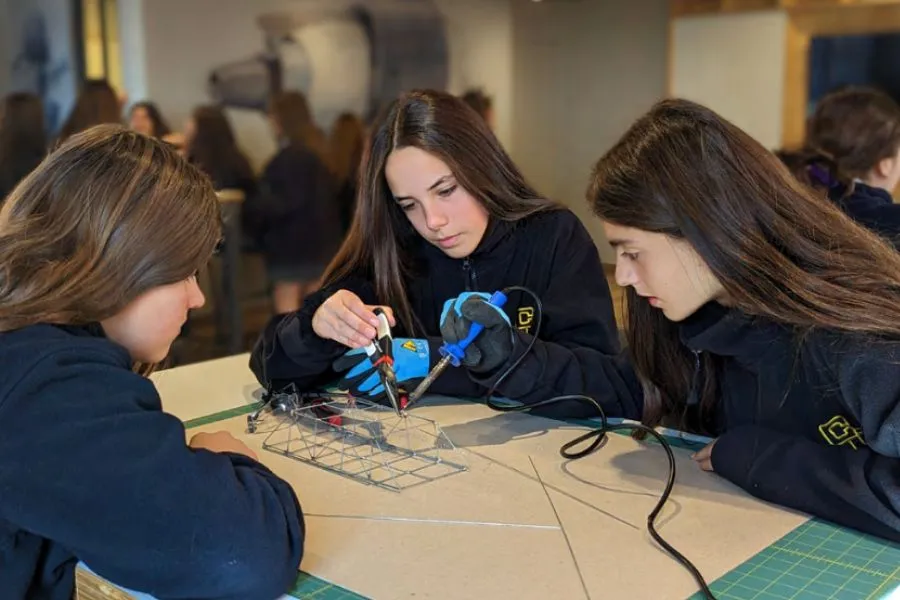
In Argentina, Fundación Mano Amiga has had a similar impact. In Pilar, the Foundation maintains the Mano Amiga Santa María School, which opened its doors in 2003. This school started with 39 students and has grown steadily, providing comprehensive education to students from diverse backgrounds. Its educational model has a dual focus, since in addition to preparing students in the academic area, it provides them with professional tools such as a bachelor's degree in Economics and Administration and certification in Basic Programming. This training not only seeks academic development, but also the social and Christian commitment of the students, so that they can be agents of change in their communities.
What distinguishes Mano Amiga schools in Chile and Argentina is the following that ltudents participate in a variety of apostolic and community projects, developing a sense of social responsibility that goes beyondl classroom. In addition, the alliance with families is an essential pillar of these schools, since it is recognized that parents are the first educators of their children, and school accompaniment should be complementary to this role.

Educators and directives share their experience
Marcela Estebanez, consecrated and director of Colegio Everest, explains that schools Regnum Christi is distinguished not only for its academic quality, but also for the integral formation that its students receive. In their own words, «faith is not only taught, it is lived», and this is reflected in the daily experience of the students. Spiritual formation, which goes hand in hand with academic excellence, is a fundamental pillar of the identity of the company..s educational institutions. This experiential teaching allows students not only to learn, but also to be transformed, finding in Christ their model and source of inspiration.
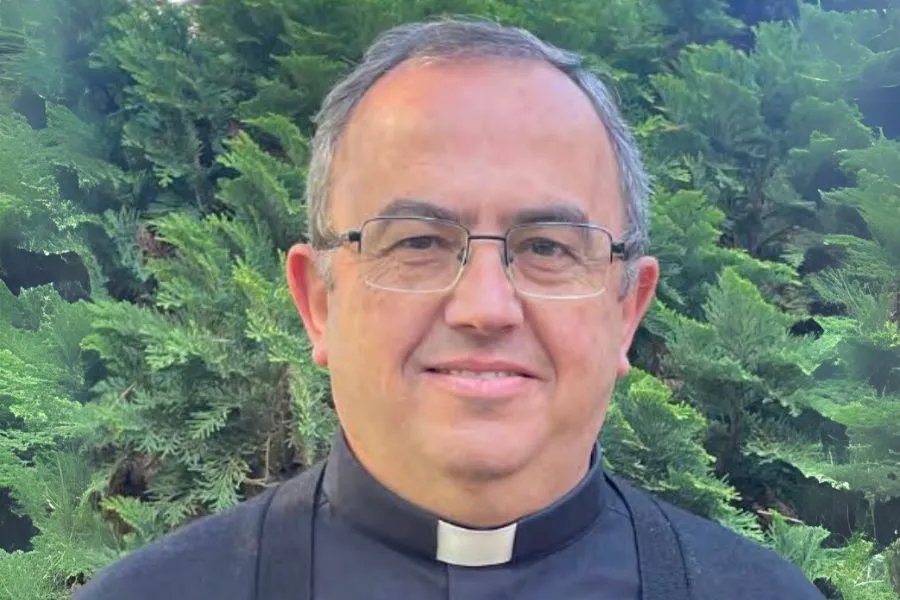
Luis María González de Aguilar, priest legionary of Christ, director of the Humanist Institute of the Most Holy Trinity, emphasizes the importance of the network of collaboration between the different schools. For him, being part of a network is not just an administrative matter, but a true experience of communion and mutual support. The ability to share experiences and good practices among the schools strengthens the identity and mission, allowing each school, despite their differences, to be aligned in their common goal: to form people capable of transforming the world with their human and spiritual talents.
Paula Muñoz, cIt has 25 years of experience in schools Regnum Christi family. His work as director of Identity, cThe Pastoral and Family Coordinator has been fundamental in strengthening the Christian and human approach that characterizes the educational centers of this network. Paula emphasizes that a C-value approacholegios Regnum Christi is the commitment to comprehensive education, which goes far beyond academic excellence. According to her, the schools are living communities where the aim is to accompany students in their process of «cristification», The program is a process of inner transformation that allows each student to develop his or her fullest potential in Christ. This approach is not limited to imitating Jesus, but seeks to make Christ live in each one of us, an experience of profound conversion that touches all aspects of the student's life.
One of the fundamental pillars of this approach is the partnership between the school and the family. As Paula explains, parents are the first and foremost educators of children, and the school plays a complementary role in this process. The formation offered in the schools is not limited to the classroom, but also involves families in a journey of faith and transformation. This accompaniment not only seeks to strengthen the spiritual life of the students, but also to involve the parents, helping them to become authentic evangelizing communities within their homes.
A futuro de esperanza and transformation
In a world that is increasingly divided and polarized, the Colegios Regnum Christi in Chile and Argentina seek to be a beacon of hope. Through their holistic educational approach, these schools are forming generations of young people committed to faith, family and society. By 2024 year of the Jubilee of Hope and with a heart full of hope, these schools continue to move forward, committed to the mission of forming leaders who will be the leaders of the future. can positively transform society.
Schools in Chile:
- Cumbres College
- Everest School
- Highlands College
- San Isidro School
- La Cruz School
- Maitenes School
- Helping Hand St. Juan Diego
- Helping Hand St. Teresa of Jesus of the Andes
- Helping Hand Santa Maria de Guadalupe
- Fernández León School
Schools in Argentina:
- Oakhill Pilar College
- Oakhill College CABA
- Betania School
- Helping Hand Santa Maria
- Humanist Institute of the Most Holy Trinity
Photo credit: Schools Regnum Christi Chile-Argentina