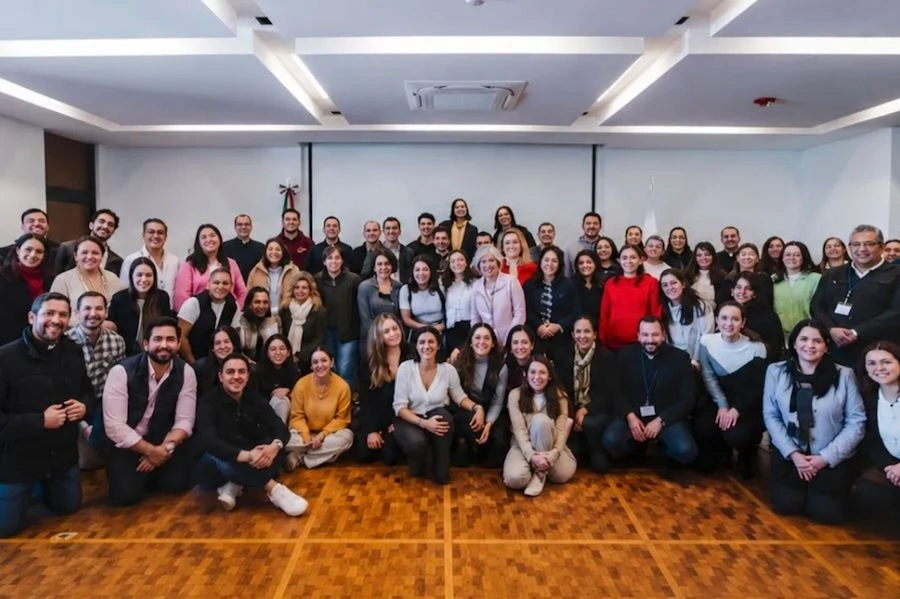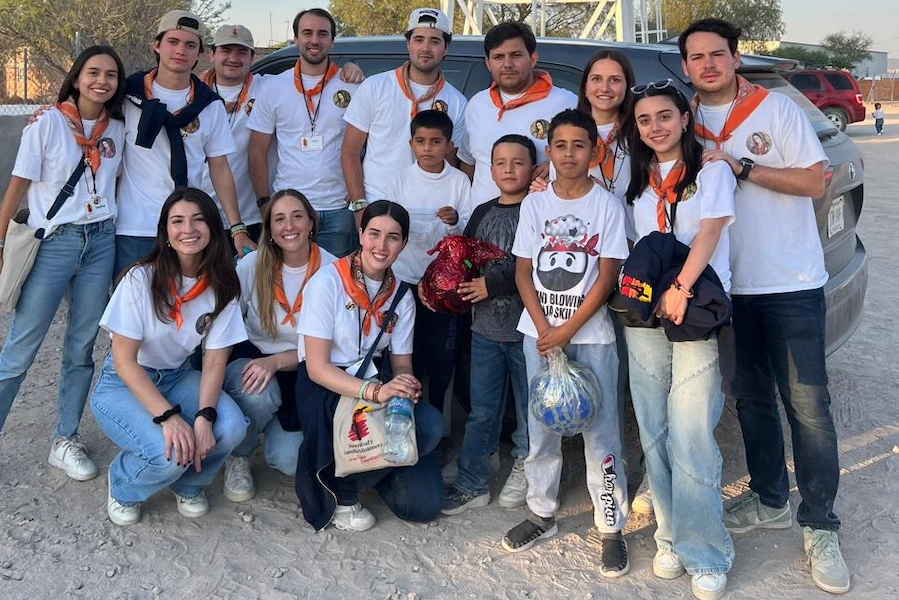
Every year, Holy Week missions bring together thousands of Regnum Christi families in different countries, along with Mission Youth. But what happens in the lives of those who, year after year, respond to this call? From Chihuahua and Mexico City to Caracas, Madrid, and the Philippines, stories are gathered that span cultures and generations, showing how the mission becomes, for many, a concrete way of living out their faith.
Much more than a one-time experience
For many of these families, the beginning of their involvement in the missions is not part of a clearly laid-out plan. Sometimes it starts with an invitation, other times with a child’s persistent urging or a desire that gradually takes shape over time. This was the experience of Ana Teresa Suárez, from San Pedro Garza García, Mexico, who decided to go on mission after seeing her daughter return transformed. The following year, the whole family took the step, and since then, the mission has become part of their family life.
Alejandrina Barraza, from Chihuahua, Mexico, recalls a similar experience. She began 16 years ago with her husband and young children, never imagining that the experience would become a way of life. Over time, what started as a one-time event gradually evolved into a steady tradition, eagerly anticipated each year.
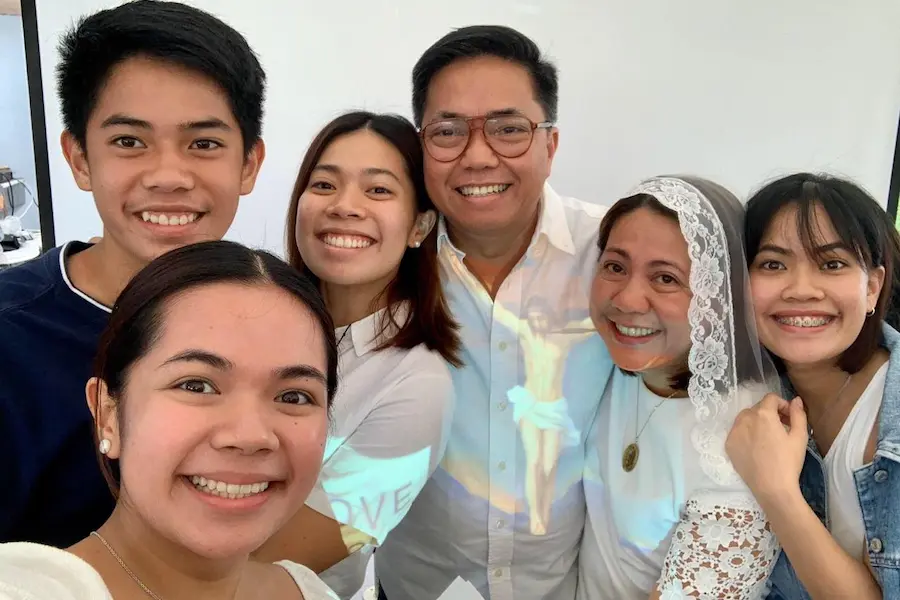
This same invitation is also extended in the Philippines, where Raymond and Malou encourage other families not to experience Holy Week as mere spectators, but to immerse themselves fully in all that is celebrated during those days. For them, the mission is not merely a service, but an opportunity to experience God’s love as a tangible reality, lived out as a family and shared with others.
A calling that becomes clearer along the way
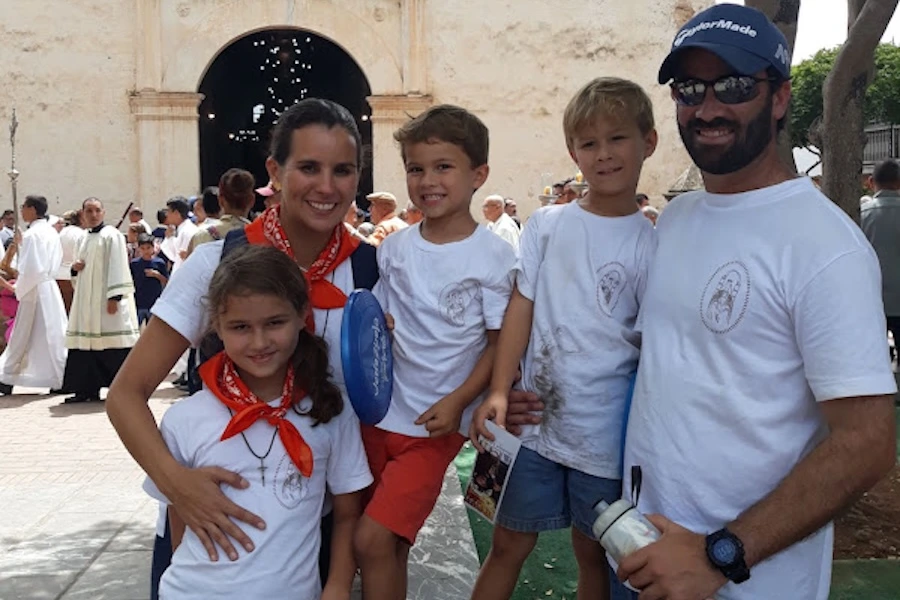
Alongside these initial motivations, the experiences converge on something deeper: the sense of a call. Cipri, a professor at the Francisco de Vitoria University in Spain, who took part with his wife Ana and their children in the missions in Villafranca del Bierzo in 2025, expresses it clearly: it is not merely a human decision.
In his case, the desire to live Holy Week close to Christ and as a family was joined by an apostolic conviction: faith is not something to be kept to oneself, but to be shared. Yet beyond these motives, he recognizes that there is something interiorly perceived—something that moves a person to take the step even when difficulties arise.
A community that endures
One of the most enduring outcomes of the mission is the community that develops over time. It’s not just about spending a few days together, but about bonds that grow stronger and endure.
Alejandrina Barraza’s experience illustrates this particularly well. After losing her husband during the pandemic, the missionary community reached out to her in tangible ways: through prayer, compassion, and ongoing support. What had taken root in the mission then manifested itself as a genuine network of companionship and community.
This sense of community is also evident in other experiences, where families highlight the lasting friendships and sense of belonging that come from sharing the same experiences of service year after year during the Holy Week missions.
Growing Together in Faith
Watching children grow is one of the most visible—and at the same time, most meaningful—rewards. Families consistently describe a similar process: children begin to participate at a young age and, over time, make the experience their own.
Alejandra Lezama, from Metepec, Mexico, puts it this way when she recalls how her children went from attending the missions with some reluctance to wanting to participate of their own accord, after discovering that personal encounter with God. In the Hurtado Valadez family, from Monterrey, Mexico, this process is also evident in their daughters, who have grown up in this environment and come to see it as part of their lives.
In some cases, this journey leads to more permanent commitments. Alicia Desesarte Vivanco, from Mexico City, recounts how her children grew up in this environment, first participating as a family and later in the Missionary Youth, to the point that one of them eventually discovered a different calling: he was ordained a priest in the Legion of Christ.
Encounters That Make Faith Visible
The missions create real encounters that leave a lasting mark. Desirée Moreau, from Caracas, Venezuela, recalls her experience on Margarita Island in 2018, where the community’s response became evident as people returned to the sacraments after many years and took an active part in the life of the Church.
Among the most memorable moments was when they accompanied a woman about to give birth and helped her get to the hospital. Later, they were able to baptize the child, forging a bond that went beyond the mission itself.
In other contexts, as the Rodríguez Fuentes family in Mexico City recounts, these encounters take the form of simple gestures: a conversation, a family prayer, or an invitation to return to the Church. In one such case, a visit led a person to be reconciled after years of estrangement.
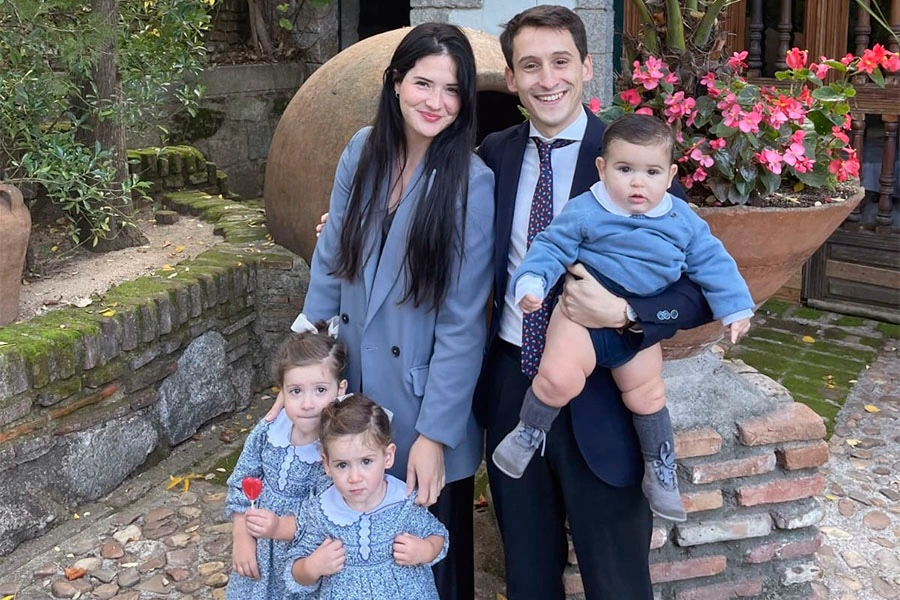
Children also play an important role in these gatherings. As Cipri from Spain pointed out, their mere presence often opens doors and warms the hearts of those being visited.
The mission also transforms those who go
A constant in these missionary experiences is the awareness that the mission is not only a service to others, but an experience that deeply transforms those who take part. Gastón Iturralde, from Mexico, acknowledges that after a time away from the missions, returning allowed him to rediscover the meaning of Holy Week and renew his relationship with God.
On a more personal note, Carlota Molina, from Madrid, describes the mission as a place where she rediscovers the gift of self-giving and grows in a faith that becomes more concrete, evolving from something she receives into a lived commitment.
This experience is shared by many families who, over the years, come to realize that they receive more from the mission than they give.
Going out of oneself to give oneself to others
The mission also involves specific challenges: changes in routine, discomfort, family logistics, or fear of the unknown. Cipri mentions, for example, the difficult weather conditions during her time in Spain and the challenge of living through it with young children.
However, these challenges are part of the journey. As Carlota Molina points out, initial fear does not prevent God from acting; on the contrary, it can become an opportunity for growth. Mission thus invites us to step outside ourselves and place God at the center, which allows us to put everything else in order.
A call that spans generations
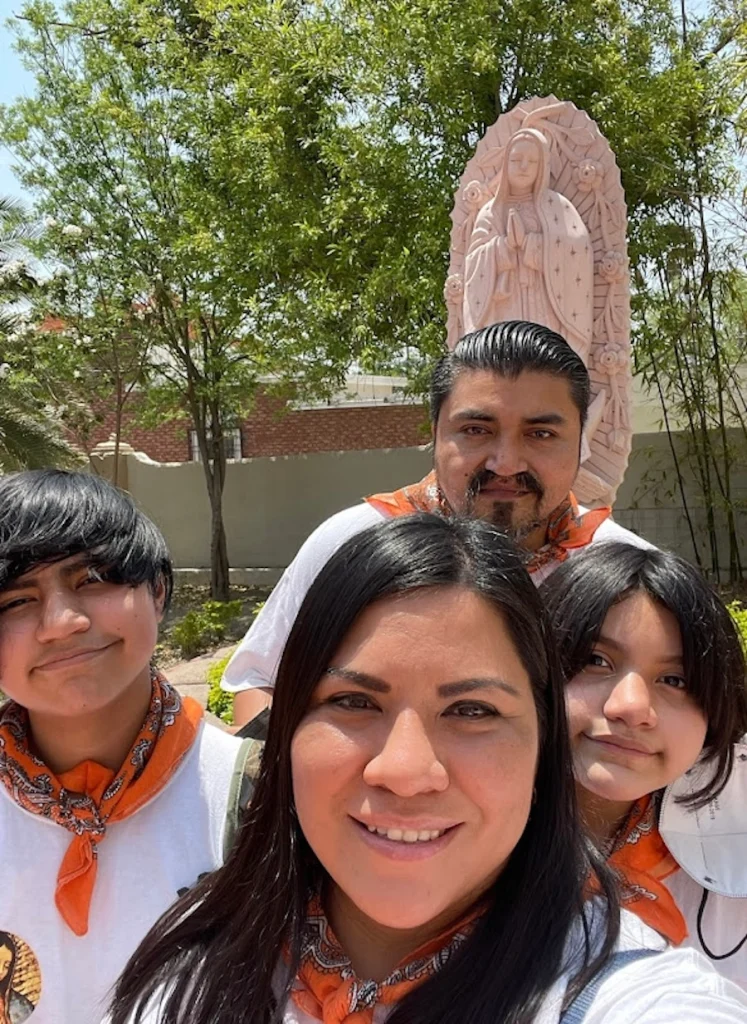
Some families have been doing this for decades. Margarita Cárdenas, from Chihuahua, Mexico, began going on missions in 1999 with her five young children. Since then, the mission has become an essential part of her life, to the point where she cannot imagine Holy Week without going on a mission.
Similarly, the De Esesarte Pérez family, from Puebla and Guadalajara (Mexico)—where various family members gather—describes these years as a blessing that has been a constant presence in their family history.
This continuity allows us to recognize that the mission is not a one-time experience, but a journey that unfolds over time and leaves a lasting impact.
A Path Open to All Today
In a context where many families are seeking concrete ways to live their faith together, the experience of missionary families offers a clear path: integrating family life, community, and mission into a single, unified dynamic.
The stories of Alejandrina Barraza in Chihuahua, Cipri in Spain, Desirée Moreau in Venezuela, Raymond and Malou in the Philippines, and Alicia Desesarte in Mexico City show that the mission does not end when one returns home. It remains as a call that continues to grow, year after year, in personal, family, and community life.