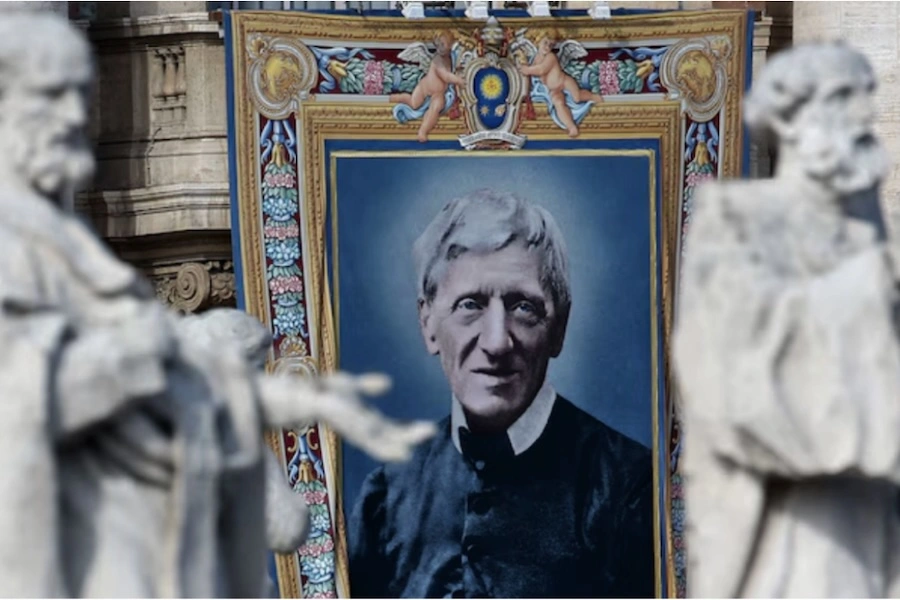
The figure of St. John Henry Newman continues to raise essential questions about faith, reason and the search for truth. What makes his thought so relevant today? How does his witness illuminate Christian life and dialogue with culture? His path, marked by intellectual honesty and spiritual depth, invites us to take a fresh look at the very heart of faith: the encounter with Christ that transforms the mind and life. Rocío Solís, coordinator of the John Henry Newman Institute of the Francisco de Vitoria University, talks about this in this interview.
The 1° On November 2025, the Solemnity of All Saints, the Church proclaims as Doctor of the Church John Henry Cardinal Newman, a witness to the fruitfulness of the encounter with Christ and his Kingdom.
Born in London in 1801, Newman moved from his brilliant academic work at Oxford to full adherence to the Catholic faith, dedicating his later years to spiritual formation, the defense of conscience and the development of Christian doctrine.
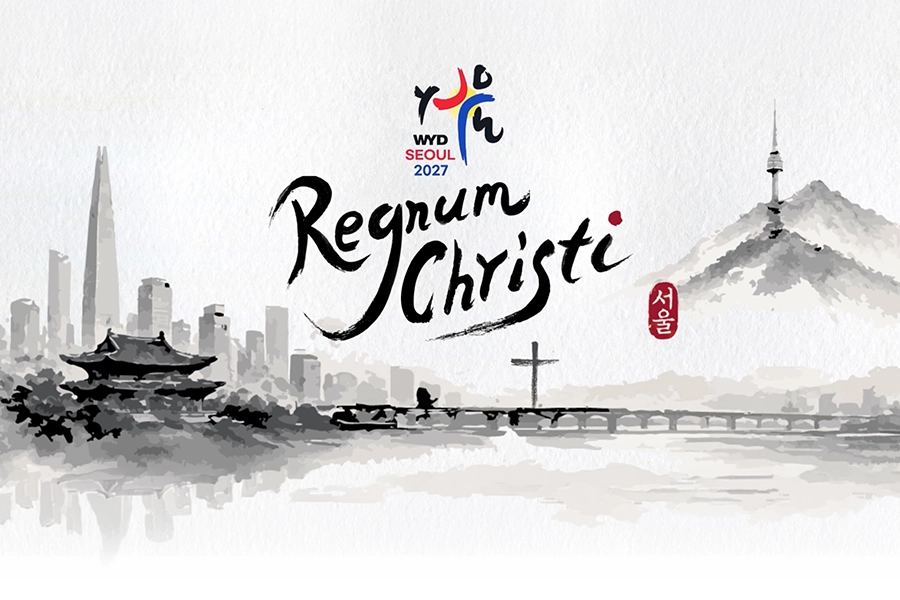
His thought - centered on the harmony between faith and reason, on conscience as the inner space where the believer encounters the truth, and on the living and organic development of knowledge - dialogues in a fruitful way with the mission of the Regnum Christi: to make Christ known, to form disciples and send them out to make his Kingdom present in the world.
His life, marked by a sincere search for truth and a personal encounter with Christ, offers today a renewed light for those who wish to unite faith, reason and witness. Rocío Solís, coordinator of the John Henry Newman Institute, in the Francisco de Vitoria University, discusses in this interview a little more about life of the English cardinal.
What does it mean for you that St. John Henry Newman be declared a Doctor of the Church?
It means that the Church recognizes him as one of the most important great masters and referents of the faith and the doctrine because it brings together two essential conditions: the intelligent and universal teaching of the faith and the holiness of his life integrated in that wisdom. SóOnly 38 saints have received this title in all of history, which underlines their exceptional character, since their teachings acquire special weight for the Catholic magisterium and spiritual life. Thus, it is indicated for the rest of the faithful that the life and doctrine of Newman are a privileged source of teaching, and that their voice speaks with authority to the whole Church..
Newman had a very comprehensive vision of the university and of the dialogue between faith and culture. How can he enlighten the academic world and the formation of young people today?
Newman and worked for a new university where they converge all disciplines, scientific, humanistic and theological, in dialogue and collaboration, since all contribute to the search for truth. and to a reason, which, as indicatedó in due course Benedict XVI, too, to be open and to see reality with more depth and openness. Newman cHe remarked that each science has its value and autonomy, but its greatest richness arises when they are related to each other and in dialogue with theology, avoiding isolation and partial vision. This approach favors a liberal education that trains not only technicians, but people with critical thinking, intellectual openness, a moral sense and a spirit of service to society. In this way, Newman invites universities to be places of encounter between faith and reason, guiding young people towards an integral understanding of reality and a commitment to truth and the common good.
What can Newman bring to today's world, marked by polarization and confusion about truth?
The truth is neither relative nor subjective, there is an objective truth that everyone we can experience, verify and teach, and to which we are all called. For Newman the key to be able to seek and find the truth consists of in forming an upright conscience, based on study, reflection and dialogue, capable of discerning between the authentic and the false, measuring up to an honest and honest experience avoiding the deception. With this perspective, Newman promotes a culture of discernment and personal responsibility, where the main duty of conscience is to seek the truth, rejecting ideological manipulation and closed dogmatism. He argues that the search for truth implies openness to the richness of reality, intellectual humility and willingness to learn from others, overcoming the temptation of single thinking and sterile confrontation.
How can we «living like Newman» today and make Christ's Kingdom present in society?
To live the Kingdom of Christ on earth is to live as a Christian in this world, with realism, knowing that this earth is not a place where we can live as Christians.úWe are not heaven, but we can be the presence of God, uncensored our limits, in it. Newman affirmed that there can be no separation between what we believe and what we live, calling to embrace the truth in a spiritual dynamic that transforms our being and our works. Intellectual honesty and fidelity to conscience are the keys to to make a path that can witness to an authentic Christianity that seeks the Mystery that sustains life.
For Newman the mission of the laity is fundamental in this workTo live committed in society, bringing light and hope from faith, and defending the truth with serenity and fortitude. This implies knowing the faith well, being able to give reasons for hope, building bridges between different ideals and being agents of cultural and social transformation in fidelity to the Gospel. Christian action in society is not limited to the private sphere, but must permeate culture, social commitment and the structures of the world, showing the merciful face of Christ in public life.
The recognition of St. John Henry Newman as a Doctor of the Church invites us to rediscover the transforming power of truth. His witness is a reminder that every authentic Christian formation intellectual, spiritual and apostolic - is born of an encounter with Christ and translates into service to the world. Following his example, we are all called ...s to form hearts that think with the Church and live their faith with intelligence, passion and dedication to the Kingdom.
Image credit: John Henry Newman Institute / Francisco de Vitoria University.