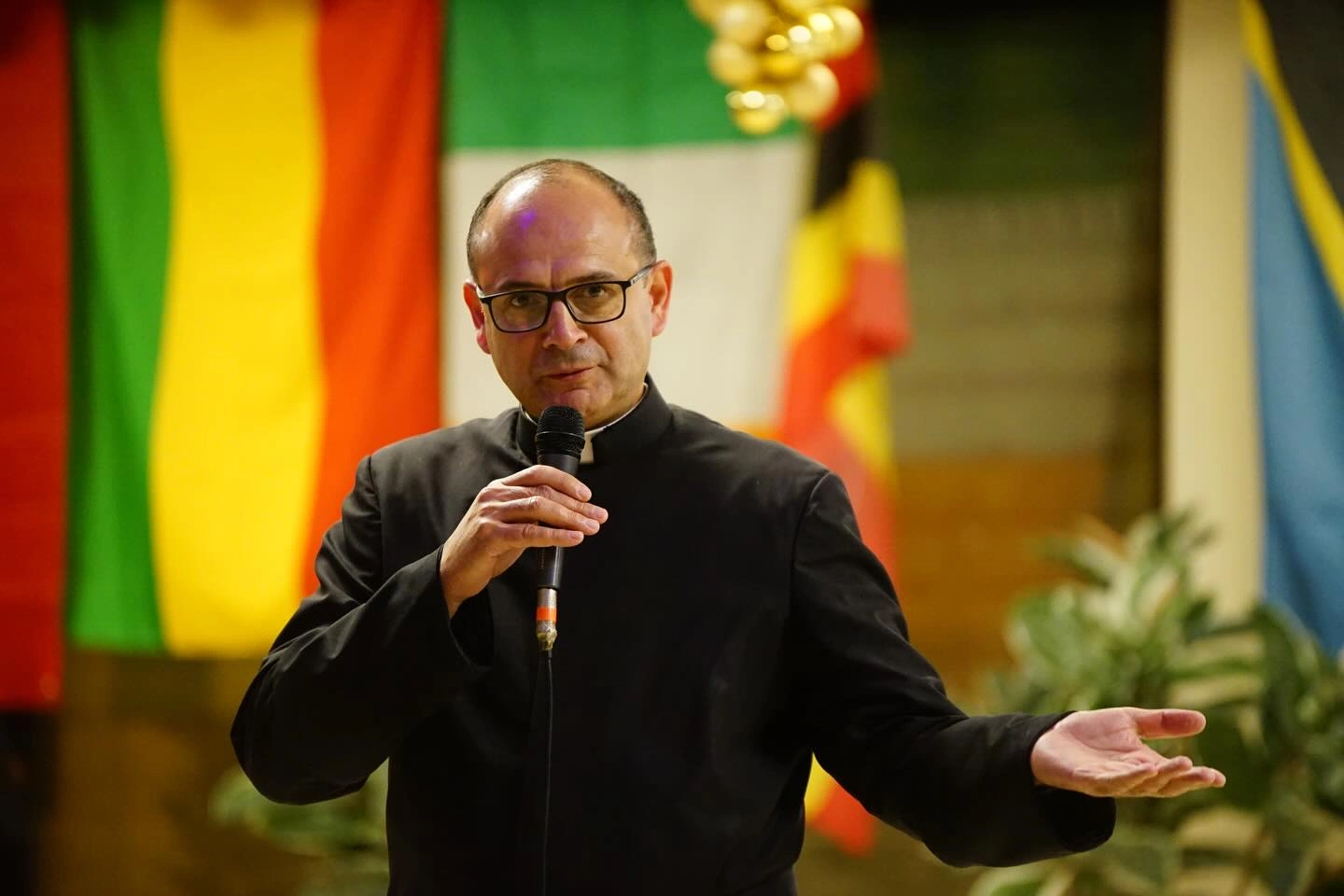
Fr. Pierre shares his vision of integral formation, communion, and mission; the experience of being formed in Rome to serve the universal Church; community and spiritual life; and the ongoing accompaniment of priests in their continuing formation. All of this unfolds in close collaboration with the Dicastery for the Clergy, seeking to respond to today’s challenges and to form priests after the heart of Jesus Christ.
Collaborators for the diocese and openness to the universal Church
When a bishop decides to send one of his seminarians or priests to the seminary, what does he expect from his diocese upon their return? What kind of pastor does he hope to form?
What a bishop can expect when sending a seminarian or a priest to Rome can essentially be summed up in two very basic points. The first is quite clear: to form his collaborators. Bishops, let’s remember, are pastors, and they are faced with the needs of the People of God and of the diocese they are called to shepherd and govern. For that, they need well-prepared collaborators—whether in a large, highly structured diocese or in one that is just beginning to take shape.
In the Pontifical International College Maria Mater Ecclesiae we have seminarians and priests from both large dioceses and those that have only just been established, were founded very recently, or are simply not yet well-organized. And the bishops send them to prepare them—whether to start new ministries, to replace those already in place, or to strengthen existing ones.
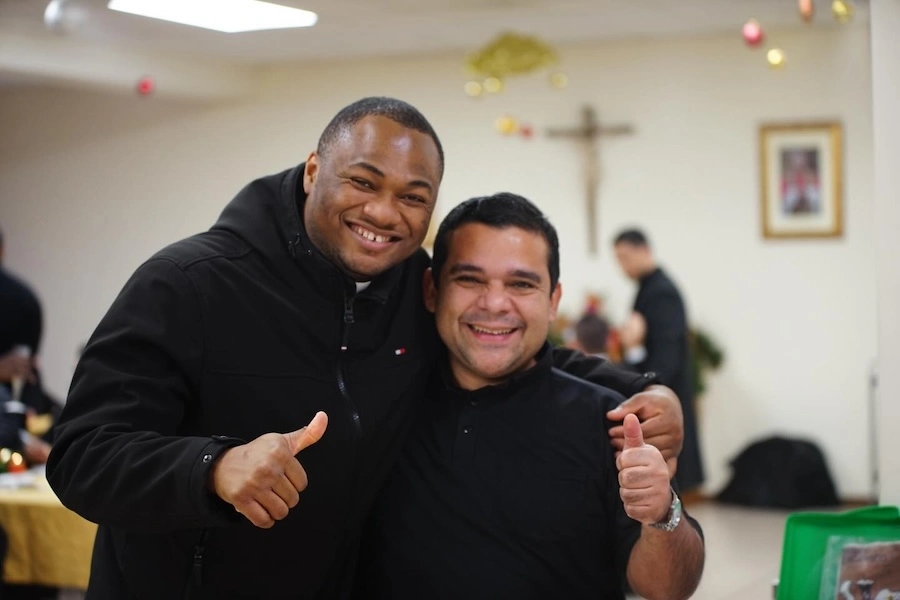
The other important aspect, I believe, is universality—the experience of the Church’s universality. Because, yes, they are sent there to be trained. But why Rome? Rome offers that—that experience of the universal Church that goes beyond theory and becomes practical, becomes life. And the seminary also provides an international experience.
There are young people here from some 27 countries and 40 dioceses around the world, and it is a living experience of the universal Church: sharing the faith—the same faith expressed in many different ways. And that is a treasure that can only be found here, in Rome. And thank God, our school has this international character, and we want to preserve it because it is an aspect of Catholicism.
Closeness to the Holy Father is also very important, as it nurtures love for the Church and a deeper sense of communion. This goes beyond simply being together or showing mutual respect; it flows from the lived experience of being close to the successor of Peter, in communion with him and with our brothers and sisters in the faith. It is an experience many carry with them—and one that bishops deeply value and actively seek. They want their seminarians and priests to have this experience of the universal Church.
The seminary was founded to support the bishops in the formation of priests, many of whom were later called to guide others as formators. How is this service carried out in the day-to-day life of the seminary?
Yes, that's right. When the seminary was founded in 1991, at the behest of St. John Paul II, the goal was to train formators, and that remains our goal today. It is this goal that inspires us to help dioceses prepare future formators for their own dioceses and for seminaries.
Of course, when a young man arrives here at the seminary and begins his theology studies, the most important goal—at the deepest level—is that he become a good priest. Whether he will later serve as a formator depends on time and on the needs of the diocese. A bishop sends him with that broader perspective in mind. They don’t send everyone—only a few—and in a certain sense, even if it may sound somewhat businesslike, it is a kind of investment: dedicating a man to a deeper formative experience so that he can later return and share that experience with others.
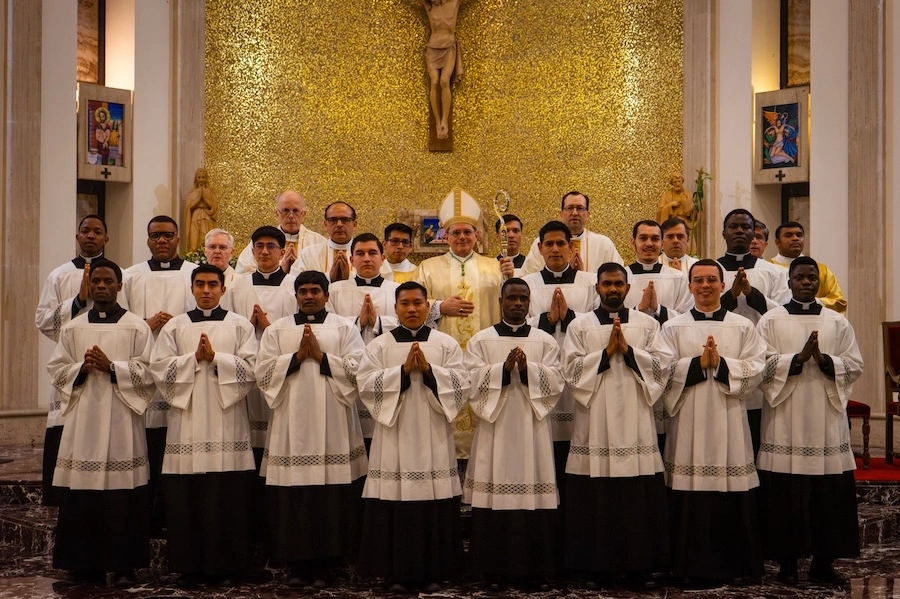
And that awareness is there: the desire to make the most of the experience and share it with others. In that sense, there is already a certain willingness to make the most of it, to prepare well, and then to share what has been experienced within your diocese, in your local church. And there we can already see a first sign of this.
Then there is a very concrete aspect: daily life. It may seem minor, but in reality, the day-to-day life of the seminary is where formation truly takes shape. The young men who come here, thank God, arrive with very good dispositions, already having begun a certain path and with a mature sense of discernment.
Therefore, they come with a desire to make the most of this time and to be well prepared—and with the intention of sharing what they have received. Arriving at a well-structured seminary, with a complete and sizable team of formators, and a large community where fraternal life can truly be lived, with an internal organization—all of this gradually shapes a way of life.
And that, in turn, helps with formation; it helps a great deal. There are very well-structured seminaries, thank God, but there are also others that are just beginning to take shape. So, the experience of a large seminary—for someone who is part of such an experience, in a seminary that is just getting started—helps shape a way of life. In this way, it also prepares the formator.
But the most important thing is that they become good priests. And once they become good priests, they can be effective formators, whether at their seminary or in their parishes.
Ultimately, every priest is, in a sense, a formator, since he shares with Christ the mission of being a teacher of the faith. Of course, this becomes more evident once they begin pursuing a bachelor’s degree, for example, or in the case of priests, even a doctorate. At that point, it becomes clearer that they will be assigned either to support a very specific pastoral ministry—such as canon law in an ecclesiastical tribunal or within the diocesan curia—or to serve as professors at the seminary. So, at that point, the educational background becomes clearer.
So the focus is on taking great care of daily life and of the spiritual life—that is essential. I believe that what bishops and local Churches most hope for is that these men become men of God. And as men of God, they will be able to form others in that experience of Christ, because in the end, that is the experience of every apostle: to encounter the Lord and then share that encounter. In his omnipotence, Our Lord has willed that faith be passed on through human mediation, and this is no different in priestly formation. It is precisely this lived experience with Christ that makes us witnesses—witnesses of an experienced mercy that calls us to invite others into that same life of faith.
Rome broadens its horizons and strengthens communion
At the beginning, you mentioned the importance of being in Rome. Living in Rome is not just about studying. How does a diocesan seminarian change when he experiences the life of the universal Church firsthand? What does he usually discover about his own diocese when he is away from it?
The experience of studying in Rome is one of growth and broadening one’s horizons—horizons of perspective and vision regarding the Church, without a doubt. The young man leaves his family environment, his parish or community setting, and moves on to the seminary, to the diocesan environment, where his experience of faith and his vision of the Church continue to grow. Of course, by coming to Rome—a truly universal experience—his horizons expand immensely.
Many people say, “I used to think the Church was just my diocese or my parish,” and then they realize that the Church is much larger than that. And that experience of broadening one’s horizons is very positive, because it helps us see the grandeur of the mystery of faith, the grandeur of the mystery of the Church, and the reality of communion—because communion becomes something very concrete when it is true diversity within unity.
And what this brings to the diocese itself is an appreciation of its own identity, because it’s not about denying what you have, but about finding its place in the beautiful mosaic that is the Church.
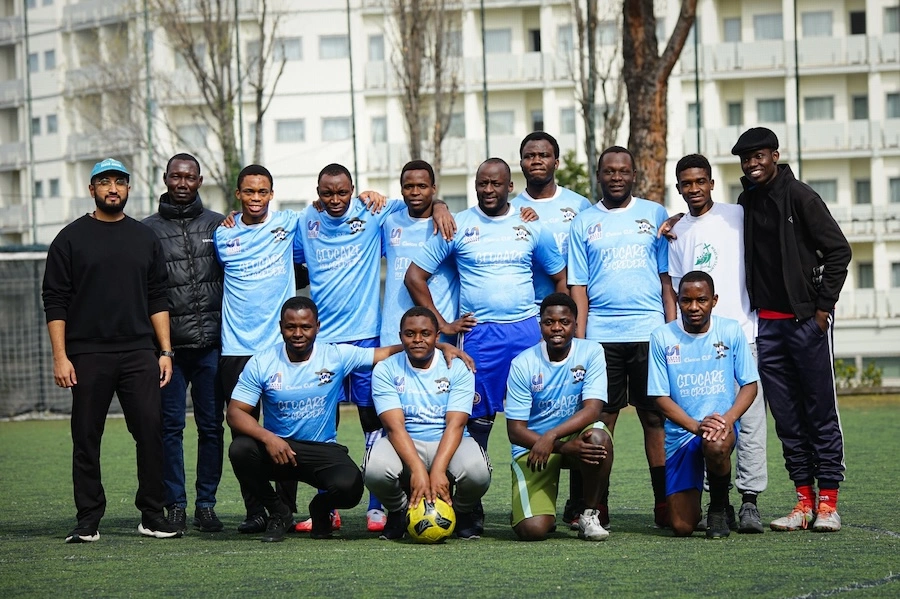
And our experience is that of priests who, once ordained, are very close to the bishop, very close to their fellow priests, very fraternal, and imbued with a strong spirit of communion. Because I believe that it is the experience of being here—of being in Rome, of being with brothers and sisters from other countries and from the diverse communities of the universal Church—that makes us brothers and sisters, enabling us to transcend our cultural differences and unite through the one thing that binds us together: our faith in our Lord, which is far stronger.
I often tell seminarians: what unites us is far more enduring than what might divide us, because we can all say during Mass, “This is my body,” and we say it with the same truth. And it is in our love for Christ and in our love for the Church that we find all this unity.
I believe it is a very rich experience—one that does not diminish their diocesan identity at all; on the contrary, it deepens it. They come to value what is uniquely their own, while also learning to place it within the broader mosaic of the beauty of the universal Church. It is a deeply enriching experience for everyone.
Today, the Church needs priests who know how to foster a sense of community. Based on your experience as a rector, what really helps a young man become that kind of pastor?
Fostering a sense of community is indeed the greatest challenge; it is the major challenge we face. I believe this has always been the case, but today it has become much more acute because we live in an increasingly individualistic society. Furthermore, young people are growing up more and more isolated and withdrawn into their own worlds.
And that is the challenge: not only a matter of personal maturity, but also of a conversion of the heart. The formation process, in fact, goes a long way toward helping young people grow in this regard. Right from the start, when vocational meetings begin in their dioceses, the preparatory seminary is an experience of communion.
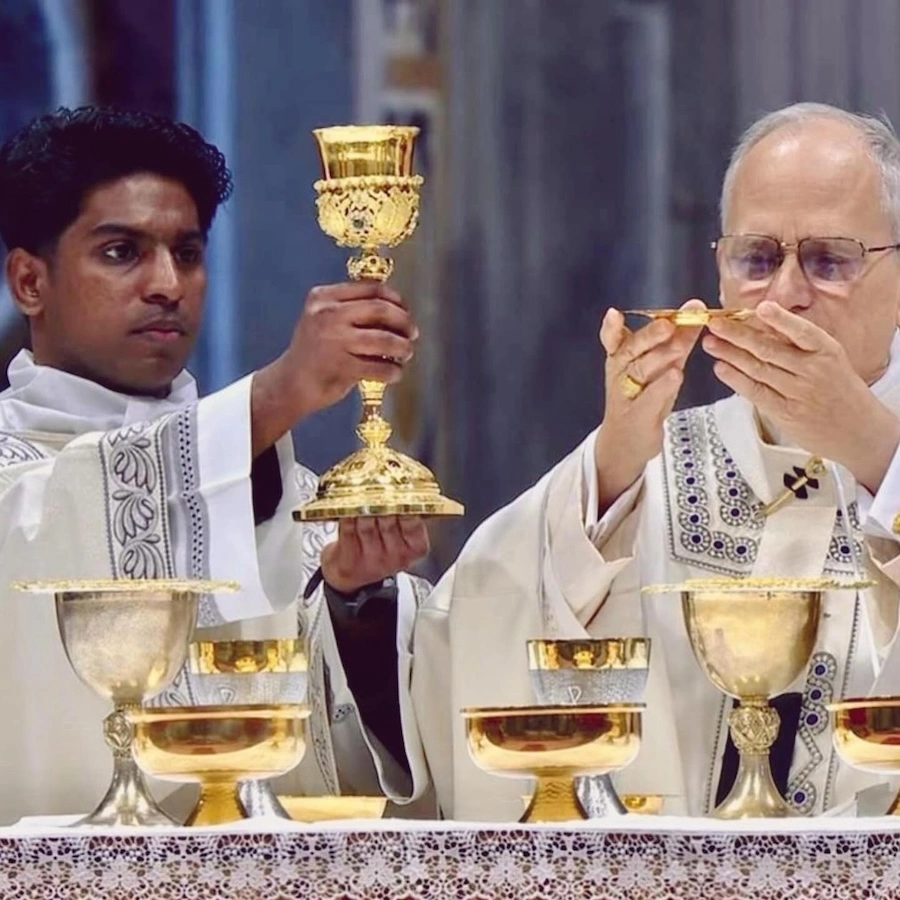
Many of these young men grew up without siblings and, for the first time, find themselves living with others their own age—their peers—and learning to share life in a truly fraternal way. They share the same life—the same house, the same meals, the same spaces. This formative experience helps them grow in their sense of being Church, of living for others.
And that is the path of formation. It helps a great deal to know and value oneself, as well as to see oneself as a gift to others. To know that I can contribute and make a difference in the lives of many people. Understanding my life as a gift for the good of others and offering it to them greatly fosters communion.
To also know that, in fact, I am not the only one, and that this is what community life offers. And here, in Rome specifically, it helps a lot to have the experience of all being away from our own homeland, where one somehow feels the need to support one another. Although we come from different nations, a beautiful family atmosphere is created because we are all one college; we are all united in this same house where we pray, where we eat, where we share.
But also where we support one another and where we can all experience the same difficulties of being far from home, the challenge of language, and even sometimes economic difficulties, because one thing is our own countries and another is Europe, where everything can be a bit more expensive.
That same shared need also helps them grow in solidarity. It forms them in a very concrete, day-to-day communion, and in a deeper communion as well—the spiritual communion that sustains it all.
Thanks to God, one of our great pillars is spiritual life, and it is there that true communion is built. It is not so much about simply being together, but about each person walking toward Christ, each one becoming more united with Him. To the extent that we are more united with the Lord, we are more united among ourselves. And spiritual life is one of the great pillars of our formation.
A living Church: vocations, cultures, and the dynamism of faith in the world
The significant number of students coming from India is a very visible reality in the college. What does that presence bring to the community? What have you learned about the vocational dynamism of the Church in India?
Indeed, the presence of seminarians in the Mater Ecclesiae community is numerous. It has grown over the years. At first, Mexico stood out, with many seminarians; then Brazil also grew significantly, along with Colombia, Venezuela, and other countries where numbers were higher. But later, vocations began to decline in the West and also in Latin America, and so other communities began to grow.
In reality, we have a reflection of what the life of the Church is like. The secretary of the Dicastery for the Clergy, who visited us, said that the college is in fact a reflection of what is happening in the Church. When asked whether there were no vocations and why there was a crisis of vocations, he said: well, there is a crisis in the West, because in the East it is not so. And it is true—we see India, Vietnam, and Nigeria.
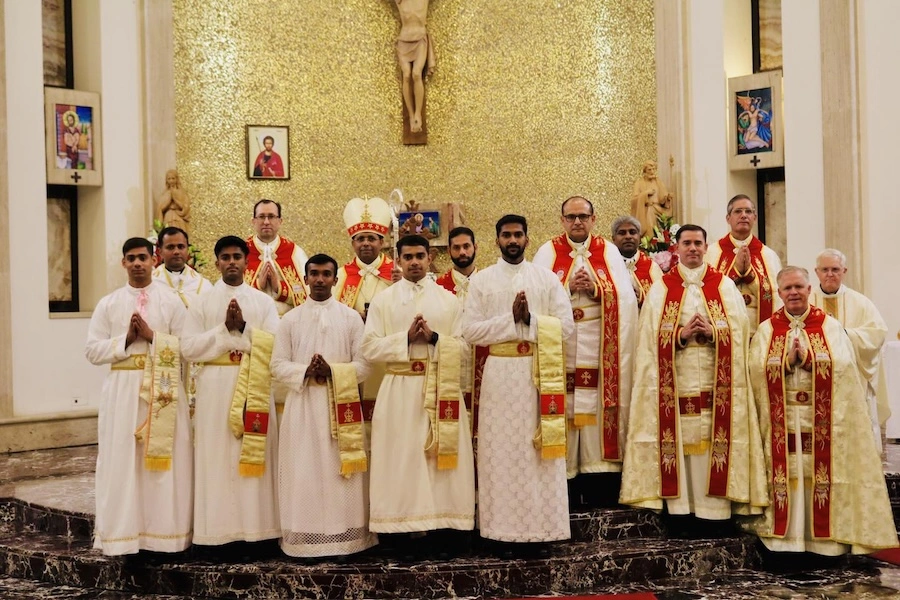
It is interesting: in those countries faith has grown greatly, and vocations have grown along with faith. Of course, it is a minority Church, a persecuted Church, a Church with a very vibrant witness, and that translates into a more authentic Christian life and, therefore, into vocations. And that is what we see: a Christianity lived authentically, with a sense of communion and community.
And this is one of the great contributions that the presence of these seminarians brings to the college. In the West, we tend to be more individualistic, but they have a strong sense of community, and that becomes a real enrichment. Their example—working together and caring for one another—is something that other seminarians from different countries also receive and deeply value.
From the vocational experience, I could mention two things. Basically, the faith of families in India. When I visited, I was able to see it firsthand. I was deeply impressed that in every home I visited there was always an altar with an image of the Virgin Mary, Saint Joseph, and the Sacred Heart.
At that altar, the family gathers to pray every day; every day at six in the evening they come together, pray the rosary, and then have dinner. In a place like that, how could vocations not flourish? How could there not be a strong Christian life?
It is a Christian life expressed through a real presence in society. Although they are a minority, the influence of the Church is very significant; for example, in Kerala, where I was, its impact on social life is very great. They have many hospitals, many schools and universities, many social works, and even initiatives that contribute to the economy, such as agricultural cooperatives.
And all of this is for the good of people, without distinction between Christians and non-Christians. Everyone can benefit. It is a Christian life that takes shape in an organized charity—one that is reflected in society and permeates it, shaping education and the broader environment, and ultimately giving rise to a fuller expression of life.
So this is a valuable contribution not only to vocational life but also to the presence of Christian life in general. I was very impressed by the trip and very grateful to God for having lived it. It allowed me to better understand the reality of the seminarians we have here and to accompany their formation more effectively, understanding their roots in order to guide them better.
In India, different liturgical traditions coexist. Some belong to the Syro-Malabar rite and others to the Latin rite. How is that diversity lived within the college? How does the ability to celebrate and learn about different liturgical traditions enrich the community?
Yes, in India there are several traditions and liturgical families. Here in the college we have seminarians from the Syro-Malabar rite, which is the most numerous in India. We also have the Syro-Malankara rite, another group, not as large but still present in India.
From other places we have previously had Greek Catholics, Melkites, or Maronites, and of course Latins. This is a richness that confirms what we mentioned earlier: the universality of the Church. For many, it is the first time they encounter this. For example, many who came from Latin America had never imagined that such diversity could exist.
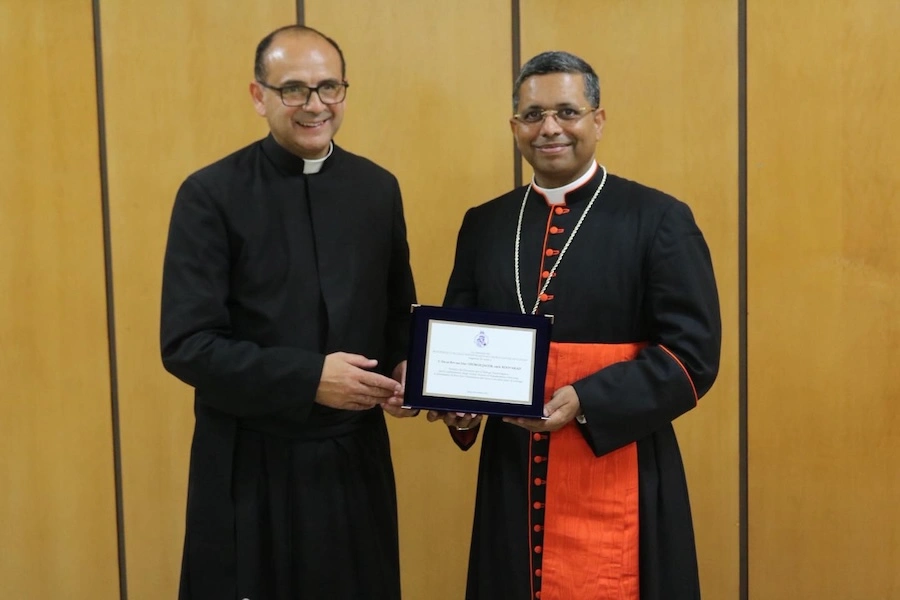
And seeing this variety is simply a marvel of the greatness of our faith, which, despite so many cultural expressions, remains the same faith in Jesus Christ, the same Eucharist, the same sacraments. It is truly something beautiful to experience.
For everyone it is a richness, and for many, a great discovery when we can share it. We have some ceremonies here—not many, in fact—but we also have opportunities to celebrate in different rites, which enriches the ecclesial and Catholic experience of everyone living in the house.
Since 2005, priests who come to Rome to study and continue their formation have also been welcomed. What concerns do these priests bring, and how does the college serve them?
Yes, the experience with diocesan priests began with the John Paul II College, which we first opened in Castel de Guido; the Legionaries of Christ opened it there, and later it moved to central Rome, near Sant’Andrea della Valle. For various reasons, that college had to close.
The priests who were staying there asked to be accommodated, some of them, at Mater Ecclesiae, in the seminary. It began as a kind of priestly residence for them and gradually more were added. Then the Holy See asked us to formalize this arrangement.
That is how the experience with diocesan priests was reopened—not as John Paul II College, but as the priestly community for ongoing formation at the Mater Ecclesiae College.
It has been a very positive and enriching experience. What this community seeks to offer is a fraternal environment for priests, where they can live out that priestly communion as they advance in their studies, and also a setting where they can nurture their spiritual life.
Ongoing formation is not only about continuing studies, but about continuing the life of the priest. That is what the priestly community seeks: to care for the priest’s ministry and vocation.
The priests can also have pastoral experiences in some parishes, and in fact they do. Their main task is indeed study, but they maintain that priestly fraternity, which is so important in anyone’s life: having a friend—and even more so for a priest, having a brother priest who supports him.
They also care for their spiritual life: having moments of prayer together and receiving spiritual guidance.
So what is sought—and what they seek—is to maintain their priestly fervor in the midst of their studies, which is their primary responsibility at this time and the reason their bishops send them to Rome.
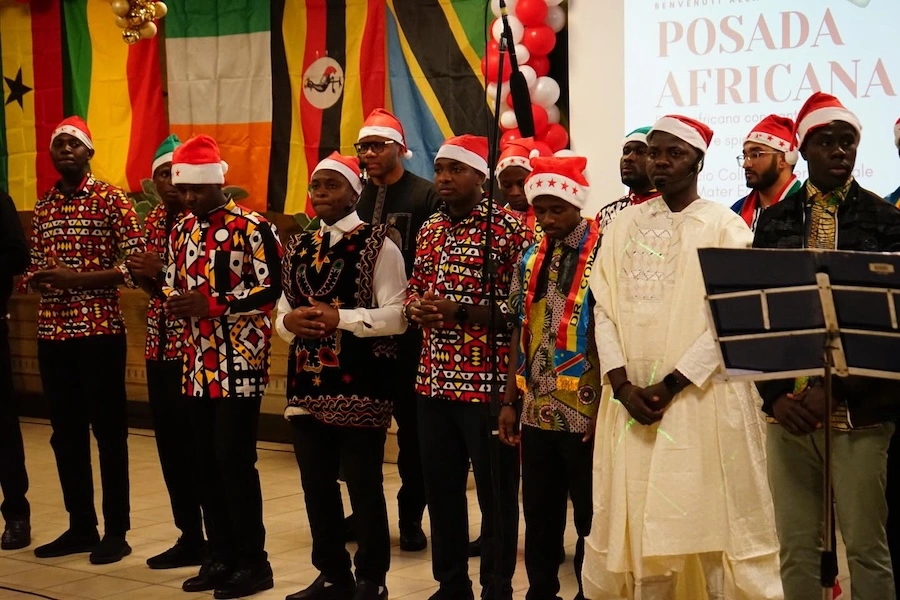
In harmony with the Church: forming according to the heart of Christ
After several years as rector, do you remain in contact with former students? What do you feel when you see them succeed in their dioceses?
Yes, the experience with alumni is one of the greatest consolations. Thanks be to God, I have been able to live alongside several of them, and over all these years—more than 20 years working in formation, 10 years as rector in Brazil, and now my years here in Rome, first as a formator and now as rector—the satisfaction is very great in seeing these priests exercising their ministry, doing so much good, and giving themselves with such zeal.
It is beautiful to experience it—to see them so happy, so fulfilled in their priesthood. Thanks be to God, there are quite a number of them engaged in this meaningful work. Many of them serve in seminaries, and it is very rewarding to encounter them.
When I was in India, for example, it was very moving to see them where they are working: some in seminaries, others in diocesan pastoral initiatives such as hospitals, and some as parish priests.
All that zeal, joy, and enthusiasm they have is truly uplifting. It is a great satisfaction for us and something to be grateful for: to see the fruits of the work, which is not ours but God’s. Still, we have contributed in some way, at least by accompanying and supporting them at the beginning of their vocation, and God continues His work.
We are only a small part, and it is a great joy to collaborate with the Holy Spirit in building the Kingdom through concrete individuals who later become evangelizers and priests.
Could you share the testimony of a former student who now serves as a formator or even as a bishop? Is there any story that, in your view, sums up the ecclesial service they offer?
So far, we have had 1,270 alumni—if I am not mistaken—ordained priests, of whom 12 are bishops. I cannot say I know all their stories, but I have lived alongside several, especially in Brazil, Mexico, and India; I have also met some in Colombia and El Salvador.
The experiences are very diverse, but there is something that sums it up well. I remember one that made a strong impression on me, from Aleppo, in Syria. During the early ISIS attacks some years ago, he was the former vicar general of the diocese, very young.
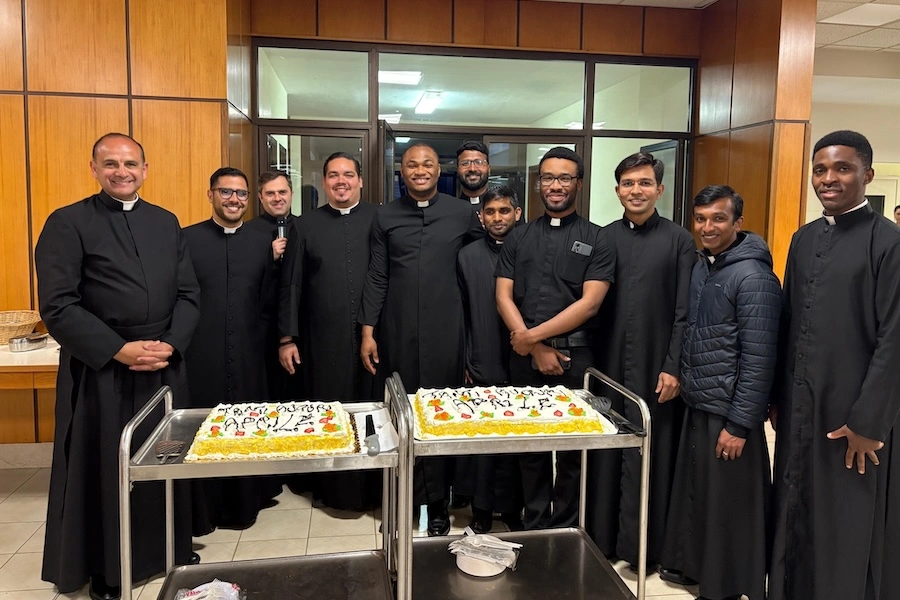
At one point, one of the formators asked him, given the attacks, why he did not take refuge or leave, since there were people who could help him. And he simply replied: “No, Father, I cannot leave, because you taught me that the shepherd gives his life for the sheep.”
And he stayed there, in Aleppo. Thank God, he is well; nothing happened to him. But his example of authenticity in the priesthood and imitation of Christ, the Good Shepherd, deeply moved me.
It is a very concrete example—not so much of spectacular work as of an attitude. And I think it is the attitude of many priests: to be there, dedicated to their people, each in the role they have, doing their best for the Church.
As I said, there are many stories and many examples, but this one left a deep impression on me and is the one that comes to mind now.
Looking ahead, what do you think the Church is asking today of a college like PCIMME? In what areas does it need to grow to better serve dioceses in the coming years?
Mater Ecclesiae, as a Pontifical College, depends directly on the Dicastery for the Clergy, the body of the Holy See that oversees priestly formation from seminary through ongoing formation.
We work very closely with them. In fact, the latest version of the college’s statutes, adapted to the one published in 2016, was always developed in collaboration with the Dicastery. We seek to maintain that contact, inviting them to visit, to know us, and to guide us.
Among those guidelines, what the Church asks today of a college like ours is to maintain an integral vision of formation. In a city like Rome, there is a strong temptation to focus everything on the academic aspect. Although this is very important—since seminarians come here to study—we cannot neglect the other dimensions of formation.
Therefore, maintaining the balance of integral formation is essential—not focusing everything on the academic calendar, but on the maturity of the young man as a disciple of Christ and his configuration to the person of the Lord, preparing to be configured to the Good Shepherd.
Here we also see the emphasis of Pope Leo XIV from the beginning: to form the inner man—to be a man of God, a man of prayer, a man with a very close relationship with God, with Jesus Christ. That is the most important thing.
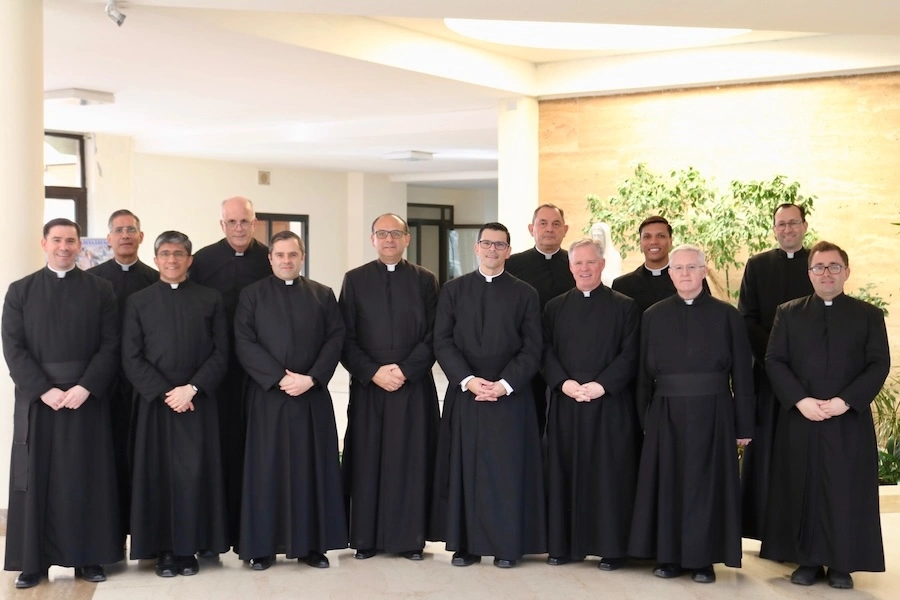
I believe this is what the Church expects and asks for: the priesthood as it has always been. What is asked is that they be priests according to the heart of Jesus Christ.
In this way, I believe we can serve the Church and the dioceses in the years to come—and always.