By Fr. Jorge Enrique Mújica, LC
Source: Analysis and News
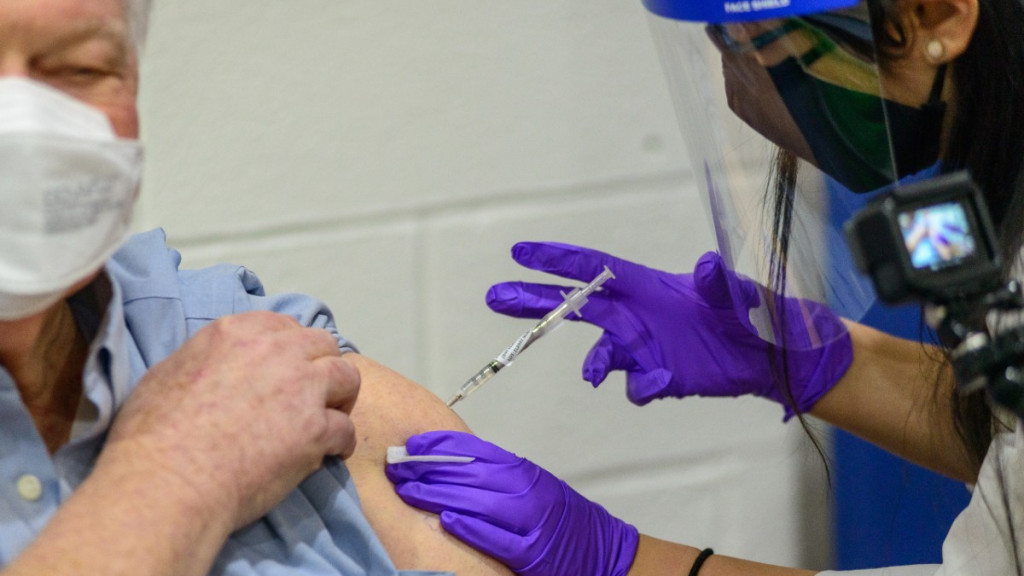
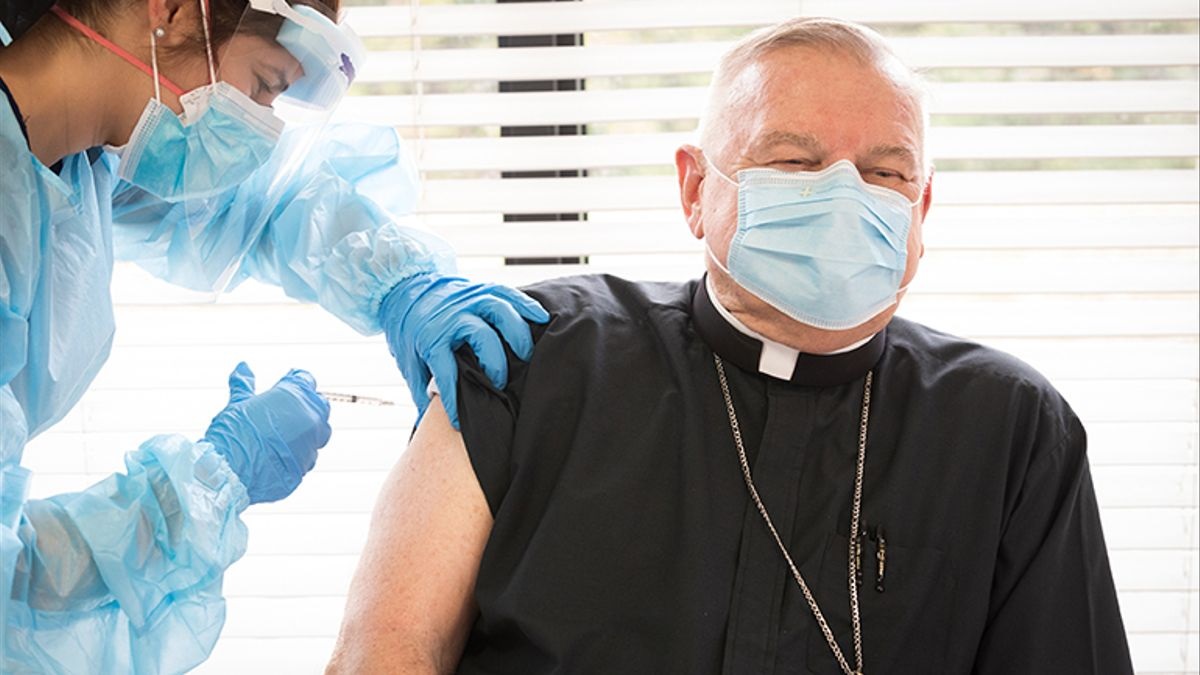 The appearance of vaccines in the context of the pandemic of 2020-2021 provoked two types of reactions: on the one hand, hope for such a resource and, on the other hand, some reservations about the morality of vaccines. The proliferation of opinions both for and against vaccines fueled this second reaction to the point of sowing well-founded doubts among people of good will, especially among Catholics of good conscience.
The subject of vaccines in general is already problematic in itself because of the opinions about them. It is known that there are anti-vaccine movements, that is, groups of people who, for different reasons, consider that the act of getting vaccinated produces more harm than good.
Considering this sensitivity and the legitimate need for guidance, the Catholic Church has already shed light on the issue of vaccines on at least four occasions: through the Pontifical Academy for Life with two documents (Moral reflections on vaccines prepared from cells derived from aborted human fetuses., June 5, 2005, and in 2017 with another note on the use of vaccines), through the Congregation for the Doctrine of the Faith in the Pastoral Instruction. Dignitas Personae, September 8, 2008; and through the Vatican's Covid-19 Commission in a note dated December 29, 2020. All these documents already reflect a mature reflection on the part of the Church in the field of vaccines.
However, the back and forth of opinions on coronavirus vaccines has come to sow perplexity by presenting them as the result of experimentation on human fetuses. Considered in this light, it is understandable that they raise the question of whether to use them. This is certainly a legitimate doubt, but is it really the case, and do Covid-19 vaccines use human fetuses?
But perhaps this question is not the only one that can be morally posed: is there a moral obligation to vaccinate? If they are lawful, can the state force its citizens to get them?
1. Are fetuses used in the production of coronavirus vaccines?
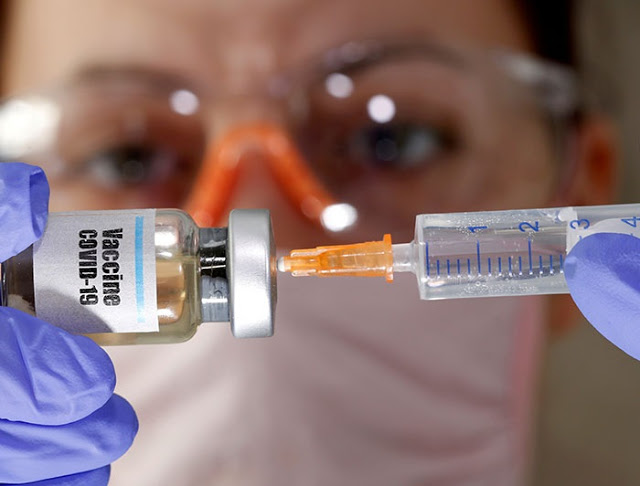 As is known, the companies that are producing vaccines are very different not only in nationality of origin but also in terms of production methodology. Already this makes the question to be posed in a more pointed and concrete way: is there any vaccine that is using human fetuses and, if yes, which one is it?
No vaccines are using cells from aborted fetuses nor have babies been aborted to produce coronavirus vaccines. Some vaccines such as Oxford-Astra Zeneca are using the HEK-293 fetal cell line and Johnson&Johnson the PER-C6 fetal cell line for vaccine design and production. Moderna and Pfizer have used the HEK-293 fetal cell line in their laboratories for their vaccine confirmations. In all four cases they do not use cells from the fetal cell lines but attenuated viruses grown in cell culture.
It is true that these are cell lines from two fetuses aborted in 1973 and 1985. A cell line is a “General term applied to a defined population of cells that has been maintained in culture for an extended period of time and has generally been exposed to a spontaneous process of transformation, which confers on the culture an unlimited life span”. This means that although the initial cells were originally those of an aborted human being, cells are reproduced from these original cells as they are maintained in the laboratory. The DNA of these successive cells undergoes mutations since they are in culture and in 2020 they retain information from the fetus from which they were obtained. However, it is not the cells that are used, but the attenuated viruses that have grown in the cultures containing these cells.
2. Is it a sin to benefit from these vaccines?
Making it clear that babies are not being aborted to produce vaccines, the most recent Church document provides an answer to this question.
A note of the Congregation for the Doctrine of the Faith on the morality of the use of some vaccines against Covid-19, dated December 21, 2020, answers this question. The competent dicastery of the Holy See considers them, on behalf of the Pope, “morally licit”. This is perhaps best confirmed by the fact that both Benedict XVI and Pope Francis have already received the two doses of one of the vaccines and that the Vatican has purchased vaccines for use by poor people.
2.1 Formal cooperation
 It happens when we freely and directly want the bad action of the other. For example: the owner of a place where abortions are performed. The one who performs the abortions is a different person from him, but the owner collaborates since it is his clinic. This does not happen in the case of the person who produces the vaccines against the coronavirus, nor with those who use them. In fact, there is no cause-effect relationship between abortions performed in 1970 and current vaccines. Certainly the intention of those who performed the abortions by searching for fetal tissues cannot be shared. Or in other words: “cannot in itself constitute a legitimization, even indirect, of the practice of abortion, and presupposes opposition to this practice on the part of those who resort to vaccines. In fact, the licit use of these vaccines does not and should not in any way imply moral approval of the use of cell lines from aborted fetuses” (cf. CDF, Note on the morality of the use of certain anti-Covid-19 vaccines, n. 3 and 4).
2.2 Material cooperation
It is a form of tolerance or suffering from the morally evil act of another. This can be: immediate-direct or mediate-indirect.
2.2.1 Immediate-direct: one helps another to perform the morally evil act. Cooperation is proximate with respect to the time as well as the matter of the act. For example, helping my thief friend to steal, even though I do not share his intention, or the nurse who does not agree with abortion but helps the doctor to perform it. This does not happen either with the one who produces vaccines or with the one who uses them.
2.2.2. Medium-indirect: happens when between the action of the principal agent and that of the helper there is a multiple result in the action of the principal agent and not a single possibility. In this case, the action of the cooperator is not necessarily or voluntarily related to the action of the principal agent. For example: one who makes a prenatal diagnosis and finds malformations in the fetus. Several actions may follow and one of them may be to abort.
This type of collaboration can be, in turn, proximate or remote., The reason for this is the connection with the moral object of the act or the temporal distance. A gun dealer may sell a gun to a public murderer. If he sells it knowing who the subject is, the collaboration will be proximate; if he does not know, it will be remote.
If, for the sake of conscience, we would like to identify what kind of collaboration it would be, if someone decides to use a vaccine against the coronavirus, it would be a remote indirect material collaboration. This is underlined by the note of the Congregation for the Doctrine of the Faith of December 21, 2020. And for this reason “clinically safe and effective” vaccines can be used with the certain knowledge that it is not a formal collaboration with abortion.
For Ramón Lucas Lucas, PhD in bioethics, “in the case of the Covid-19 vaccines, there would not even be “remote indirect material cooperation” with the moral evil of the abortion performed more than forty years ago. Without entering into subjective responsibility, the abortion was a morally evil act; whoever cooperated with it at the time, cooperated formally or materially depending on the involvement he had; whoever later used the fetal cells may or may not have cooperated with the evil. The mere use of fetal cells, subsequent to an abortion, does not in itself imply cooperation with it; in the same way the removal of an organ from a murdered person and its transplantation to another person does not in itself imply cooperation with the one who committed the murder” (cf. Ethical aspect of anti-Covid vaccines 19).
Finally, it is valuable to consider that this reflection of the Church on anti-Covid-19 vaccines takes place after the vaccines already exist. The Church reflects on the basis of a fact and the moral questions that this fact raises. It is worth noting the invitation made by the Pontifical Academy for Life since 2005 to laboratories to seek and promote alternative ways of obtaining vaccines.
Should a Catholic be vaccinated?
 The question could be outlined not from the angle of religious confession because what is good for a human being is also good for a Catholic. And vice versa. As St. Thomas Aquinas said: truth, if it is truth, comes from the Holy Spirit.
There is a human duty to protect one's own health but also to protect the health of others, as a concrete way of living the common good and charity. This second aspect seriously underlines the approach of voluntary vaccination unless there are serious and proven objective reasons for refraining from doing so.
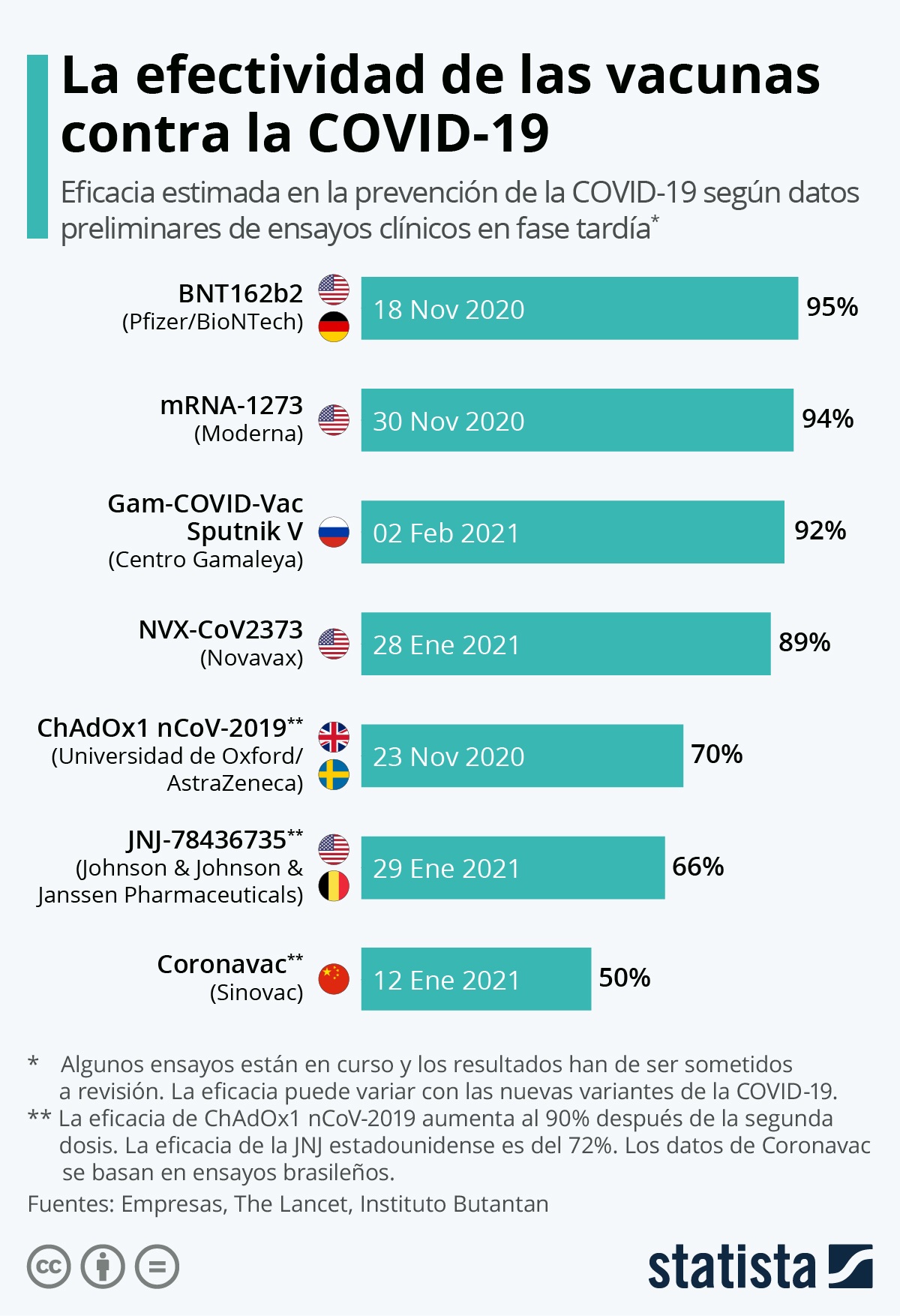
To my own understanding, I believe that currently these serious objective reasons could be, for some, the effectiveness percentages that vaccines are having and the first consequences that they are having at least in a sector of the population, in some countries, due to age (in Norway, for example, deaths have been recorded in at least 23 older adults to whom the Pfizer-BioNTech vaccine was administered. See this link). The moral obligation to vaccinate is connected with the proven efficacy and safety of vaccines. Without such guarantee and safety there may be serious objective reasons for not consenting to the application.
However, the decision not to vaccinate goes hand in hand with taking personal measures to avoid becoming a vehicle of transmission.
Does the State have the power to force its population to be vaccinated?
Although we should first distinguish between the imposition of a good medical act (such as the amputation of a leg after an accident) from an evil act (such as abortion), the right of an adult person to self-determination must always be safeguarded. However, the moral validity of limiting this fundamental right, through prudent and just measures on the part of the State, can be further explored when this fundamental right violates the common good. This is what happens, for example, with people in prison: their fundamental right to liberty is curtailed by a measure for the common good.
In the case of vaccines, I consider in the margin of a prudent measure the use of anti-Covid-19 vaccination passports for travelers, for example.
It should not be forgotten that in virtually all cases, the current anti-Covid-19 vaccines have appeared in an emergency situation where approval times have been shortened because of the urgency. We do not yet know with complete certainty the long-term safety of the vaccines, although this may be overcome with the passage of time. In this context, a state imposition on its inhabitants appears to be unfounded.
Conclusion
At another time in history, the Church's pronouncement would have served to reassure consciences. Times change and many other voices find echo in the digital continent, raising questions that were not asked but also concerns that were not carried. It is true: one can choose who to believe. But one is at a disadvantage in this field when the Church, in such a well-argued way, pronounces itself not only with text, because, as we said above, possibly the clearest example of the morality of vaccines is that both the Pope Emeritus and Pope Francis have already received the second dose of their vaccines.