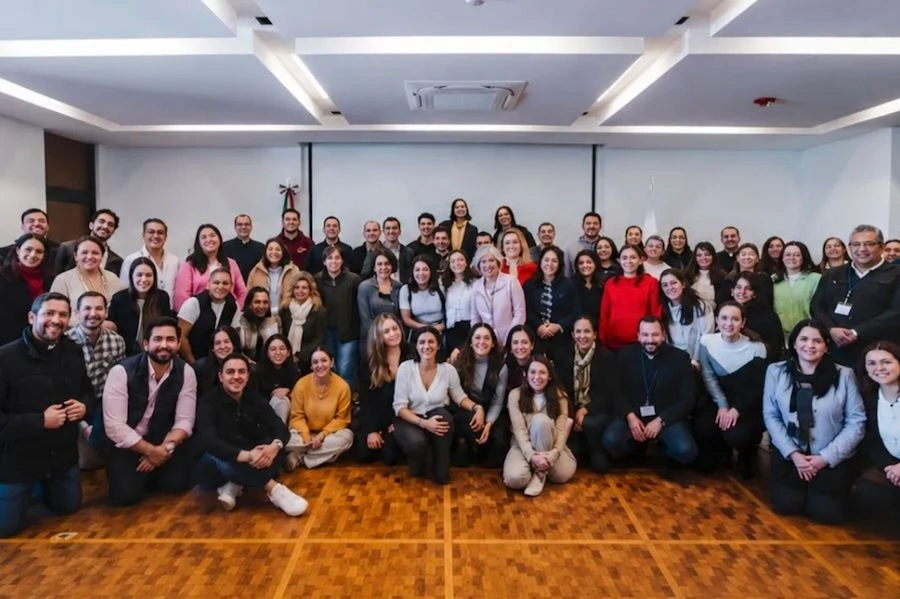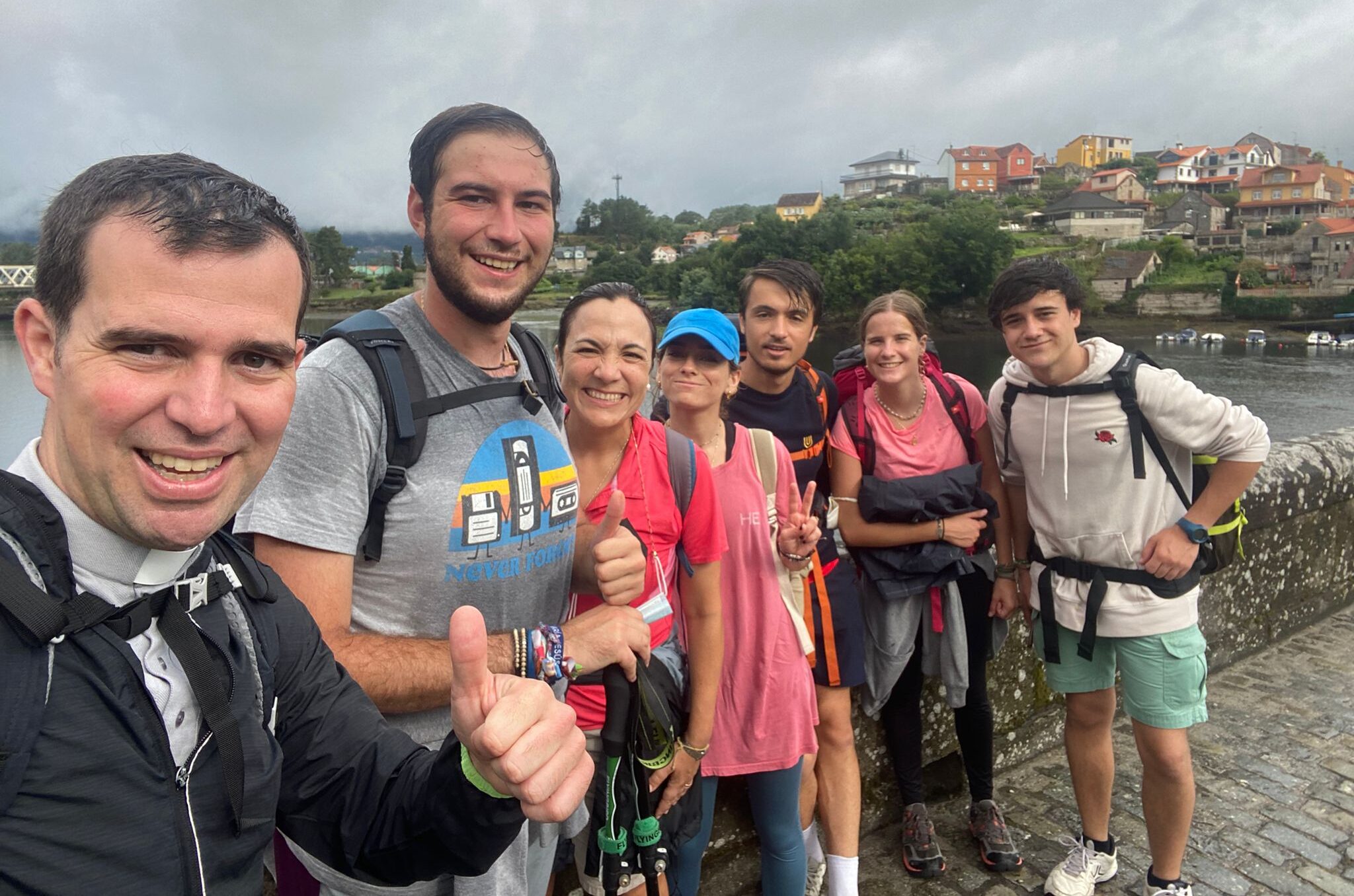
On July 21, more than 100 young people from Regnum Christi and friends from all over Spain began a pilgrimage to Santiago de Compostela along the Portuguese Way while also participating in a course on the catechesis of Father Fabio Rosini on “The Art of Starting Over. However, after seven days of walking, two days before reaching the tomb of the Apostle, the COVID-19 forced them to return home early. They were accompanied by six Legionaries of Christ and three Consecrated Women of Regnum Christi, Among those present was Betty Rivera, territorial director of the Consecrated Sisters of Regnum Christi in Spain. Alexis Gática, LC, before the start of the pilgrimage, and which still has all its value, he told us: “What we are looking for is to generate a good atmosphere with young people who live with their vocation of Regnum Christi and also that their invited friends know this experience; that they meet young people who know how to have fun and people who know how to challenge themselves, who know how to pray, how to rejoice. This is the most important thing about the Cursillo, that the young people really have a deep and real experience with God, with others and with themselves”. A message that has not lost its validity then or now.
How is it possible to combine a Regnum Christi Cursillo with a pilgrimage to Santiago? Is there the strength to do both at the same time?
What we are looking for is a practical experience of Regnum Christi. For many years, there have been theoretical courses where we have tried, through content and formation, to help young people to enter into the experience of Regnum Christi. However, we realize that many times Regnum Christi is not a content, but a vital experience that the movement is the people who compose it. Therefore, what we are all looking for is to generate a good atmosphere with young people who live with their vocation of Regnum Christi and also that their invited friends know this experience; that they meet young people who know how to have fun and people who know how to challenge themselves, who know how to pray, to rejoice. This is the most important thing about the Cursillo, that the young people really have a deep and real experience with God, with others and with themselves.
Why is the spiritual theme “the art of starting over”? What do we have to start over? What does a young person have to start over?
One of the most important elements of the human being is memory: memory that we are created and that we were made to love and be loved. Also, memory to remember that God calls us to happiness and heaven and that many times in the day to day, with the contact with the world and with so many things we can forget. It is always good to start again and learn from the genetic code of our life. The genetic code of the Christian is the creation, in Genesis we see that God has an order at the time of creating everything and also invites us to enter into that deep mystery. In our day to day life we do not always have the possibility to think about this, because we forget it and many times superficiality wins over us. I think it is an ideal opportunity because on the road to Santiago we have spaces for concentration, silence and to meet ourselves and also to carry the backpack with which we also have to carry the fatigue, the leg pains, the blisters. It is a time for young people to reconnect and remember the essentials of life and that, whether they have had a good year or a bad year, they know how to reconnect and meet God.
What is a normal day like in this experience of combining cursillo and Camino de Santiago?
The Way of St. James offers us a great and beautiful opportunity to encounter God, ourselves and others. Also, the vocation of Regnum Christi is a call to constantly meet with a God who calls us and loves us, and it is also a call to share with others the love that God places in our hearts. It is an opportunity to know that we are loved and called by God and, above all, to deeply value the call to life and existence, to give our lives for God and others. In the Regnum Christi Cursillo we seek to deepen our faith and vocation.
In this year we want to help young people, in a time so marked by the pandemic and within the concrete circumstance that young people live in of wanting to reconnect with God and restart, to return to the genetic code of our existence and recognize that there are a series of principles that govern our lives and that many times in the day to day, or because of pain or superficiality, we forget. These principles include recognizing that God has created everything and that also, in my life, there are a series of priorities that should be recognized instead of me choosing them. Also, to recognize that God leaves great evidences on Earth with which we can meet Him. This course looks at a vital experience that young people are going through and wants to offer a response and at the same time a real experience of Regnum Christi: to meet with young people who live this call in their hearts, who vibrate with it and who awaken those who perhaps do not live it and arouse the desire for constant interior conversion and apostolate.
What virtues do they especially live during these days?
What we seek is to cultivate life and the living of the interior life. We live in a world full of superficiality, where there is little reflection, there is no silence and because of the pandemic we are locked up a lot of the time. This experience of the Way of St. James also motivates us to get out of ourselves, out of our land, and to meet other people we do not know. We are also invited to look for God in nature, in the things that happen to us and also to work with time and space and to know how to rest and have fun. Many of us have some days where we start tired and end up exhausted, and here too there is plenty of space for the young people to rest and enjoy themselves. There are also times of intense prayer and moments of fellowship in a healthy environment, where we can talk about God and exchange ideals and even, if necessary, discuss, but with the confidence of knowing that we are a family.