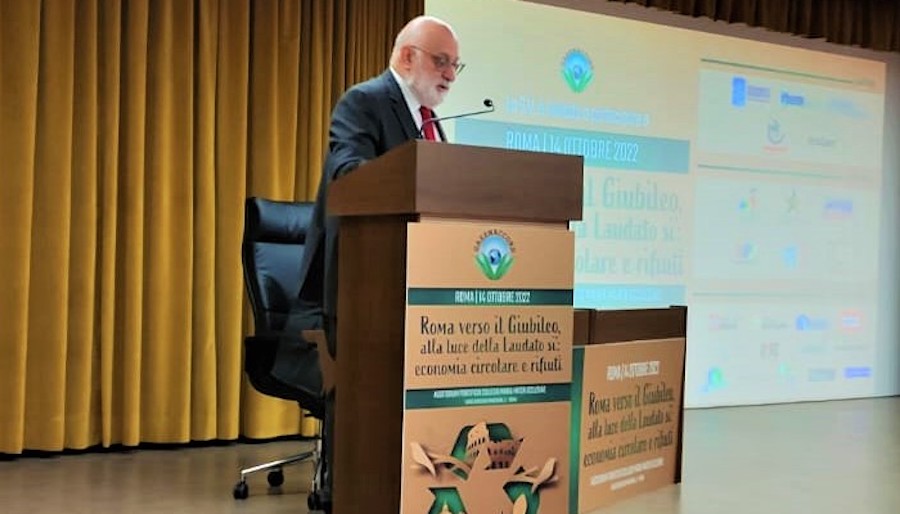
An event held on October 14, 2022 in Rome, at the Pontifical International College Maria Mater Ecclesiae.
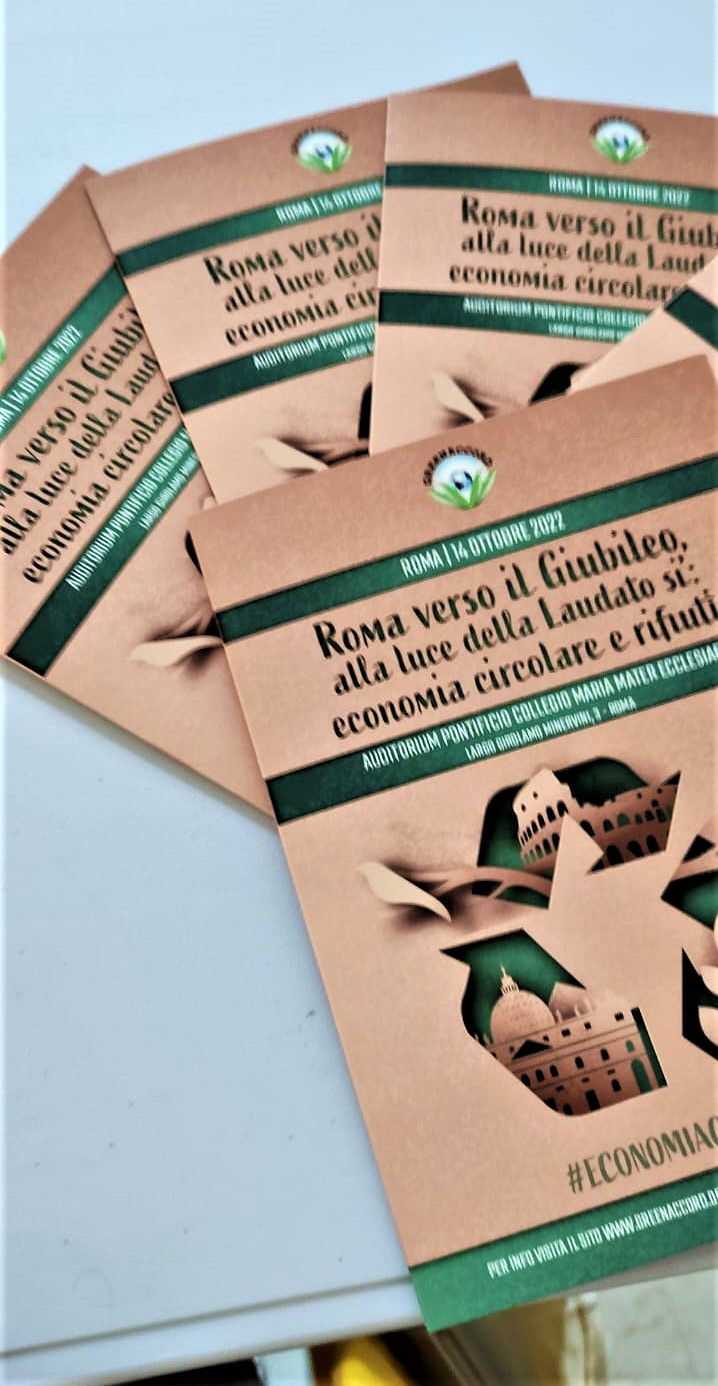 Stimulating and deepening the debate on how the Vatican City and the city of Rome can welcome pilgrims during the Jubilee 2025, according to the criteria of environmental sustainability, even in less spiritual aspects such as waste, was the sense of the event. “Rome towards the Jubilee, in the light of the Laudato si’circular economy and waste”.”, organized on Friday, October 14 by Greenaccord onlus in the auditorium of the Pontifical International College of Mary Mater Ecclesiae.
“The basic idea of the Jubilee is based on the biblical concept of the rest of the earth, which every seven years foresaw a year in which it was allowed to rest in order to regenerate itself,” stressed the president of Greenaccord, Alfonso Cauteruccio, presenting the meeting. “Therefore the Jubilee cannot be separated from Laudato si’. The idea - continued Cauteruccio - is to endow Rome, with2025 in mind, with permanent structures that guarantee better services for Roman citizens, responding to the dictates of Pope Francis' encyclical.
Integral ecology of Laudato Si’
“Laudato si’ - the Pope teaches us - must be read in a triple dimension: as integral ecology, as integral conversion and as integral spirituality,” stressed Msgr. Rino Fisichella, Pro-Prefect of the Dicastery for Evangelization. “Therefore, it must not be linked only to nature, but to all the poverty of the world. And among these poverties, there is also nature, impoverished by the evil that man causes with his actions, abusing the goods that God has placed in our hands. A wealth that we have reduced to poverty. A step forward is needed to rediscover the beauty of creation. In this sense, in view of the Jubilee, as the Vatican, we have suggested to the Italian and Roman authorities some projects that touch the outskirts of the city to make them more beautiful and cleaner, with environmental interventions, where it will be possible to find life in common, sociability”, concluded Bishop Fisichella.
Recycling and waste
“In waste management, commonly, we are interested in what is left of products after their use and finding a suitable final destination for them. But this is not enough,” said Andrea Masullo, scientific director of Greenaccord. “For the European Union, waste management is the key element for us to talk about a true circular economy that brings benefits to the local and global environment, promotes competitiveness, economic growth, employment and innovation. With the Jubilee approaching, Rome, which will see the arrival of millions of pilgrims, will have to choose which path to take: that of adjusting the existing system or that of innovation aimed at recycling,” concluded Andrea.
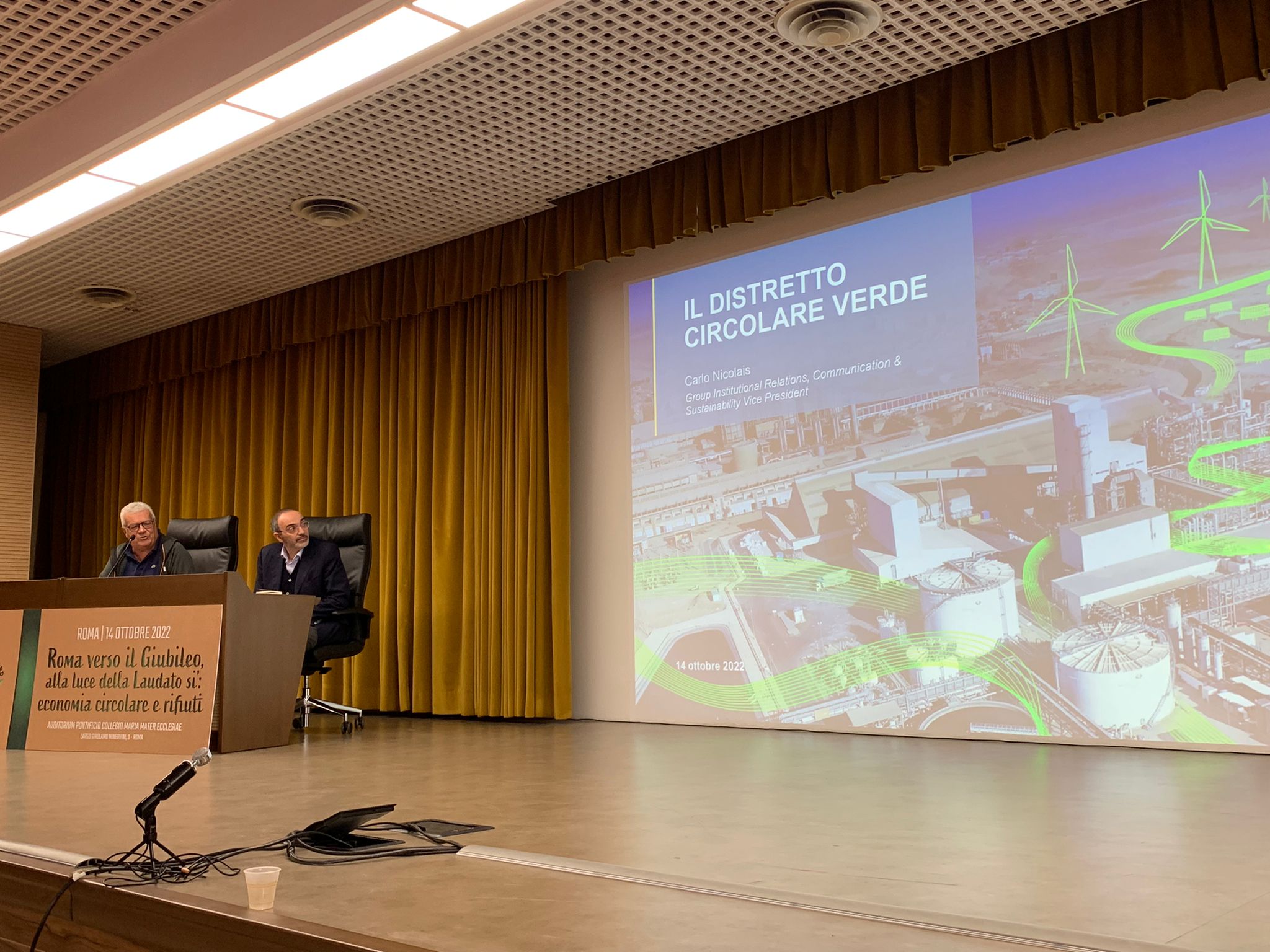 One of the most interesting projects concerns the recycling of mattresses. It was presented by Francesco Faralli, from Cormatex. “After a first phase in which the mattress is sanitized at the end of its life, and the different materials that compose it (textile fibers, polyurethane foam, latex, wood, metals) are separated,” explains Faralli, “the Cormatex Airlay Lap Formair line processes textile, polyurethane and latex waste. At the end of the process, new recycled mattresses are produced (up to 120,000 per year), certified and guaranteed in terms of quality and technical specifications. New developments in the process - currently under study - are offering interesting results in terms of increased elasticity and resilience, which will help to expand the market segment for recycled products”.
Use of renewable resources, reduction of environmental impacts of industrial processes, reduction of CO2 emissions. These are some of the objectives of the proposal Zerowaste of Confindustria, which applies circular economy models, illustrated by Delio Belmonte, CEO of Assorisorse. “The industrial scheme Zerowaste is based on the integration of different technologies that make it possible to recover waste and treat undifferentiated waste,” explains Belmonte, “enhancing all recoverable components and converting non-recoverable fractions into biomethane, hydrogen and chemical products.
The closing speech was made by Giuseppe Lanzi, CEO of Sisyphus - Benefit Society, on integral ecology and sustainable development, with the aim of building bridges between the world of circular economy and that of ethical finance. Lanzi, in particular, spoke about the experience of Assisi, the Economy of Francis, an event attentive to the stewardship of creation, in which his company has applied the principles of environmental sustainability. A model that can also be replicated for the Jubilee 2025.