By Celso Júlio da Silva LC
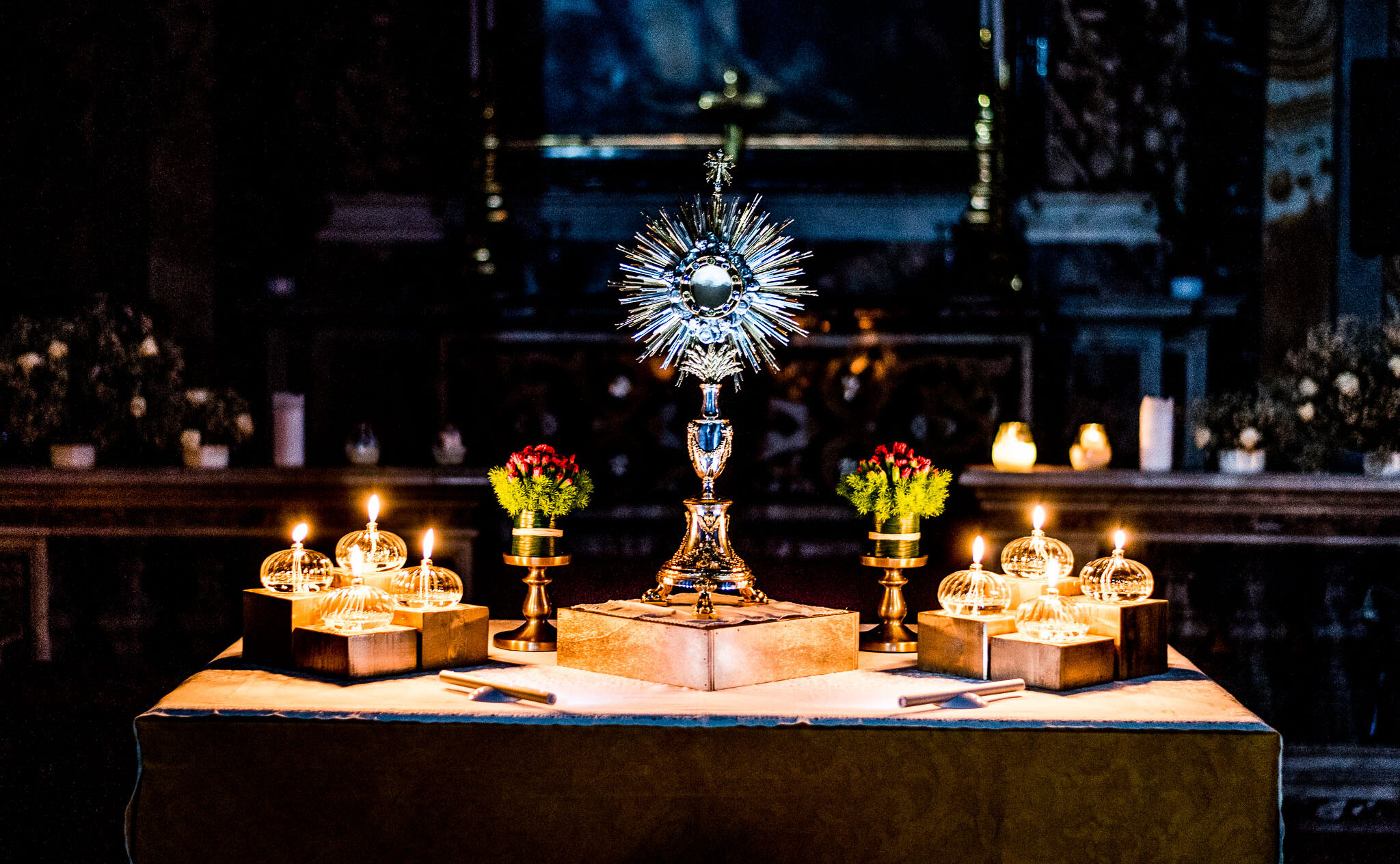
For some months now the world has been hungry for the Eucharist. In some countries, churches are already reopening following the indications of the authorities. In others, however, there is still hope for a return to normality. In both situations, the old phrase of an anonymous Christian from North Africa, after being surprised in his house by Roman soldiers during the celebration of the Eucharist, resonates in both situations: sine dominico non possumus! Some translate this expression as “without Sunday we cannot live”. Instead the correct translation is: “without the Lord Jesus Christ we cannot live”.
Historically, the adoration of the Body and Blood of the Lord had been proposed by divine inspiration by St. Julienne de Mont Cornillon in Belgium. Already in the 13th century a miracle occurred in Bolsena. A priest who doubted the real presence of Christ in the Eucharist received the particular grace of seeing in his hands the host becoming flesh. From that marvelous event, Pope Urban IV officially instituted with the bull Transiturus solemnity throughout the Church.
Urban IV commissioned St. Bonaventure and St. Thomas Aquinas to write the office of readings in honor of the Blessed Sacrament. While the pope recited what had been composed by the Aquinas, St. Bonaventure tore up what he had written, for he humbly recognized that what St. Thomas had written was of incomparable value. Many of these hymns are still preserved and sung in our churches and are chords of eternal resonance that are directed towards the mystery of God in the Eucharist.
The Eucharist is the real presence of Jesus Christ in the midst of his Church and of the world. There our soul always approaches with a spirit of adoration because if on the cross the divinity of the Word of God was hidden, now in the Eucharist his humanity is also hidden. The great mystery of Christ in the Eucharist involves a revelation that the more it is revealed to us, the more it is hidden.
He who believes approaches the Mystery to nourish himself on the path of life with the true Manna come down from Heaven. Manjar prepared in Mary's hot furnace of faith and love - her maternal womb. Remedy of immortality for the soul of the pilgrim man on earth. “This is my Body ... This is my blood”. Christ was given to us as food for the road to Heaven. Under the appearances of the bread and wine in substance is God Himself, the Word of God. He left us his real presence. To better understand this, let us use an analogy.
A father before he dies does not tell his son by handing him a photograph: “This house you see here is yours when I am gone. It is your inheritance. The father loves his son and does not deceive him; he leaves him the photo, but he also leaves him the house! In the same way, at the Last Supper Christ did not leave us only a piece of bread as a sign of his presence. No! He left himself in the sacrament of the Eucharist while we are on pilgrimage in this world. And if the way is heavy, He says to us as He did to the prophet Elijah, offering Himself as Heavenly Food: “take and eat for the road is long!”
The deepening of St. John Paul II's work in this area is admirable. Ecclesia de Eucharistia which is an invitation to return to the essential core of what holiness entails within the Church: Christ Eucharist. As the planets revolve around the sun, so our lives must revolve around the sun that never sets: Christ. The life of the Church and of every Christian revolves around Christ the Eucharist. And ours must also be a continuous conformation to the great gift of this Eucharist. Thanksgiving which is the Holy Mass.
From the first centuries of the Church the saints taught us to conform our lives to the Holy Eucharist. Let us think, for example, of St. Ignatius of Antioch, Doctor of Unity. Eager to be crushed wheat in the teeth of wild beasts, he gave a courageous and coherent witness to the faith he professed. Holiness begins with personal and frequent contact with Jesus in the Eucharist.. You cannot give your life for someone you do not know. To frequent the Holy Eucharist is to know Him who loved us first and to give one's life for Him.
On this Solemnity of the Body and Blood of Christ, let us adore this unfathomable Mystery with gratitude, love and deep faith. Let us approach Life with our hearts. It is edifying to note that so many people miss Holy Communion during this pandemic. May the gift of the Eucharist transform our lives and may we move from weariness, fear and uncertainty to certainty in faith that Christ alone is the strength for the journey.
May our faith and our life be nourished by that true Bread come down from Heaven and may we not hesitate to conform all that we are and do to Him. For in the words of St. John de Brebeuf: You will never know how valuable Christ is to you until He becomes for you a matter of life and death..
Finally, let us follow the advice that St. Columbanus wisely gives us: “even if we eat and drink the Lord, we will always hunger and thirst for Him.”.