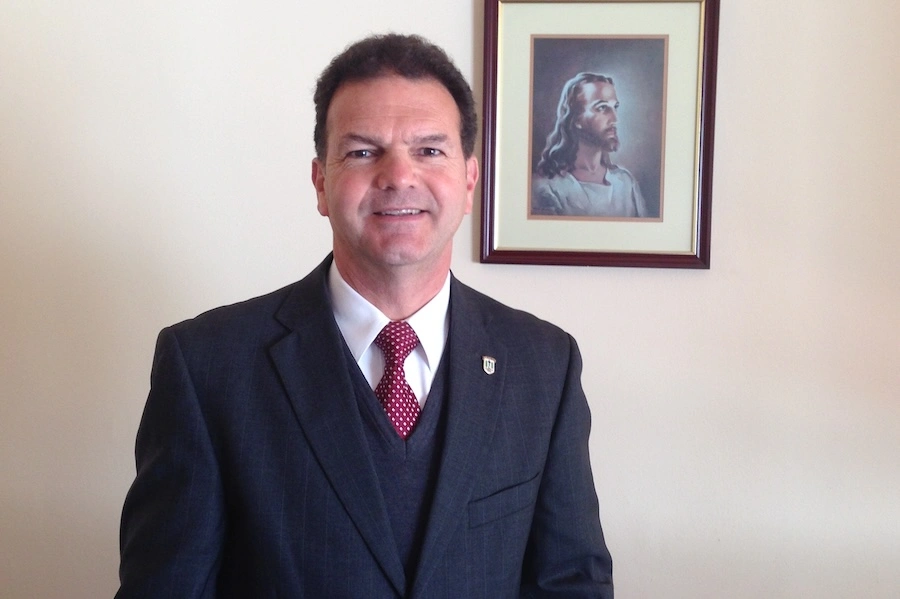
The story of Gerardo González Estrada is not that of someone who decided to withdraw from the world, but of someone who learned to read it from within, with a spiritual outlook and an educational vocation. His life as a consecrated layperson dRegnum Christi to go to conting in process training, in accompanied young people, in decisions that van transformdo. How do you sustain a vocation for more than three decades? What can faith teach a generation that lives behind a screen? Gerardo shares a life experience marked by discernment, education and hope, more as a witness than as a model.
Ehe inner echo of a call
Gerardo González speaks of his vocation without solemnity. His story begins in Mexico City, in a deeply Catholic family, and continues in the schools where he was formed within religious communities. From the age of thirteen he participated in the ECYD and, later, was associated withl Regnum Christi. In August 1989 he took the step that would define his life: devote yourself to God. He does not describe it as a sudden leap, but as a process sustained by grace and spiritual accompaniment.
For nine months, she says, she lived a discernment that was neither linear nor obvious. It was necessary to stop, to look inward, to recognize the signs of Providence and to allow himself to be guide. Un priest lo was accompanying him in this process, But his experience goes beyond the religious sphere: he speaks of time as a space of maturation where the decision becomes a response and not an impulse. «Only those who stop to discover what God wants for their lives can experience fulfillment.», with the conviction of someone who is making of this search its daily life.
It is not only a reflection on the consecrated vocation. Gerardo insists that every human being, believer or not, needs this inner silence in order to find the purpose that gives meaning. to your life. Faith, in his view, is not an imposition, but a way of discovering the deepest joy, that which does not depend on circumstances or external achievements.
And while he acknowledges that some people could even encontrar their unguided paths, insists on the value of human accompaniment. «God uses others to guide us», he says. Mediation, far from detracting from authenticity, makes it possible to recognize more clearly what is being sought. In his case, it was that company that supported him in a process that, more than a decision, became a confirmation.
The classroom as a meeting space
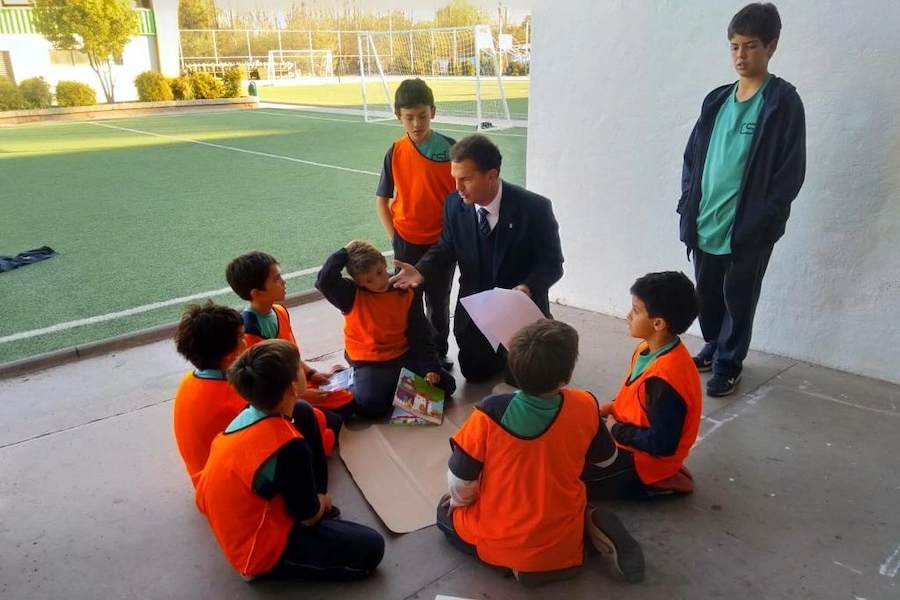
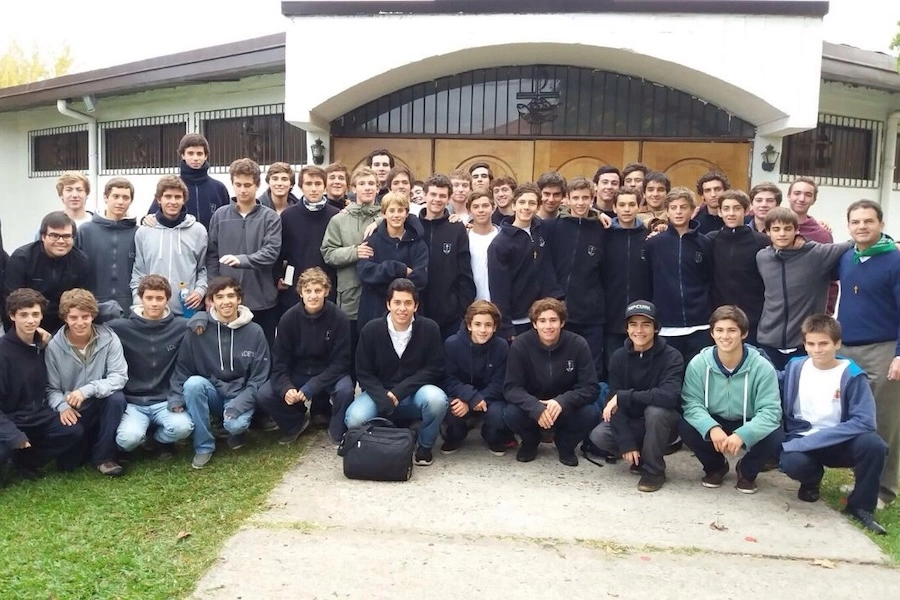
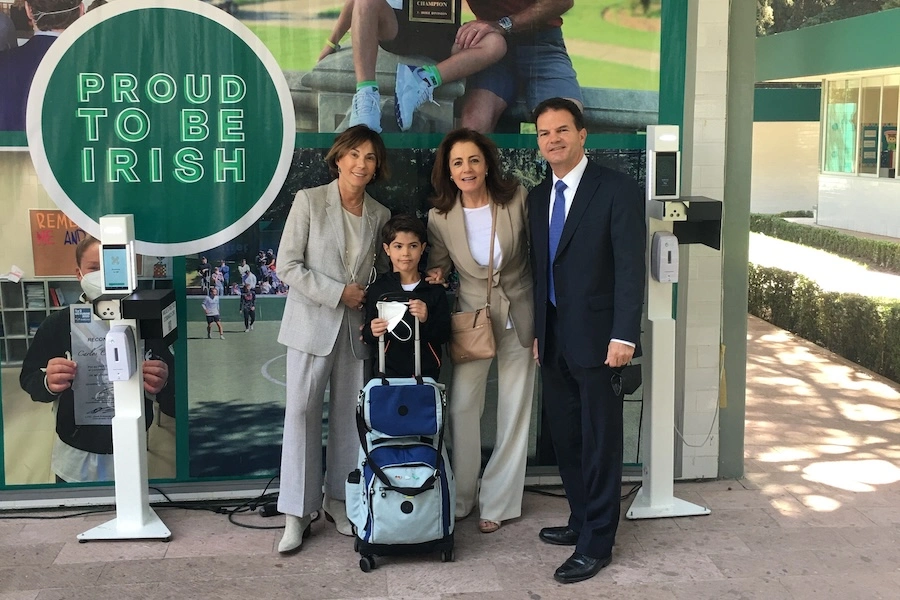
Gerardo is currently director of training at Irish Institute Mexico. Your pastoral work in schools has given him the opportunity to apply that personal experience in the formation of young people. Not from the pulpit, but from classrooms, conversations and educational programs. «We assist them institutionally and personally», he explains. The subjects of formation cThe vocation weeks and personal dialogues are spaces where students learn that faith is not just a “obligation”, but an invitation to ask themselves who they want to be.
Gerardo recognizes that the challenges of education today are complex. He speaks realistically about what is happening in many families: marriages in crisis, unstable contexts, absent parents. «Educational complementarity works best when there is consistency at home», she points out. In her experience, the best results are achieved when school and family work together; however, such collaboration is not always possible.
In addition to family challenges, there are technological ones. Social networks, he says, have become an ambiguous terrain: they can form or deform. In this context, educating means teaching limits, prudence and a critical sense. «Digital tools can elevate learning, but also be a danger if there is no close guidance», he warns. In his opinion, educators and parents should act as compasses rather than judges.
Faced with a hyper-connected youth, he proposes to approach before correcting. «We must first enter their world to understand it», he says. Only in this way, he argues, can the positive aspects and risks of digital media be recognized. Accompaniment, once again, appears as the key word: to educate is not to impose, but to accompany with firmness and empathy.
Can you believe today with your index finger on the screen?
When speaking about young people and their relationship with technology, Gerardo does not fall into alarmist discourse. He recognizes that screens are not enemies, but a reality that can be used for good if educated responsibly. «Excesses are never good, but there are also many noble and formative possibilities in the digital sphere.», he says. His insistence is on teaching the responsible freedom: learning to choose, not to flee.
When asked if young people have forgotten about God, his response goes beyond the generations. «Not only young people, but also society», he says. Loraison life, Sunday Mass, the sacraments, all of them “it looks like” to have lost presence in many households. However, it has also there is signs of rebirth. In l.s educational works of the Regnum Christi, assures that there is a rediscovery of living faith, prayer and solidarity as ways to return to what is essential.
Gerardo sees a balance between the diagnosis of reality & the hope that gives us faith. «No it is necessary to complaintrse of the times, it is necessary to understandsrlos». Ni it is about condemn, but rather than propose. In this sense, the educational work becomes a testimony of a faith that is not imposed, but shared.
The young soul as a mirror
Anecdotes told by Gerardo González van disclosedo the heart of its mission. Son those stories of transformation. The first occurred during Holy Week missions, when a high school student, while on his way to the help carriesndo communion to a dying elderly woman in precarious conditions, she discovered her consecrated vocation. That experience - dramatic, simple, deeply human - sowed in the young man the desire to dedicate his life to service. Today, that same student ishappy consecrated to God.
The second story comes fromhe country of Chile. A young student, constant in his daily attendance at Mass, was discerning, with help and accompaniment, his call to the priesthood. Gerardo watched him grow, pray, make up his mind. «I was surprised by his youthful fervor and very attentive.», he recalls. Over the years, the boy was collaborator of Regnum Christi and, finally, ureligious in formation. In both stories, the educator is also recognized as a learner: «I usually learn from the young people teachings for life».
The two anecdotes condense how do you see the essence of his work: sowing without expecting immediate results, trusting that each encounter can leave a mark. To Gerardo, education is both an act of faith as well as patience.
And perhaps therein lies the experience that is giving the certainty that faith is transmitted more by presence than by words. alone, more with listening than with speeches. And ehe path of Gerardo go to mostrando also that the vocation is notoly se defined by a moment, but by the constancy of the service.r, accompanying, discerning and waiting, which is only happening every day..